
 by
by 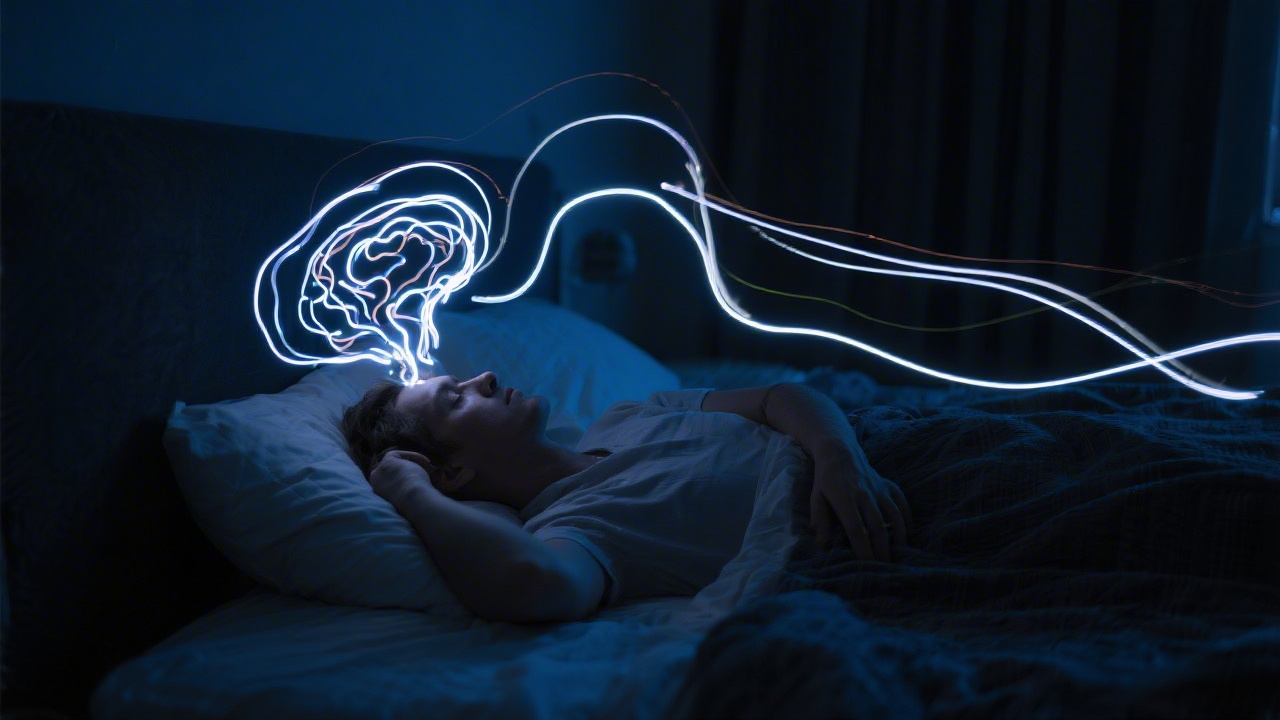
Our Top Mattress Pick for Better Sleep
The Saatva Classic offers three comfort levels, dual coil support, and a breathable organic cotton cover — designed for all sleep positions and built to last.
People with ADHD don't just struggle to focus during the day — they struggle to sleep at night. ADHD-related sleep disruption is not incidental or secondary. It is built into the neurobiology of the condition itself. Understanding why ADHD and sleep interact so consistently is the first step toward better nights.
How Common Are Sleep Problems in ADHD?
Research consistently finds that 50-80% of children and adults with ADHD have clinically significant sleep problems — compared to roughly 10-15% of the general population. These aren't just the same sleep problems everyone has, amplified. ADHD creates specific, neurobiologically distinct sleep disruptions.
Delayed Circadian Phase in ADHD
One of the most consistent findings in ADHD sleep research is a delayed circadian phase. People with ADHD have naturally shifted internal clocks — their bodies produce melatonin later, their core temperature drops later, and their biological drive for sleep peaks later than neurotypical individuals.
A 2019 meta-analysis found that ADHD adults showed melatonin onset averaging 1.5 hours later than controls. This is not a behavioral choice or a discipline problem — it is a measurable biological difference in circadian timing. The practical consequence: an ADHD person trying to fall asleep at 10 PM may be fighting a body that biologically isn't ready for sleep until midnight or later.
This overlaps with the experience of sleep procrastination — but ADHD individuals often describe feeling genuinely alert and engaged late at night, not merely delaying sleep out of desire for personal time.
The Hyperactive Mind at Bedtime
ADHD is characterized by dysregulation of the default mode network (DMN) — the brain's internal narrative and imaginative system. In neurotypical brains, the DMN quiets when task-focused attention is required. In ADHD, the DMN stays active, generating a stream of thoughts, ideas, and associations that competes with task engagement during the day — and competes with sleep at night.
Bedtime removes external stimulation that had been keeping the ADHD mind anchored. In the silence and darkness, the DMN activates fully: ideas, plans, worries, memories, creative tangents. This is the "ADHD bedtime spiral" — a widely recognized experience among adults with ADHD, now with neurological explanation.
Sleep Architecture Differences
Polysomnography studies of ADHD show several consistent differences from neurotypical sleep:
- Increased sleep onset latency — takes longer to fall asleep
- Reduced sleep efficiency — more time awake during the sleep period
- Increased periodic limb movement disorder (PLMD) — ADHD has significantly elevated rates of PLMD, which causes micro-arousals throughout the night
- Restless legs syndrome co-occurrence — RLS rates are elevated in ADHD, and both conditions involve dopaminergic dysregulation
- Increased REM sleep abnormalities — particularly in ADHD-combined presentation
- Sleep-disordered breathing overlap — OSA rates are elevated in ADHD, and treating OSA can significantly improve ADHD symptom severity
How Stimulant Medications Affect Sleep
The relationship between ADHD medications and sleep is complex and often misunderstood.
Short-acting stimulants (immediate-release methylphenidate, amphetamine): If taken early, wear off by evening and typically don't significantly disrupt sleep. The better-focused day may actually improve sleep by reducing anxiety and chaos. If taken too late, they directly delay sleep onset.
Long-acting stimulants (extended-release formulations): Have longer active windows and are more likely to interfere with sleep onset when taken in the afternoon. Timing optimization is critical — many clinicians recommend the last dose by noon or 1 PM.
The rebound effect: Some individuals experience a stimulant rebound in the evening — a period of increased irritability, impulsivity, and sometimes hyperactivity as the medication clears. This can impair sleep wind-down even before direct medication effects resolve.
Non-stimulant medications (atomoxetine, guanfacine, clonidine): Guanfacine and clonidine are alpha-2 agonists that can actually improve sleep in ADHD — they're sometimes prescribed specifically for their sleep-promoting effects in ADHD children. Atomoxetine has variable effects.
Sleep Strategies Specific to ADHD
Bright Light Therapy in the Morning
Given the delayed circadian phase, morning bright light is the most targeted intervention. 30 minutes of bright light (10,000 lux) within an hour of waking shifts melatonin onset earlier, progressively moving the biological clock forward. This is more mechanistically targeted than any other intervention for ADHD sleep timing problems.
Exercise Timing
Regular exercise improves ADHD symptoms through dopaminergic and noradrenergic effects and improves sleep quality significantly. For ADHD specifically, the cognitive calming effect of morning or early afternoon exercise can reduce evening hyperactivity. Avoid intense exercise within 3 hours of bedtime — this compounds the delayed arousal problem common to ADHD.
Externalizing the Bedtime Brain
Because the hyperactive DMN generates content at bedtime, having an external "dump" container reduces its hold. A bedtime notebook (physical, not digital) where racing thoughts are captured — tasks, ideas, worries — allows the brain to release them without losing them. The perceived need to "hold on" to thoughts contributes to the ADHD bedtime spiral.
Medication Timing Optimization
Work with the prescribing physician to optimize stimulant timing for sleep. This is often more impactful than any behavioral intervention. Many ADHD patients are taking their last dose too late without awareness. Small timing adjustments produce significant sleep improvement.
Stimulus Control Adapted for ADHD
Standard stimulus control advice (leave bed if you can't sleep, only use bed for sleep) requires adaptation for ADHD. The instruction to "lie quietly in another room until sleepy" fails for many ADHD adults — a fully quiet environment with no stimulation is not tolerable. Modified stimulus control allows a quiet, low-stimulation non-screen activity (audiobook, podcast at low volume) as a transition activity before bed, rather than enforcing complete silence.
Melatonin (Low-Dose, Timed for Circadian Phase)
Melatonin for ADHD is best understood as a circadian signal, not a sedative. Low doses (0.5-1mg) taken 2-3 hours before desired sleep onset — not at bedtime — shift the circadian clock earlier. This is the mechanism-appropriate use. Higher doses at bedtime primarily cause next-morning grogginess without addressing the underlying phase delay.
Our Top Mattress Pick for Better Sleep
The Saatva Classic offers three comfort levels, dual coil support, and a breathable organic cotton cover — designed for all sleep positions and built to last.
Frequently Asked Questions
Does treating ADHD improve sleep?
Yes and no. Stimulant medication that is properly timed typically improves the daytime chaos and anxiety that exacerbate sleep problems. However, stimulants taken too late directly worsen sleep onset. The net effect depends heavily on timing and dosing. Non-stimulant options like guanfacine may improve sleep directly.
Is delayed sleep phase disorder more common in ADHD?
Yes. Delayed Sleep Phase Disorder (DSPD) is significantly overrepresented in ADHD populations. Some researchers estimate 70-80% of DSPD patients have ADHD symptoms. The shared dopaminergic mechanism is thought to explain this overlap — both conditions involve circadian timing dysregulation.
Why do ADHD children resist bedtime so intensely?
Bedtime resistance in ADHD children combines genuine circadian delay (biologically not ready for sleep), hyperactive DMN activation in quiet darkness, emotional dysregulation (a core ADHD feature), and difficulty with transitions — all operating simultaneously. This is not willful defiance in most cases; it is neurobiological incompatibility with early bedtimes.
Can sleep deprivation worsen ADHD symptoms?
Significantly. Sleep deprivation directly impairs prefrontal cortex function — the same region compromised in ADHD. A sleep-deprived neurotypical person shows ADHD-like symptoms. A sleep-deprived ADHD person shows dramatically worsened ADHD. The circadian phase delay that leads to insufficient sleep creates a daily compounding of symptom severity.
Are there specific mattress features that help ADHD sleep?
Motion isolation is particularly relevant for ADHD — a restless sleeper who moves frequently benefits from a mattress that absorbs movement rather than transmitting it. For ADHD adults with comorbid restless legs or periodic limb movement, a firmer mattress may reduce the subjective discomfort that amplifies the sensory experiences disrupting sleep.
Voted best luxury innerspring mattress with exceptional lumbar support and white-glove delivery.
Check Price & Availability FAQPage", "mainEntity": [ {"@type": "Question", "name": "Does treating ADHD improve sleep?", "acceptedAnswer": {"@type": "Answer", "text": "It depends. Properly timed stimulants reduce daytime chaos and anxiety that worsen sleep. Stimulants taken too late directly worsen sleep onset. Non-stimulant options like guanfacine may improve sleep directly."}}, {"@type": "Question", "name": "Is delayed sleep phase disorder more common in ADHD?", "acceptedAnswer": {"@type": "Answer", "text": "Yes. DSPD is significantly overrepresented in ADHD populations, with an estimated 70-80% of DSPD patients showing ADHD symptoms, likely due to shared dopaminergic circadian dysregulation."}}, {"@type": "Question", "name": "Why do ADHD children resist bedtime so intensely?", "acceptedAnswer": {"@type": "Answer", "text": "Bedtime resistance combines genuine circadian delay, hyperactive default mode network in quiet environments, emotional dysregulation, and difficulty with transitions — all neurobiological, not willful."}}, {"@type": "Question", "name": "Can sleep deprivation worsen ADHD symptoms?", "acceptedAnswer": {"@type": "Answer", "text": "Significantly. Sleep deprivation impairs prefrontal cortex function — the same region compromised in ADHD — dramatically worsening symptom severity the following day."}}, {"@type": "Question", "name": "Are there specific mattress features that help ADHD sleep?", "acceptedAnswer": {"@type": "Answer", "text": "Motion isolation is particularly relevant for restless ADHD sleepers. A firmer mattress may help those with comorbid restless legs by reducing sensory discomfort."}} ] }