
 by
by Why Position Matters More Than Any Other Factor in Sleep Apnea
Obstructive sleep apnea (OSA) — the most common form — occurs when the upper airway collapses during sleep, partially or completely blocking airflow. The structural vulnerability of the airway is significantly influenced by body position, and a mattress and base combination that addresses positioning can meaningfully reduce apnea severity.
This guide focuses specifically on what mattress features and sleeping positions matter for sleep apnea, and why an adjustable base is the single most impactful equipment change most apnea patients can make.
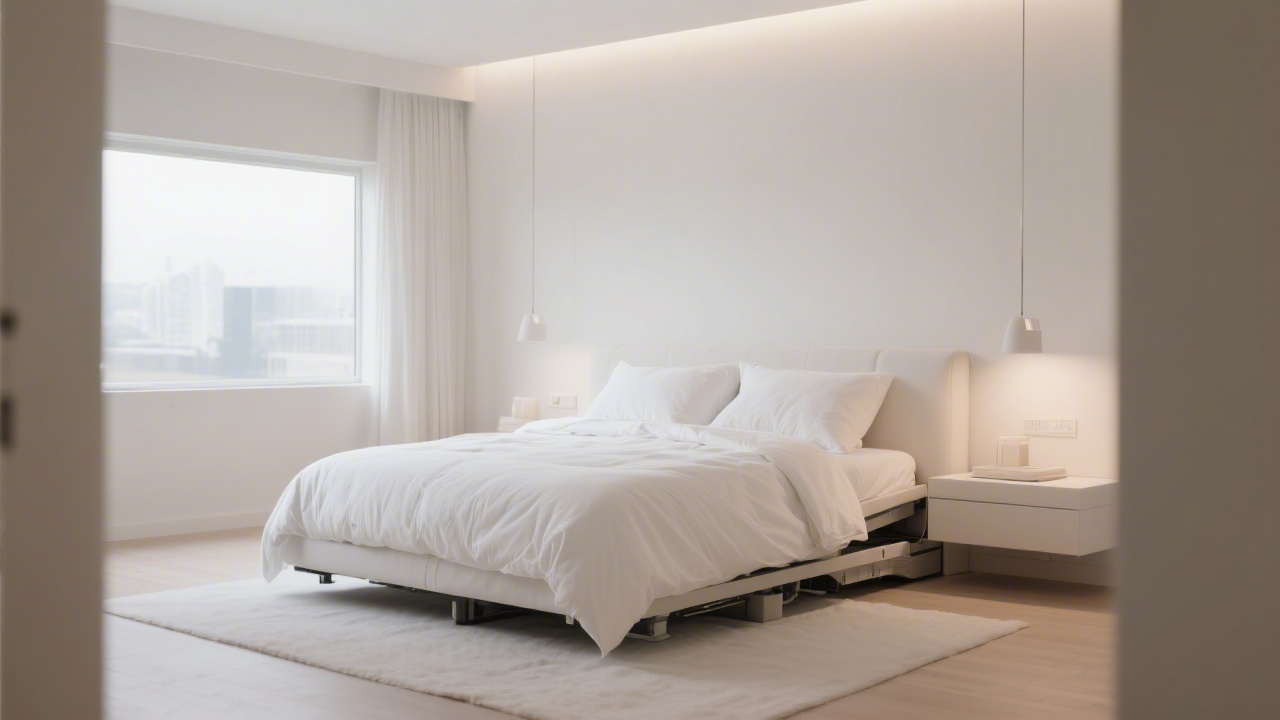
Our Top Pick: Saatva Adjustable Base Plus
Elevate head to 15-30 degrees to reduce apnea episodes. Compatible with Saatva Classic mattress. Zero-gravity preset included.
Pros and Cons
What We Like
- Luxury innerspring with excellent lumbar support
- Multiple firmness options available
- Free white-glove delivery and mattress removal
- 365-night trial and lifetime warranty
What Could Be Better
- Higher price than many online brands
- Heavier than foam mattresses
- Not compressed in a box
- Some off-gassing possible initially
Position-Dependent Sleep Apnea
Roughly 50-60% of OSA patients have position-dependent apnea — their apnea index (events per hour) is at least twice as high in the supine (back flat) position as in other positions. For these patients, positional therapy is a primary treatment, not just a complement to CPAP.
The mechanism is straightforward: in the supine position, the tongue falls posteriorly under gravity, and the soft palate descends toward the posterior pharyngeal wall. This reduces the effective diameter of the upper airway at its most collapsible point. Elevating the head (or side-sleeping) counteracts this gravity effect.
Head Elevation: The Most Effective Positional Intervention
Multiple randomized controlled trials have demonstrated that head-of-bed elevation of 15-30 degrees reduces apnea event frequency, oxygen desaturations, and snoring in both position-dependent and non-position-dependent OSA.
The mechanisms are two-fold:
- Airway geometry — elevation shifts the tongue and soft palate forward relative to the posterior pharynx, widening the upper airway
- Rostral fluid shift reduction — lying flat causes fluid redistribution from the lower limbs to the neck, increasing pharyngeal tissue volume; head elevation reduces this effect
The most precise, comfortable, and consistent way to achieve this is with an adjustable base. Wedge pillows work but have limitations — they shift during sleep, may cause neck discomfort if improperly sized, and don't allow the precise angles an adjustable base provides.
Our Top Pick: Saatva Adjustable Base Plus
Elevate head to 15-30 degrees to reduce apnea episodes. Compatible with Saatva Classic mattress. Zero-gravity preset included.
Side Sleeping for Sleep Apnea
Side sleeping (lateral decubitus position) is the most-studied positional intervention for sleep apnea. Research consistently shows 50-60% reduction in apnea-hypopnea index (AHI) when comparing lateral to supine position in position-dependent OSA patients.
A mattress suitable for apnea-related side sleeping needs:
- Shoulder and hip pressure relief — extended side sleeping on an unsupportive surface causes shoulder and hip pain, prompting rollover to the supine position during the night
- Good motion isolation — minimizes waking from partner movement during the fragmented sleep typical of untreated apnea
- Responsive support — allows easy repositioning without creating "stuck" zones that encourage staying in one position
CPAP Compatibility
For the majority of OSA patients who use continuous positive airway pressure (CPAP), mattress and base choice affects therapy compliance in two ways:
- Comfort at elevation — CPAP is more comfortable when the head is elevated, as it reduces the sensation of pressure and helps with mask seal. An adjustable base that can maintain 15-25 degree elevation consistently improves CPAP tolerance.
- Mask interface — side sleepers using a nasal or full-face mask benefit from pressure relief at the face. A mattress with a very soft top comfort layer can reduce mask compression against the face during side sleeping.
Our Recommendation
The Saatva Adjustable Base Plus paired with the Saatva Classic is the strongest combination for sleep apnea patients who want positional control. The adjustable base provides head elevation from flat to 65 degrees (15-30 degrees is the therapeutic range), has a zero-gravity preset that combines head and foot elevation for maximum airway benefit, and is compatible with wireless remote or app control.
The Saatva Classic's individually wrapped coil construction maintains support characteristics when inclined — a property foam mattresses lack, as they tend to compress or shift when angled.
See also: how sleep changes with age, night sweats causes, and best mattress for back pain.
Frequently Asked Questions
Does sleeping position affect sleep apnea severity?
Yes, significantly. Supine (back flat) sleeping is the worst position for most OSA patients because the tongue and soft palate fall back under gravity, narrowing the airway. Side sleeping reduces apnea events by 50-60% in position-dependent OSA. Head elevation reduces them further.
How much should the head be elevated for sleep apnea?
Research shows 15-30 degrees of head elevation meaningfully reduces apnea events and oxygen desaturations. Beyond 30 degrees, comfort typically degrades without additional benefit. An adjustable base allows precise, consistent positioning.
Can a mattress replacement cure sleep apnea?
No — sleep apnea is a structural and neuromuscular condition. However, optimizing sleeping position through an adjustable base or side-sleeping mattress can significantly reduce event frequency and improve CPAP compliance (as lying flat reduces CPAP comfort).
What mattress works best with a CPAP machine?
The most CPAP-compatible setup is an adjustable base elevated 15-25 degrees with a mattress that maintains support at angles. The Saatva Classic's coil construction retains support when inclined, unlike all-foam mattresses that may buckle or shift at elevation angles.
Is a wedge pillow as effective as an adjustable base for sleep apnea?
Wedge pillows provide elevation but are less precise, may shift during sleep, and cover only the upper body. An adjustable base provides consistent, whole-upper-body elevation, is adjustable in real time, and integrates better with mattress support.