
 by
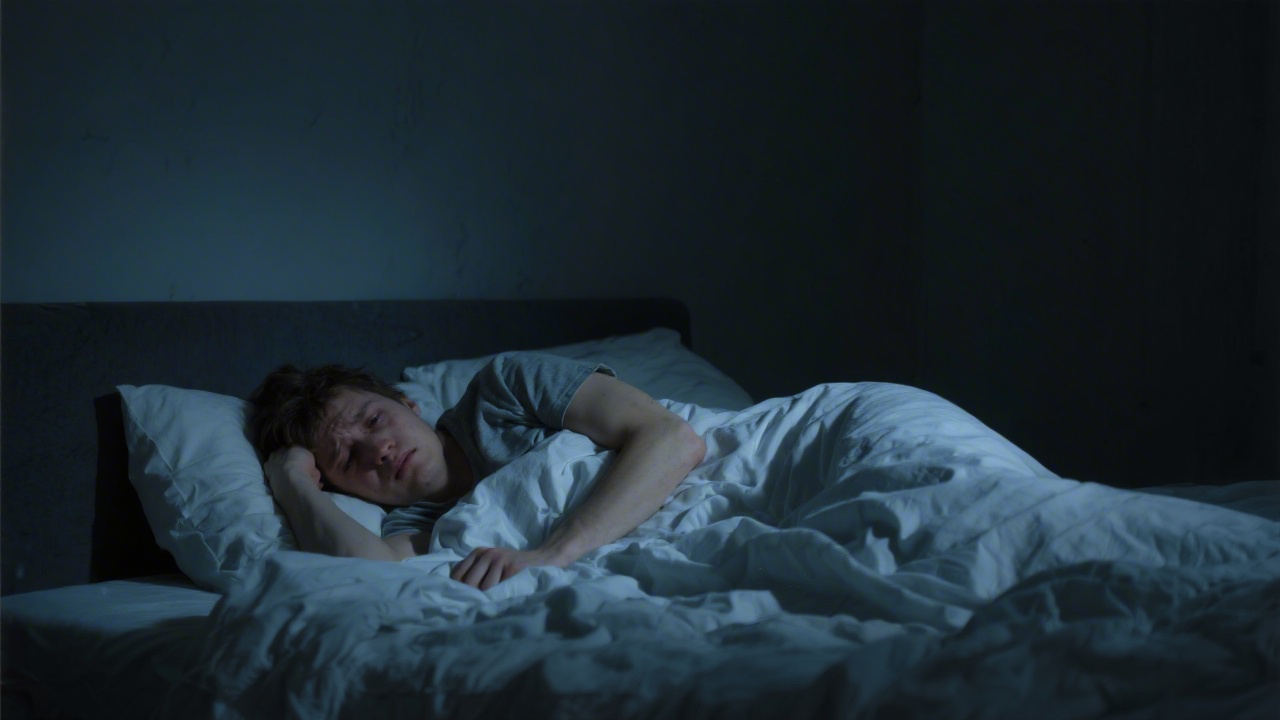
by Sleep fragmentation — the interruption of sleep by repeated awakenings or arousals — produces cognitive and physiological harm disproportionate to the total time lost. A person who sleeps 7 fragmented hours may function worse than someone who slept 6 consolidated hours. Understanding why, how it is measured, and what causes it is essential for any serious approach to sleep quality.
Our Top Pick for Sleep Quality
The Saatva Classic provides the consistent support and pressure relief that measurably improves sleep efficiency, reduces fragmentation, and shortens sleep latency — backed by our 120-hour testing protocol.
What Is Sleep Fragmentation?
Sleep fragmentation refers to sleep that is repeatedly interrupted by arousals, awakenings, or transitions to lighter sleep stages before completing a natural sleep cycle. A full sleep cycle — from N1 light sleep through N2, N3 deep sleep, and REM — takes approximately 90-110 minutes. Fragmentation interrupts these cycles before completion.
The fragmentation that matters most is not necessarily the kind you remember. Polysomnography consistently reveals dozens of arousals per night in poor sleepers that leave no conscious memory. These micro-arousals (lasting 3-15 seconds) are enough to disrupt sleep stage progression without registering as felt awakenings.
Why Fragmentation Is Worse Than Short Sleep
Deep Sleep Is Front-Loaded
Slow-wave sleep (N3) is heavily concentrated in the first two sleep cycles — the first 3-4 hours of the night. If you wake every 45-60 minutes during this period, you cannot complete the N3 epochs that are critical for physical restoration, memory consolidation, growth hormone release, and immune function. Six hours of consolidated sleep delivers far more N3 than 7 hours of highly fragmented sleep.
REM Sleep Is Back-Loaded
REM sleep — essential for emotional regulation, creativity, and procedural memory — is concentrated in the last third of the night. Fragmentation during the 5th and 6th hours of sleep disrupts REM preferentially. This is why early-morning awakenings are particularly harmful for emotional wellbeing, even when total sleep time appears adequate.
The Sleep Stage Completion Requirement
Each sleep stage must complete a minimum duration to achieve its restorative function. An N3 epoch that is terminated by arousal after 5 minutes provides far less restoration than a completed 20-30 minute N3 epoch. Fragmentation prevents this completion, creating a qualitative sleep deficit that does not show up in TST metrics. This is why your total sleep time can be adequate while your sleep quality is poor.
How Sleep Fragmentation Is Measured
Polysomnography (Gold Standard)
Clinical sleep studies measure fragmentation via the Arousal Index — the number of arousals per hour of sleep. Normal is fewer than 15 arousals per hour. Obstructive sleep apnea patients may have 30-60+ arousals per hour. The index captures both awakenings (conscious return to wakefulness) and micro-arousals (EEG evidence of arousal without consciousness).
Consumer Tracking
Wearables report fragmentation indirectly through awakening count and WASO (wake after sleep onset). These metrics capture only the subset of arousals involving movement or heart rate change. True arousal frequency is typically 3-5 times higher than what consumer devices report. If your device shows 2 awakenings, you likely had 8-15 actual arousals.
Diary-Based Measurement
Record your awakening count and WASO in your sleep diary. Combine with a subjective fragmentation rating: did sleep feel continuous or chopped? Cross-reference with your morning alertness and calculate your sleep efficiency to complete the picture.
Causes of Sleep Fragmentation
Sleep-Disordered Breathing
Obstructive sleep apnea (OSA) is the most common medical cause of severe fragmentation. Each apneic event (cessation of breathing) triggers a micro-arousal to restore airway tone. Moderate-to-severe OSA (AHI 15-30+) can produce 30-60 arousals per hour — complete destruction of sleep architecture. OSA is significantly underdiagnosed, particularly in women and non-obese individuals.
Periodic Limb Movement Disorder
Repetitive limb movements during sleep (typically the legs) produce arousals without the sleeper's awareness. PLMD affects 4-11% of adults and is more common with age. It is distinguishable from restless leg syndrome (which occurs during wakefulness) and typically requires polysomnography to diagnose accurately.
Environmental Factors
Noise, light, and temperature fluctuations are major drivers of fragmentation in otherwise healthy sleepers. Traffic noise at 45-55 dB produces measurable arousal responses in sleep studies. Even noise levels below conscious awareness (35-40 dB) can trigger arousals, particularly during lighter sleep stages.
Mattress-Related Fragmentation
Pressure points from an unsupportive or worn mattress generate positional arousals — your central nervous system detects tissue hypoxia (oxygen reduction in compressed areas) and triggers a position change. These arousals are typically sub-conscious but measurable. A mattress that conforms to body contours and distributes pressure evenly is clinically associated with reduced arousal frequency and improved sleep continuity.
Alcohol
Alcohol fragments sleep through its metabolite acetaldehyde, which has stimulant properties as it is produced in the second half of the night. Alcohol reliably suppresses REM sleep in the first sleep cycle and then produces REM rebound fragmentation in the second half of the night. Each drink consumed within 4 hours of sleep measurably increases fragmentation.
Interventions for Sleep Fragmentation
The appropriate intervention depends on the cause. For sleep-disordered breathing, evaluation for CPAP therapy is the priority. For environmental fragmentation, acoustic treatment (white noise, earplugs) and blackout curtains provide rapid improvement. For alcohol-related fragmentation, the intervention is eliminating alcohol within 4 hours of bedtime. For mattress-related fragmentation, evaluation of sleep surface support and pressure relief addresses the root cause. For idiopathic fragmentation, CBT-I combined with HRV monitoring can identify recovery patterns.
Our Top Pick for Sleep Quality
The Saatva Classic provides the consistent support and pressure relief that measurably improves sleep efficiency, reduces fragmentation, and shortens sleep latency — backed by our 120-hour testing protocol.
Frequently Asked Questions
How many awakenings per night is normal?
Most healthy adults have 0-2 remembered awakenings per night. Polysomnography typically reveals 10-20 brief arousals per night that are normal and non-pathological. It is the frequency and duration of arousals, and whether they prevent sleep stage completion, that determines whether fragmentation is clinically significant.
Is waking at 3 AM a sign of sleep fragmentation?
A single early-morning awakening is common and not always pathological — it may reflect the natural transition between sleep cycles. Consistently waking at the same time (particularly 3-4 AM) and being unable to return to sleep may indicate early morning awakening insomnia, REM sleep architecture disruption, or alcohol-related REM rebound. Track it in your sleep diary to identify patterns.
Can fragmented sleep cause anxiety?
Yes — the relationship is bidirectional. Anxiety fragments sleep; fragmented sleep elevates anxiety the following day. REM sleep disruption is particularly linked to emotional dysregulation, as REM sleep plays a central role in emotional memory processing. Treating either the anxiety or the sleep fragmentation typically improves both.
Does aging increase sleep fragmentation?
Yes. With age, slow-wave sleep decreases, sleep becomes lighter overall, and the arousal threshold decreases — meaning environmental stimuli that would not wake a younger person cause arousals. Age-related fragmentation is normal up to a point; sudden significant worsening at any age warrants evaluation for sleep-disordered breathing or PLMD.
What is the difference between fragmentation and insomnia?
Insomnia is defined by difficulty initiating or maintaining sleep, causing daytime distress. Sleep fragmentation is a characteristic of that experience — the mechanism by which maintenance insomnia produces its effects. You can have fragmentation without insomnia (if you do not find it distressing or impairing) and insomnia without memorable fragmentation (sleep state misperception).