
 by
by 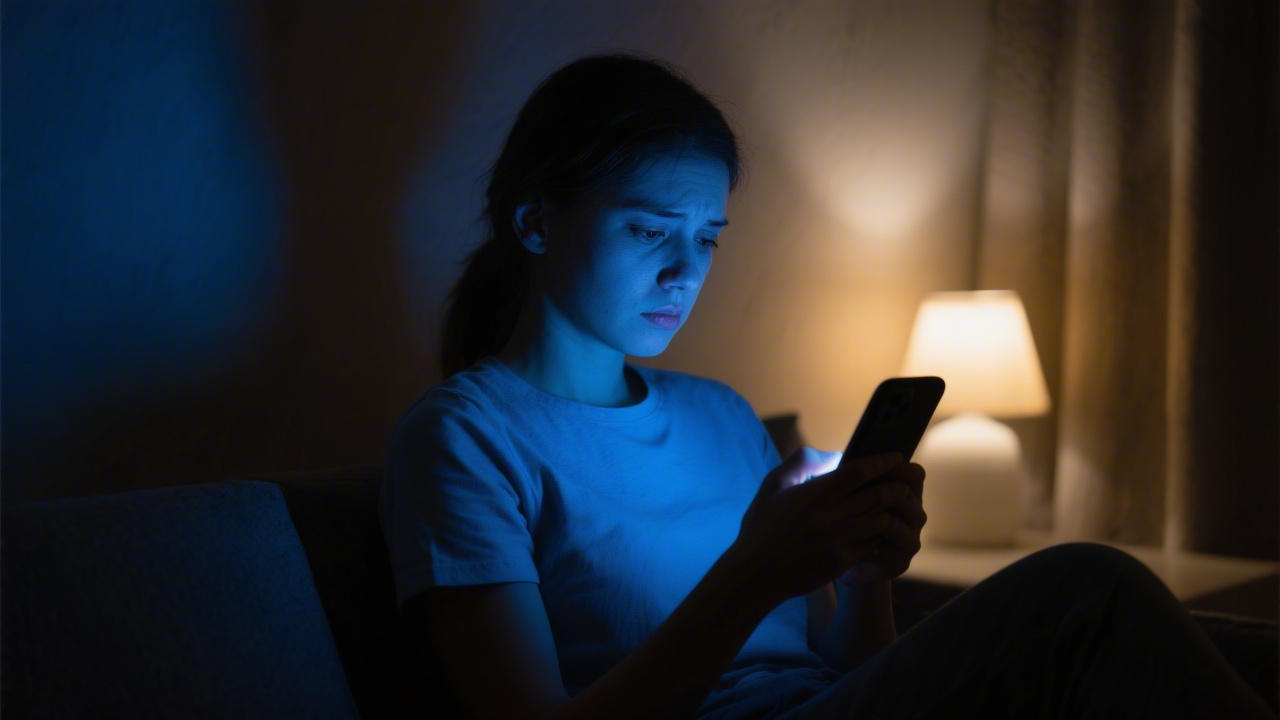
Our Top Mattress Pick for Better Sleep
The Saatva Classic offers three comfort levels, dual coil support, and a breathable organic cotton cover — designed for all sleep positions and built to last.
You're exhausted. You have to wake up early. You know you should go to bed. But instead, you stay up for another hour — scrolling, watching, just existing in the quiet of late night. This is sleep procrastination, and it's more widespread than most people realize.
What Is Sleep Procrastination?
Sleep procrastination is the voluntary delay of bedtime despite having no external obligation keeping you awake. A 2014 study by Floor Kroese et al. in Frontiers in Psychology defined it as failing to go to bed at an intended time without external circumstances preventing it.
It's not insomnia — you can fall asleep once you get there. The problem is simply not going. And the consequences compound: chronic short sleep, daytime fatigue, reduced cognitive performance, and mood dysregulation.
The Psychology Behind It
Why does someone who's visibly tired refuse to sleep? Research points to several overlapping mechanisms:
1. Self-Regulation Failure
Sleep procrastination follows the same psychological pattern as all procrastination: short-term mood regulation wins over long-term benefit. Staying up feels good right now. Going to sleep means tomorrow arrives sooner.
2. Low Daytime Autonomy
The concept of revenge bedtime procrastination — popular on social media but backed by real behavioral research — describes how people with low control over their daytime hours reclaim personal time at night. The less free time you have during the day, the more likely you are to delay bedtime as a form of psychological compensation. See our full breakdown: revenge bedtime procrastination.
3. Present Bias
Humans systematically overvalue immediate reward over future benefit. The pleasure of one more episode is immediate and certain. Better tomorrow functioning is abstract and distant. Present bias predicts that you'll sacrifice sleep for now-rewards even when you know it's a bad trade.
4. Depletion of Executive Function
The prefrontal cortex — responsible for self-control and future planning — becomes less effective as the day progresses and cognitive load accumulates. By 11 PM, your brain's regulatory capacity is weakened, making it harder to override the impulse to stay up.
Who Is Most Vulnerable?
Research consistently identifies several risk factors:
- High job demands with low job control — the classic setup for revenge procrastination
- Evening chronotype — natural night owls fight their biology by staying up even later
- High smartphone use — devices that provide infinite, variable-reward content are purpose-built to override sleep intentions
- Depression and anxiety — nighttime can feel safer for those who dread what tomorrow brings. This intersects with sleeping with an anxiety disorder.
Consequences of Chronic Sleep Procrastination
Sleep loss is not trivially recovered. Regularly cutting sleep by even 90 minutes accumulates significant sleep debt. Effects include:
- Impaired memory consolidation
- Reduced emotional regulation
- Increased food cravings (ghrelin rises with sleep loss)
- Higher cortisol baseline
- Reduced immune function
Weekend "catch-up" sleep partially compensates but does not eliminate cognitive deficits from the weekdays.
How to Stop Procrastinating Sleep
Implementation Intentions
Research by Peter Gollwitzer shows that specific "when-then" plans dramatically improve follow-through. Instead of "I'll go to bed earlier," use: "When the clock hits 10:30, I will put my phone in the other room and get into bed." The specificity reduces the need for in-the-moment willpower.
Wind-Down Rituals
Create a 20-30 minute ritual that signals your brain that the day is ending. The content matters less than the consistency. A set sequence — dim lights, stretch, brief reading — trains your nervous system to shift toward sleep mode.
Separate the Reward from the Timing
If you're staying up to get "your time," the solution isn't willpower — it's engineering more protected personal time during the day. The behavior is rational given the constraint. Fix the constraint.
Reduce Phone Friction at Night
Keep your phone charged outside the bedroom. Use app timers. Switch to grayscale mode after 9 PM. These aren't hacks — they're structural changes that reduce the moment-to-moment battle between your tired self and a device optimized for engagement.
Address the Sleep Environment
Sometimes sleep procrastination is partially driven by an uncomfortable or overstimulating bedroom. A mattress that causes discomfort makes "staying up a bit longer" feel more attractive than bed. Poor sleep environment factors compound procrastination.
Our Top Mattress Pick for Better Sleep
The Saatva Classic offers three comfort levels, dual coil support, and a breathable organic cotton cover — designed for all sleep positions and built to last.
Frequently Asked Questions
Is sleep procrastination the same as insomnia?
No. Insomnia involves difficulty falling or staying asleep even when you try. Sleep procrastination is the deliberate delay of going to bed. Someone with sleep procrastination can fall asleep normally once they lie down — they just keep not doing it.
Why do I feel more awake when I should be sleepy?
This is partly circadian — many people experience a second wind in the evening driven by a natural cortisol and temperature rhythm. Screen light also suppresses melatonin onset. And psychologically, nighttime removes daytime obligations, creating a perceived freedom that activates wakefulness.
Can sleep procrastination lead to insomnia?
Yes. Chronic sleep procrastination that leads to irregular sleep timing can dysregulate the circadian rhythm. Over time, it can create conditioned arousal — where the bed becomes associated with wakefulness and anxiety rather than sleep. This is the core mechanism of psychophysiological insomnia.
Does weekend sleep make up for weekday procrastination?
Partially. Weekend recovery sleep can reduce subjective sleepiness and some physiological markers of sleep debt. However, research shows it doesn't fully restore cognitive performance lost during the week. And the irregular schedule itself disrupts circadian rhythm — known as social jetlag.
Is it ever okay to stay up late?
Yes. Occasional late nights with intentional purpose — a meaningful event, creative work, genuine decompression — are not harmful. The problem is when staying up late becomes the default, driven by avoidance or passive scrolling rather than active choice.
Voted best luxury innerspring mattress with exceptional lumbar support and white-glove delivery.
Check Price & Availability FAQPage", "mainEntity": [ {"@type": "Question", "name": "Is sleep procrastination the same as insomnia?", "acceptedAnswer": {"@type": "Answer", "text": "No. Insomnia involves difficulty falling or staying asleep. Sleep procrastination is the deliberate delay of going to bed despite being able to sleep once you lie down."}}, {"@type": "Question", "name": "Why do I feel more awake when I should be sleepy?", "acceptedAnswer": {"@type": "Answer", "text": "A second wind from evening cortisol rhythms, melatonin suppression from screen light, and the psychological freedom of nighttime all contribute to feeling awake at bedtime."}}, {"@type": "Question", "name": "Can sleep procrastination lead to insomnia?", "acceptedAnswer": {"@type": "Answer", "text": "Yes. Chronic irregular sleep timing can create conditioned arousal, where the bed becomes associated with wakefulness — the core mechanism of psychophysiological insomnia."}}, {"@type": "Question", "name": "Does weekend sleep make up for weekday procrastination?", "acceptedAnswer": {"@type": "Answer", "text": "Partially. Recovery sleep reduces sleepiness but does not fully restore cognitive performance, and the irregular schedule creates social jetlag."}}, {"@type": "Question", "name": "Is it ever okay to stay up late?", "acceptedAnswer": {"@type": "Answer", "text": "Yes. Occasional intentional late nights are not harmful. The problem is when late nights become the default driven by avoidance or passive scrolling."}} ] }