
 by
by Our Top Mattress Pick
The Saatva leads our testing on pressure relief, spinal alignment, and long-term durability — ideal for improving sleep quality on a supportive surface.
Affiliate disclosure: We earn a commission if you purchase via our links, at no extra cost to you.
Millions of people check a sleep score every morning. Far fewer understand what it is actually measuring — or what its limitations mean for decisions made based on it.
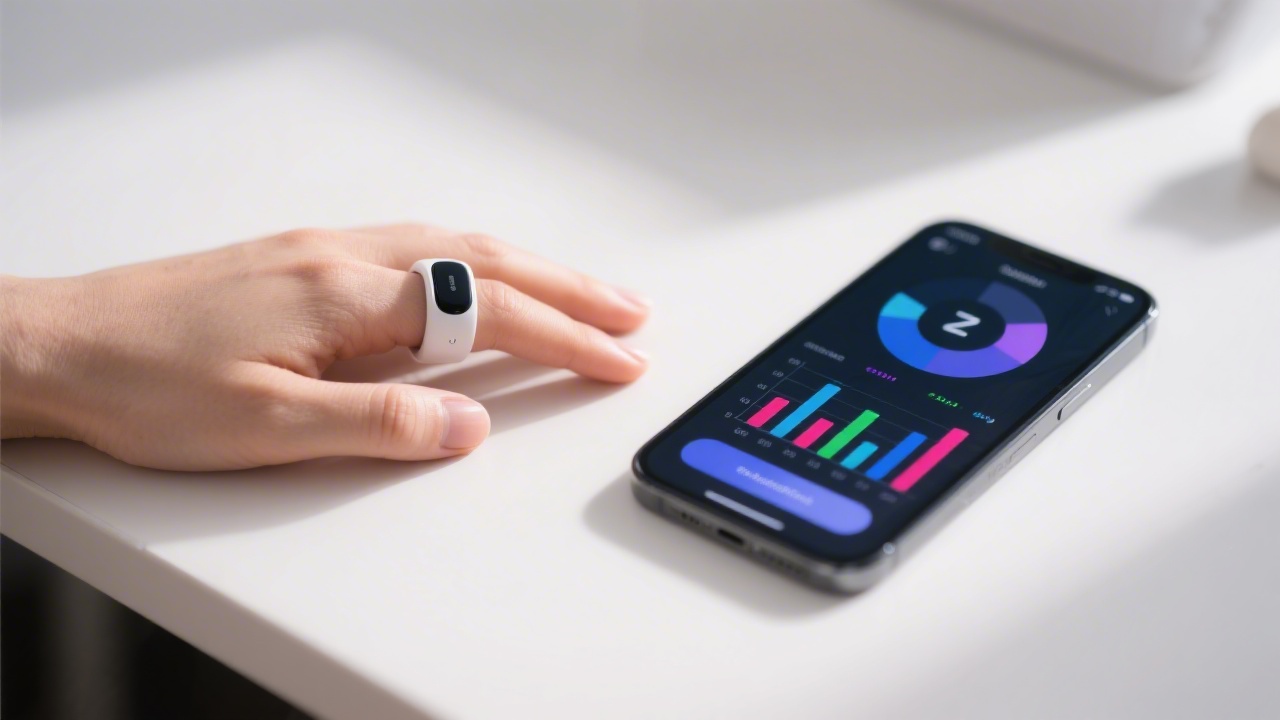
This guide breaks down how Oura, Fitbit, Apple Watch, and Garmin calculate their scores, what consumer wearables can and cannot measure, and how to use your score constructively.
What Consumer Wearables Can Actually Measure
No consumer wearable measures brain activity. Clinical sleep staging requires polysomnography — electrodes measuring brain waves, eye movement, and muscle activity. Wearables use proxy signals:
- Accelerometer: Detects movement. No movement suggests sleep; movement suggests wakefulness or arousal.
- Photoplethysmography (PPG): Measures heart rate and heart rate variability from the skin surface.
- Skin temperature: Used by Oura and some Garmin models to detect circadian rhythm patterns.
- SpO2: Blood oxygen saturation, useful for detecting potential sleep apnea events.
Platform-by-Platform Breakdown
Oura Ring
Oura uses PPG, accelerometer, skin temperature, and HRV. The finger location provides superior PPG signal quality compared to wrist-based devices. The overall Sleep Score (0 to 100) combines readiness factors: total sleep, efficiency, restfulness, REM sleep, deep sleep, and sleep timing relative to the user's optimal window. Stage detection accuracy is approximately 80 to 85% for wake versus sleep; lower for individual stage classification.
Fitbit
Fitbit's Sleep Score (0 to 100) combines sleep duration, sleep quality including awakenings and time in each stage, and restoration via estimated HRV and resting heart rate. Fitbit classifies four stages: Awake, Light, Deep, and REM. Deep sleep detection has known limitations — Fitbit may undercount slow-wave sleep.
Apple Watch
Apple Watch added sleep stage tracking in watchOS 9. It classifies Awake, REM, Core (light), and Deep sleep using accelerometer and heart rate data. Apple shows percentage of time in each stage rather than a single composite score. Overall accuracy is comparable to other wrist-based devices.
Garmin
Garmin's Sleep Score incorporates sleep duration, stress, respiration, and SpO2 deviation. The inclusion of SpO2 tracking throughout the night makes Garmin useful for detecting potential respiratory events that other platforms may miss.
How to Interpret Your Sleep Score Constructively
Use trends, not individual scores
A single night's score has noise. A 7-day average is meaningful. Look at what behavioral changes correlate with score improvements over weeks, not what happened last night.
Correlate scores with subjective experience
Keep a sleep journal alongside your wearable data. When your score is high but you feel unrested, the device is measuring one thing and your experience is measuring another. Both are valid data — they are measuring different things.
Watch for orthosomnia
If checking your score has become stressful, try a two-week device holiday and use a paper sleep journal instead. The goal is better sleep, not a better score.
Take SpO2 data seriously
Unlike sleep stage data, SpO2 readings that consistently show drops below 90% at night warrant medical follow-up. This is potential sleep apnea territory. A sleep audit and physician consultation are indicated.
Related: Sleep efficiency explained | Evidence-based sleep improvement methods
Our Top Mattress Pick
The Saatva leads our testing on pressure relief, spinal alignment, and long-term durability — ideal for improving sleep quality on a supportive surface.
Affiliate disclosure: We earn a commission if you purchase via our links, at no extra cost to you.
Frequently Asked Questions
How accurate are wearable sleep trackers?
Consumer wearables achieve roughly 70 to 80% accuracy for sleep versus wake detection compared to clinical polysomnography. Sleep stage accuracy is significantly lower, approximately 50 to 65% for classifying light, deep, and REM sleep. They are most useful for tracking trends over time rather than precise nightly measurements.
What is a good sleep score?
Oura Ring considers 85 or above a good score. Fitbit's Sleep Score of 80 or above indicates good sleep. Apple Watch uses a different scale. A good score means the platform's algorithm found favorable patterns in the data it measures — it does not perfectly mirror clinical sleep quality.
Why does my sleep score vary so much night to night?
Algorithm sensitivity picks up genuine night-to-night variability in sleep architecture, but also measurement noise. Alcohol, late exercise, illness, and stress all produce measurable score drops. Scores are more meaningful as weekly averages than as individual-night verdicts.
Can I trust my wearable's REM and deep sleep numbers?
With moderate caution. Commercial wearables classify sleep stages using movement and heart rate variability, which are proxy signals. REM detection accuracy is reasonably good at around 70%. Slow-wave deep sleep classification is less reliable. Trends matter more than absolute values.
Should I obsess over my sleep score?
No. Orthosomnia — performance anxiety about sleep metrics — is a documented phenomenon that can worsen sleep quality. Use your sleep score as a trend indicator, not a nightly grade. Focus on how you feel, and use a sleep journal to capture the full picture.