
 by
by No animal superpowers required — just the right mattress. The Saatva Classic gives you the only sleep superpower you need: consistently deep, restorative bilateral sleep. See current pricing →
Nature has had 600 million years to optimize sleep. The results are extraordinary. Bears sleep for months without losing muscle. Dolphins sleep with half a brain while swimming. Certain fish species appear to be the first vertebrates found to lack the brain-based sleep signatures seen in all other vertebrates studied. And the platypus — one of evolution's most eccentric creations — may spend 8 hours per day in REM sleep, more than any other mammal.
Here are 8 species with the most remarkable sleep abilities on Earth.
1. Dolphins: The Half-Brain Sleepers
Bottlenose dolphins can sleep one hemisphere at a time — a trick called unihemispheric slow-wave sleep. While one hemisphere rests in deep slow-wave sleep, the other maintains waking alertness, controlling swimming, breathing, and predator vigilance. They alternate hemispheres every 1-2 hours and can maintain this for up to 8 hours continuously. No human pharmaceutical or technique approaches this level of selective neural rest. Full guide to marine mammal sleep →
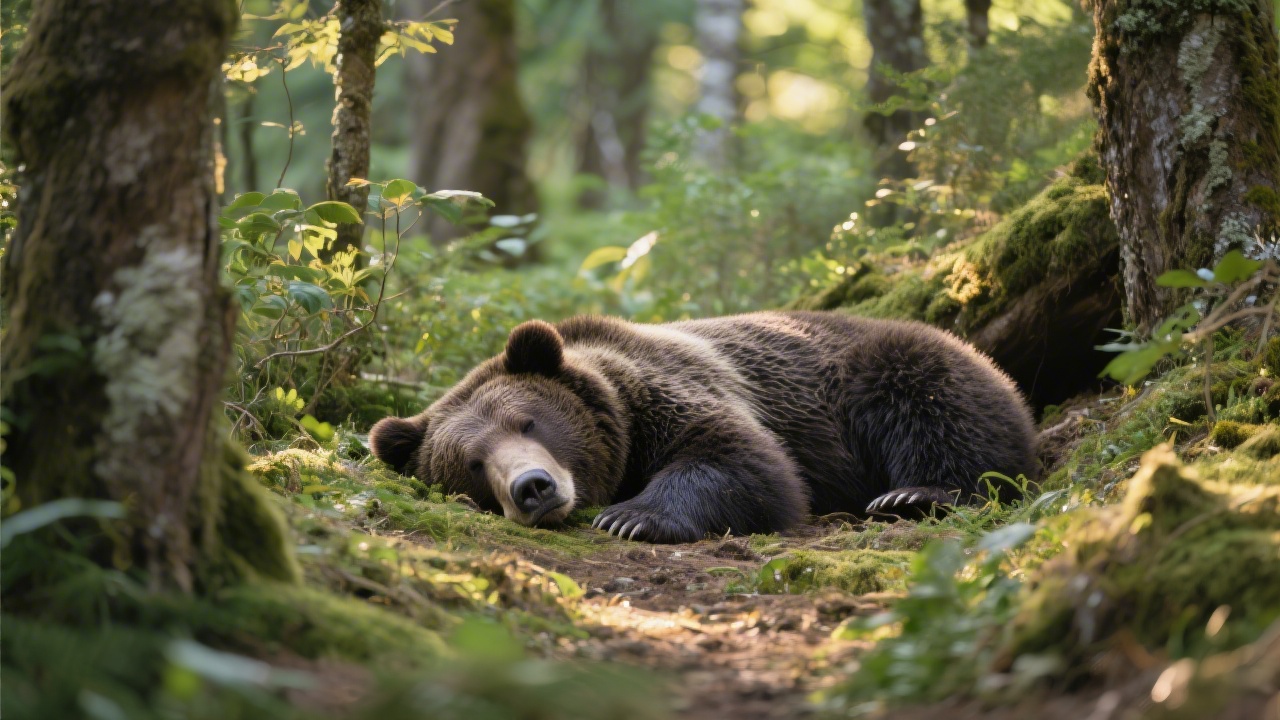
2. Bears: Masters of Torpor
Black bears and grizzlies enter torpor for 5-7 months without eating, drinking, urinating, or defecating. Body temperature drops only slightly (unlike true hibernators like ground squirrels, whose temperature approaches freezing). The extraordinary superpower: bears emerge in spring with minimal muscle atrophy and bone density loss despite months of complete inactivity.
The mechanism involves a serum factor researchers have termed "bear obligatory sleep factor" that suppresses muscle catabolism during torpor, combined with periodic micro-arousals during which brief muscle contractions maintain structural integrity. NASA is actively studying this for long-duration spaceflight muscle preservation.
3. Migrating Birds: The Microsleepers
Common swifts, alpine swifts, and frigatebirds sleep while airborne for periods ranging from days to months. EEG data from frigatebirds confirm both unihemispheric and brief bilateral sleep episodes during soaring flight. During active migration, some species reduce sleep to 20-30% of normal levels while maintaining cognitive function — a state called "adaptive sleeplessness" with no human equivalent. Full guide to migratory bird sleep →
4. Platypus: The REM Champion
The platypus may spend up to 8 hours per day in REM sleep — more than any mammal studied. This is particularly puzzling because platypuses are monotremes (egg-laying mammals), among the most evolutionarily ancient mammal lineages. Since REM was hypothesized to have evolved for complex memory processing in advanced mammals, the platypus's extreme REM time complicates that theory. It may suggest REM has more primitive biological functions than previously understood.
5. Sea Otters: The Social Sleepers
Sea otters sleep floating on their backs on the ocean surface, often in groups of dozens called "rafts." They hold hands with neighbors to avoid drifting apart and to maintain mother-pup contact. In kelp forest habitat, they wrap themselves in kelp as natural anchors. No other mammal routinely sleeps on a liquid surface in social groups — and few species show such elaborate sleep-maintenance social behaviors. More animal sleep behaviors →
6. Sperm Whales: The Vertical Nappers
Sperm whales sleep vertically, noses at the surface, in tight pods — the only whale species confirmed to sleep in this rigid posture. They achieve brief bilateral sleep (unlike most cetaceans that use USWS) by using their massive oxygen storage capacity to complete sleep episodes during apnea. A pod of sleeping sperm whales was discovered in 2008 by a research vessel that accidentally motored through the group without waking them — confirming sleep depth comparable to Stage 3 human sleep.
7. Elephant Shrews: The Sub-Hour Sleepers
Elephant shrews (sengis) have one of the highest metabolic rates of any mammal — which means they burn through adenosine (the sleep pressure chemical) rapidly, requiring frequent sleep. They take numerous 1-3 minute sleep episodes throughout the day and night rather than a single consolidated block. Their sleep is fragmented by design: like prey animals everywhere, they cannot afford to be unconscious for long periods in an exposed environment.
8. Bullfrog: The Disputed Case
For decades, the American bullfrog was cited in textbooks as evidence that some animals do not sleep. A 1960s study found no cortical slow-wave patterns during apparent rest states. The claim: bullfrogs are always at a consistent level of alertness and never enter true sleep.
More recent analysis has challenged this interpretation. The electrode placement in the original study was optimized for mammalian cortical recording, which may not adequately capture amphibian brain activity patterns. Most contemporary sleep researchers believe bullfrogs likely have some form of restorative rest. The "never sleeps" claim is now considered scientifically contested — a reminder that absence of evidence is not evidence of absence when the evidence collection method was designed for a different species.
The Common Thread
Every species on this list has evolved a remarkable sleep adaptation in response to a specific environmental pressure: predation risk, breathing requirements, migration demands, or metabolic constraints. Each adaptation preserves the biological core of sleep — neural restoration, metabolic clearance, memory consolidation — while solving a specific survival constraint. What these animals teach us about human sleep →
Frequently Asked Questions
Do bullfrogs really never sleep?
This is disputed. The original 1960s claim was based on methodology optimized for mammalian brains. Most current sleep scientists believe bullfrogs have some form of restorative rest. The claim is now considered scientifically contested.
How do bears survive months without muscle atrophy?
Bears produce factors that suppress muscle catabolism during torpor and perform periodic micro-arousals with brief muscle contractions. NASA is studying this mechanism for space travel applications.
What is the purpose of REM sleep?
REM sleep is associated with emotional memory processing, procedural memory, creative problem-solving, and emotional regulation. The platypus's extreme REM time suggests REM may also have more primitive biological functions.
Can animals predict REM sleep?
Platypuses show up to 8 hours of REM daily — more than any other mammal — despite being among the most evolutionarily primitive mammals. This complicates REM evolution theories.
Are there animals that never sleep?
No verified examples exist. All studied animals show some sleep or sleep-like rest. The bullfrog claim is disputed. The hypothesis that any complex animal can completely forgo sleep has not been confirmed.
Your Own Sleep Superpower: 8 Hours of Real Rest
Bears survive months of torpor. Dolphins sleep with half a brain. The human superpower is different: our bilateral deep sleep drives the most complex cognition on Earth. Protect it.
Key Takeaways
Animal Sleep Superpowers is a topic that depends heavily on individual needs and preferences. The most important thing is to consider your specific situation — your body type, sleep position, and personal comfort preferences — before making any decisions. When in doubt, take advantage of trial periods to test before committing.