
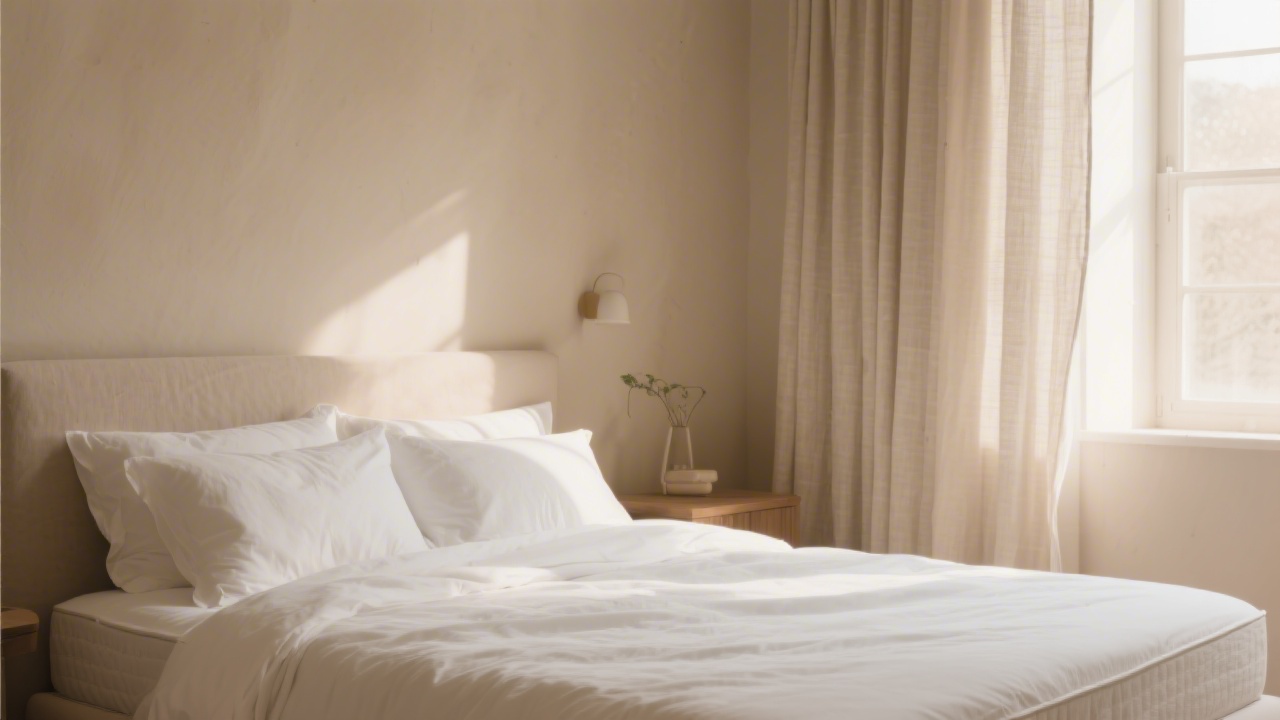
 by
by Sleep is not a passive state. It is an active, complex biological process governing memory consolidation, immune function, hormonal regulation, and emotional resilience. Yet most people treat it as whatever time is left after everything else. This guide changes that.
The Sleep Wellness Guide 2026 is the most comprehensive reference we have built — covering every domain that determines sleep quality: bedroom environment, circadian scheduling, daily habits, psychological patterns, and equipment. Whether you are troubleshooting a specific problem or building a sustainable sleep practice from scratch, every answer is here.
[affiliatly_link pubref="sleep-wellness-hub" id="saatva-classic"]→ Our Top Recommendation: Saatva Classic Mattress — the single most impactful upgrade for anyone serious about sleep quality.[/affiliatly_link]
Why Sleep Wellness Requires a Systems Approach
Single-variable interventions rarely work because sleep is governed by multiple overlapping systems: the circadian clock (24-hour timing), sleep pressure (adenosine accumulation), the autonomic nervous system (arousal regulation), and sleep architecture itself (NREM/REM cycling). This guide addresses all five domains:
- Environment — light, temperature, sound, air quality, bedding
- Schedule — consistency, circadian alignment, nap strategy
- Habits — pre-sleep routines, substance use, exercise timing
- Psychology — stress, cognitive arousal, sleep anxiety, CBT-I
- Equipment — mattress, pillow, sleep tracking, environment controls
Domain 1: Sleep Environment
Temperature: The Most Underrated Variable
Core body temperature must drop 1-2°F to initiate sleep. A room at 65-68°F (18-20°C) supports this by facilitating heat dissipation through the skin. Sleeping hot — common on memory foam mattresses — is one of the leading causes of frequent waking and reduced deep sleep. Breathable bedding and an innerspring-hybrid mattress outperform solid foam on thermal neutrality by a significant margin.
Light: Your Circadian Controller
Light is the primary zeitgeber — the external cue that synchronizes your internal clock. Morning bright light (>1,000 lux within 30 minutes of waking) anchors your rhythm. Evening blue-spectrum light from screens delays melatonin onset by 1-3 hours. The bedroom itself should be near-total darkness — even 5 lux from a hallway gap suppresses melatonin. Blackout curtains are the highest-ROI environmental purchase after a quality mattress.
Sound Control
The sleeping brain continues evaluating sounds for threat relevance. Consistent background noise (white, brown, or pink) masks disruptive sounds by narrowing the contrast between silence and sudden noise. This reduces micro-arousals without requiring full silence — which can itself increase anxiety in some people.
Domain 2: Sleep Schedule
Consistency Over Duration
Sleep regularity — measured as standard deviation of sleep timing across days — predicts sleep quality as well as total duration. Waking at the same time every day (including weekends) is more impactful than any supplement or protocol. This single habit builds reliable sleep pressure and synchronizes circadian phase. It is the foundation everything else builds on.
Chronotype Alignment
Approximately 25% of people are morning chronotypes, 25% evening, and 50% intermediate. Fighting your chronotype — sleeping and waking outside your biological window — reduces sleep quality even if total duration is maintained. Where schedules allow, aligning sleep timing with natural chronotype produces measurable improvements in alertness, mood, and metabolic function.
Strategic Napping
A 10-20 minute nap taken 6-8 hours after waking reduces afternoon cognitive decline without meaningfully reducing evening sleep pressure. Avoid napping within 5 hours of target bedtime. Naps longer than 30 minutes produce sleep inertia and require 10 minutes of recovery activity afterward.
Domain 3: Sleep Habits
Pre-Sleep Routine
The hour before sleep is a decompression period. A consistent wind-down routine acts as a conditioned cue — the brain begins shifting toward sleep when routine elements begin. Effective routines include 3-5 specific, repeatable behaviors: reducing light, lowering thermostat, light reading, and a fixed sleep time. The consistency of the routine matters more than any individual element.
Caffeine Timing
Caffeine's half-life is approximately 5-6 hours. A quarter-life rule is more practical: 25% of caffeine consumed at 2pm is still circulating at midnight. For people sensitive to caffeine's sleep effects, cutting off consumption by noon is a conservative starting point. Shifting the cutoff earlier is often more effective than reducing total intake.
Alcohol and Exercise
Alcohol reduces sleep onset latency while fragmenting sleep architecture, suppressing REM, and triggering rebound wakefulness. Even 1-2 drinks measurably reduces sleep quality. Regular aerobic exercise improves sleep across all metrics; vigorous exercise within 2 hours of bedtime can delay onset in sensitive individuals. Resistance training specifically improves slow-wave sleep.
Domain 4: Sleep Psychology
The most common cause of chronic insomnia is not stress itself but conditioned arousal — the brain associating the bedroom with wakefulness after enough sleepless nights. Stimulus control (using bed only for sleep) and sleep restriction therapy break this association. CBT-I is the gold-standard treatment, with long-term outcomes superior to sleep medication. Digital programs like Sleepio and Somryst deliver comparable results to in-person therapy.
Domain 5: Sleep Equipment
No sleep optimization strategy compensates for a mattress that causes pain, traps heat, or fails to support spinal alignment. Key criteria: zoned support (firmer under hips, softer under shoulders), thermal neutrality, and durability over a 10-15 year lifespan. Pillow loft should maintain neutral cervical alignment relative to your sleep position — side sleepers need more height, back sleepers need moderate height, stomach sleepers need minimal loft.
[affiliatly_link pubref="sleep-wellness-hub" id="saatva-classic"]→ View Saatva Classic — Best Overall Mattress for Sleep Quality[/affiliatly_link]
The Sequential Improvement Protocol
- Week 1: Fix the environment (temperature, light, sound)
- Week 2: Lock the schedule (consistent wake time, circadian alignment)
- Week 3: Audit habits (caffeine cutoff, alcohol, wind-down routine)
- Week 4: Address psychology (stimulus control, cognitive restructuring)
- Month 2: Optimize equipment (mattress, pillow, tracking tools)
This sequence mirrors our 30-Day Sleep Improvement Plan. For a structured starting point, use the Sleep Quality Assessment to identify your highest-priority domain. The Sleep Troubleshooting Guide addresses 12 specific problems with decision-tree diagnostics.
Frequently Asked Questions
Most people notice measurable improvement within 2-4 weeks of consistent environmental and schedule changes. Psychological patterns (conditioned arousal, sleep anxiety) take longer — typically 6-8 weeks with CBT-I techniques. Equipment changes like a new mattress produce immediate results from night one.
Consistent wake time produces the most reliable improvement across populations. It builds sleep pressure and anchors circadian rhythm. After that, the answer depends on your specific problem — which is why a sleep quality assessment before making changes is valuable.
Low-dose melatonin (0.5-1mg) is effective for circadian phase shifting but does not improve sleep quality in people whose rhythm is already well-anchored. Magnesium glycinate has modest evidence for quality improvement. Most other supplements have weak or mixed evidence.
Consult a physician if you snore loudly or stop breathing during sleep, if insomnia persists beyond 3 months despite behavioral changes, if you have excessive daytime sleepiness regardless of sleep opportunity, or if you experience restless legs or periodic limb movements.
Yes. A medium-firm mattress with zoned support consistently outperforms single-zone designs in spinal alignment, pressure relief, and self-reported sleep quality. Neither the firmest nor softest option is optimal — the relationship between firmness and quality is an inverted U-curve.
Our Top Mattress Pick
The Saatva Classic consistently ranks #1 for comfort, support, and long-term durability.
View Saatva Classic Pricing & Details