
 by
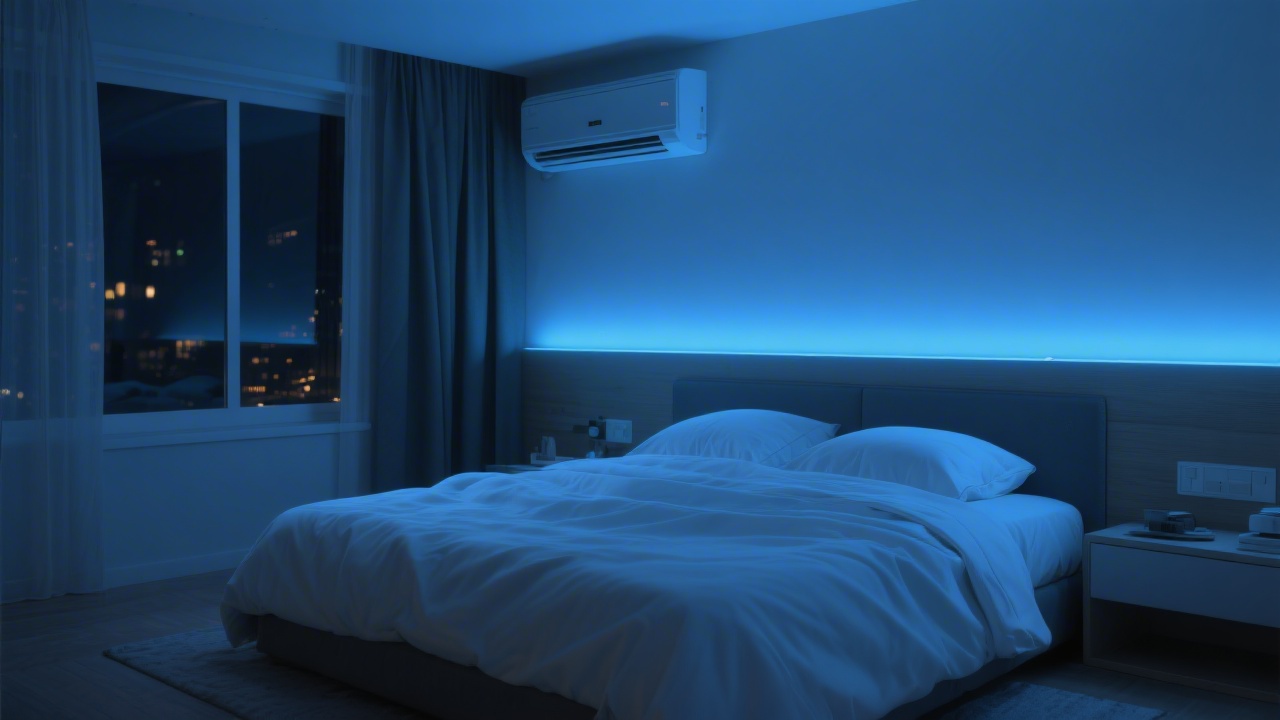
by The research on optimal sleep temperature is unusually consistent: 65–68°F is the range where sleep onset is fastest, deep sleep duration is longest, and nighttime waking is least frequent. Air conditioning is the most reliable way to achieve and maintain this range — and how you use it matters as much as whether you use it.
The Optimal AC Setting: 65–68°F
The body triggers sleep onset through a process of core temperature reduction — a drop of approximately 1–2°F. A bedroom at 65–68°F creates the ambient conditions that allow this to happen efficiently. Research from institutions including Harvard Medical School’s Division of Sleep Medicine identifies this range consistently.
Most people’s instinct is to set AC a few degrees warmer to save energy. The cost: slower sleep onset (typically 10–20 additional minutes to fall asleep above 70°F) and more fragmented sleep architecture through the night.
Central AC vs. Window Units vs. Portable AC
Central AC
Most precise temperature control. Can maintain a consistent room temperature through the night. The key setting: program it to reach target temperature 30–60 minutes before your scheduled sleep time.
Window Units
Effective for single-room cooling. Set to “cool” mode (not “fan only”), targeting 66–67°F. Sleep mode on modern units reduces noise and cycling frequency through the night — useful for light sleepers.
Portable AC
Less efficient than window units due to exhaust limitations, but functional. Place the unit on the wall opposite your bed rather than adjacent — you want ambient cooling, not direct airflow.
Humidity: The Hidden AC Variable
AC units dehumidify as they cool — which is largely beneficial for sleep. High relative humidity (above 60%) impairs sweat evaporation, one of the body’s primary heat-dissipation mechanisms. Air-conditioned rooms typically maintain 40–50% relative humidity, which is the sweet spot for comfortable sleep.
However, in very dry climates or when running AC heavily, humidity can drop below 30%, causing nasal dryness and throat irritation that disrupts sleep. A small room humidifier running simultaneously can balance this.
How AC Affects Different Mattress Types
Memory Foam
Cold ambient temperatures stiffen memory foam. A room maintained at 65°F may make a memory foam mattress noticeably firmer than its rated feel, particularly in the first 15–30 minutes before body heat warms the sleep surface.
Innerspring and Hybrid
Temperature-neutral. The coil support system doesn’t change physical properties with ambient temperature. An innerspring or hybrid like the Saatva Classic performs consistently across the 60–75°F range, making it a better pairing with consistently cool AC environments.
Latex
Natural latex is more temperature-stable than memory foam but still slightly affected by cold. Generally performs well in AC-cooled rooms.
AC Noise and Sleep Quality
Modern AC units typically operate at 40–60 dB, which is within the range of acceptable background noise for sleep (similar to a quiet conversation). The consistent “white noise” quality of AC airflow can actually mask disruptive environmental sounds. Cycling on/off is more problematic than consistent operation — use sleep mode or a steady fan setting where available.
Related reading: How to Sleep When It’s Hot | Why Cold Rooms Improve Sleep | Sleeping in a Humid Climate
Frequently Asked Questions
What is the best AC temperature for sleeping?
65–68°F is the research-backed optimal range. This facilitates core body temperature drop, which is the physiological trigger for sleep onset. Most people set AC too warm (72–74°F), which impairs sleep quality.
Should I sleep with AC on all night?
Yes, if maintaining 65–68°F. Programming your thermostat to maintain this temperature through the night is preferable to turning AC off and allowing the room to warm in the early morning hours, which often causes early waking.
Does sleeping with AC on cause health problems?
Well-maintained AC systems are safe. Dry air from over-cooling can cause nasal dryness — solved with a small humidifier. The sleep quality benefits of a properly cooled room substantially outweigh concerns about AC use.
Is AC or a fan better for sleep?
In warm climates (above 75°F ambient), AC is necessary — a fan alone cannot cool a room, only circulate warm air. In mild climates where ambient temperature drops to 65–68°F overnight, a fan with open windows is sufficient and quieter.
Why does my AC make the room too dry for sleeping?
AC removes moisture as it cools. In hot, humid climates this is beneficial. In climates where ambient humidity is already moderate or low, heavy AC use can drop relative humidity below 30%, causing dryness. A bedroom humidifier running on a low setting solves this.
Voted best luxury innerspring mattress with exceptional lumbar support and white-glove delivery.
Check Price & Availability FAQPage", "mainEntity": [ { "@type": "Question", "name": "What is the best AC temperature for sleeping?", "acceptedAnswer": { "@type": "Answer", "text": "65-68°F is the research-backed optimal range. It facilitates core body temperature drop, which triggers sleep onset. Most people set AC too warm at 72-74°F, which impairs sleep quality." } }, { "@type": "Question", "name": "Should I sleep with AC on all night?", "acceptedAnswer": { "@type": "Answer", "text": "Yes, if maintaining 65-68°F. Programming your thermostat to hold this temperature through the night is better than turning AC off and letting the room warm in early morning, which causes early waking." } }, { "@type": "Question", "name": "Does sleeping with AC on cause health problems?", "acceptedAnswer": { "@type": "Answer", "text": "Well-maintained AC systems are safe. Dry air from over-cooling can cause nasal dryness, solved with a small humidifier. Sleep quality benefits of a properly cooled room outweigh concerns." } }, { "@type": "Question", "name": "Is AC or a fan better for sleep?", "acceptedAnswer": { "@type": "Answer", "text": "In warm climates above 75°F, AC is necessary. In mild climates where ambient temperature drops to 65-68°F overnight, a fan with open windows is sufficient and quieter." } }, { "@type": "Question", "name": "Why does my AC make the room too dry for sleeping?", "acceptedAnswer": { "@type": "Answer", "text": "AC removes moisture as it cools. In climates where ambient humidity is already low, heavy AC use can drop relative humidity below 30%. A bedroom humidifier on low solves this." } } ] }