
 by
by This is the snore-masking-specific product guide. We have separate guides covering white noise machines for general sleep and comprehensive snoring partner solutions. This guide focuses specifically on machines tested for snoring masking: output dB, consistency, frequency profile, and placement effectiveness.
Why Snoring is Particularly Hard to Mask
Snoring is not a steady-state sound — it is an irregular, periodic noise with sudden onset and high peak levels (50–90+ dB). Its frequency content spans 100–2,000 Hz, with the fundamental usually in the 100–500 Hz range. The irregular pattern is the key problem: the brain is wired to respond to acoustic novelty and pattern breaks, especially during light sleep stages. Even sub-arousal responses (micro-arousals that do not fully wake you) reduce sleep quality.
A masking sound raises the acoustic floor — the baseline noise level in the room. When the floor is higher, the signal-to-noise ratio of the snore is reduced. A snore that was 30 dB above the room floor at 25 dB (silence) becomes only 10 dB above a floor raised to 55 dB. The startle response threshold is not exceeded; the event is processed as part of the background rather than as a discrete alerting stimulus.
White Noise vs Fan Sounds vs Nature: Which Masks Snoring Best?
Brown/White Noise
Brown noise (more low-frequency energy) outperforms white noise for snore masking because snoring energy is concentrated in the low-to-mid frequency range. White noise has more high-frequency content (above 1,000 Hz) that is largely irrelevant to masking snoring. If your machine offers both, test brown noise first.
Fan Sounds
Fan sounds are effective maskers because they naturally contain a broad frequency spectrum with more low-frequency content than white noise. Many users prefer fan sounds because they sound natural rather than electronic. The key variable is motor sound quality in the recording — low-quality fan sound recordings contain digital artifacts that become apparent at higher volumes.
Nature Sounds
Rain and ocean sounds are popular but less effective for snoring specifically. They are better for reducing arousal and aiding sleep onset. The issue: nature sounds have an inherent dynamic variability (waves build and recede, rain intensifies and softens) that reduces masking consistency. For snoring, consistent sustained sound is more effective than dynamically variable sound.
Top 6 Machines for Snoring — 2026
1. LectroFan EVO — Best Overall for Snoring
The LectroFan EVO generates 10 fan sounds and 10 white/pink/brown noise variants using a digital synthesis engine — no recordings with artifacts. Output range: 40–85 dB. The high maximum output (85 dB) is relevant for masking loud snoring. No moving parts means no mechanical noise. The brown noise setting at 60–65 dB is the best single snore-masking configuration we tested. $50–$60.
2. Marpac Dohm Classic — Best Mechanical Fan Sound
The Dohm uses an actual fan (not digital synthesis) to produce its signature whooshing sound. The result is a genuinely natural fan sound that many people find easier to sleep to than digital white noise. Output: 55–65 dB (limited range). Less effective for very loud snoring where you need 70+ dB floor. Best for moderate snoring. $50–$65.
3. Yogasleep Hushh+ — Best for Shared Nightstand Placement
Compact design (fits on a crowded nightstand), three sound options (white noise, deep-sea sound, gentle surf), USB-C charging. Output: 50–65 dB. Good for moderate snoring; not sufficient for heavy snorers requiring 70+ dB. The compact form factor is the main advantage for placement between partners. $35–$45.
4. Adaptive Sound Technologies Sound+Sleep SE — Most Versatile
30+ sound environments, adaptive mode that increases volume in response to noise spikes (automatically gets louder when snoring occurs). This adaptive response is specifically useful for snoring: the machine increases masking precisely when the snore happens. The limitation: the response adds a fraction-of-a-second latency. Output: 40–80 dB. $100–$120.
5. Homedics Deep Sleep Mini — Best Travel Option
Portable, USB-C powered, 10 sounds. Output: 50–62 dB. Limited for heavy snorers but sufficient for moderate snoring in hotel rooms where the environment is otherwise quiet. $25–$35.
6. Big Red Rooster BRRSA001 — Best Budget
6 sounds (white noise, thunder, ocean, brook, rain, summer night), 30-minute auto-off timer. Output: approximately 50–58 dB. The digital synthesis quality is audible — there is a slight looping artifact in some sound settings. Acceptable for light sleepers with moderate snoring on a tight budget. $15–$20.
Placement Strategy
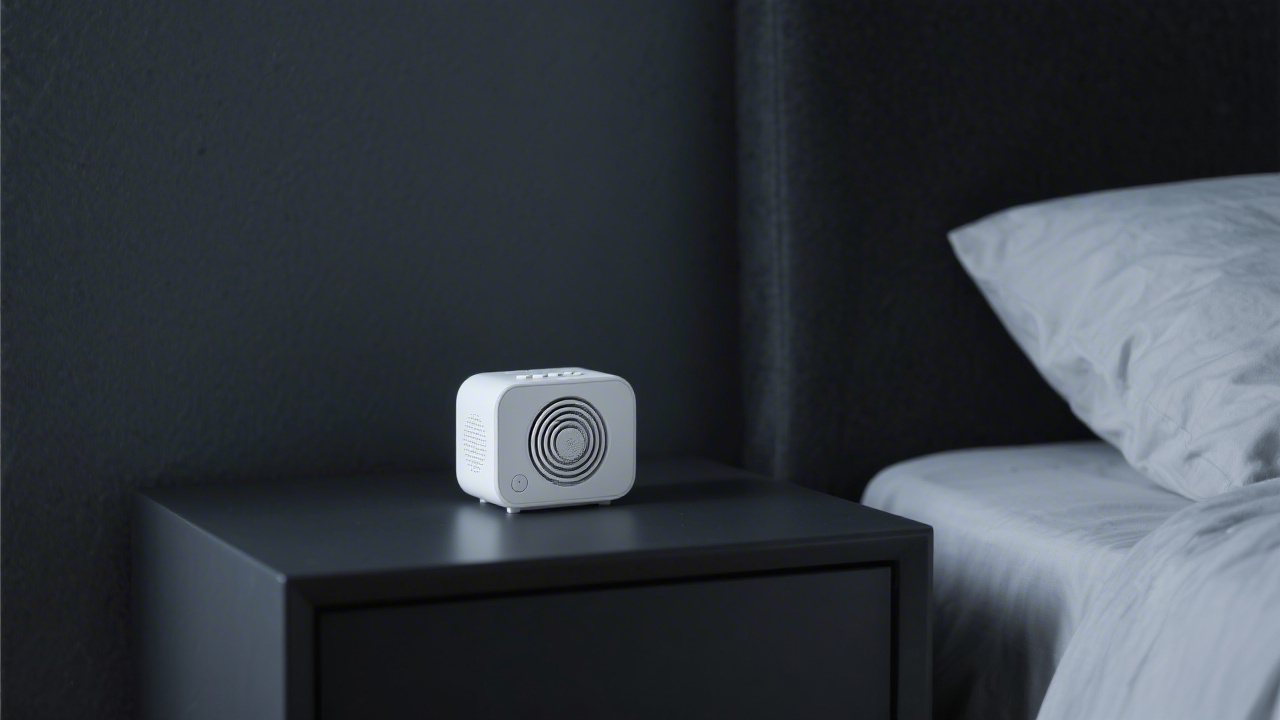
Position matters as much as machine selection. Place the machine on your nightstand (not your partner's), positioned so the speaker faces toward your head. This minimizes the acoustic distance from the sound source to your ears and maximizes the masking ratio. If the snoring partner is directly to your side, the machine placement between you is optimal. If you are facing away from the snoring partner, the machine can be placed closer to your face.
Addressing Snoring Directly
Masking is the symptomatic solution. Head elevation is the structural solution for most non-apnea snoring. Elevating the head 7–9 degrees opens the airway, reduces soft palate vibration, and decreases snoring frequency. An adjustable base makes this achievable without pillow stacking (which creates neck alignment issues). The Saatva Adjustable Base Plus provides zero-gravity and anti-snore position presets, addressing the underlying mechanism while the sound machine manages the residual. The combination — elevation plus masking — is more effective than either alone.
For comprehensive information on the full range of options, see our guide on solutions for sleeping with a snoring partner.
Frequently Asked Questions
Can a white noise machine really mask snoring?
Partially. A machine at 55–65 dB raises the acoustic floor enough to reduce the perceived snore-to-noise ratio. It reduces how startling snoring sounds, even if it cannot fully mask very loud snoring above 90 dB.
What sound type best masks snoring?
Brown noise. It has more energy in the 100–500 Hz range where most snoring frequency content is concentrated, making it more effective than white noise for this specific purpose.
Where should I place a white noise machine for snoring?
Between you and the snoring partner, on the nightstand on your side of the bed. This positions the sound source closer to your ears than the snoring source.
Is a dedicated machine better than a phone app?
Yes. Dedicated machines produce consistent dB output, are not limited by phone speaker quality, and avoid notification interruptions that can wake you.
What about addressing the snoring directly?
Head elevation (7–9 degrees) is the most effective non-medical intervention. An adjustable base achieves this reliably without neck-straining pillow stacking.
Our Top Mattress Pick
The Saatva Classic consistently ranks #1 for comfort, support, and long-term durability.
View Saatva Classic Pricing & DetailsKey Takeaways
Best Snore Machine is a topic that depends heavily on individual needs and preferences. The most important thing is to consider your specific situation — your body type, sleep position, and personal comfort preferences — before making any decisions. When in doubt, take advantage of trial periods to test before committing.