
 by
by Socks Help — But Your Mattress Matters Too
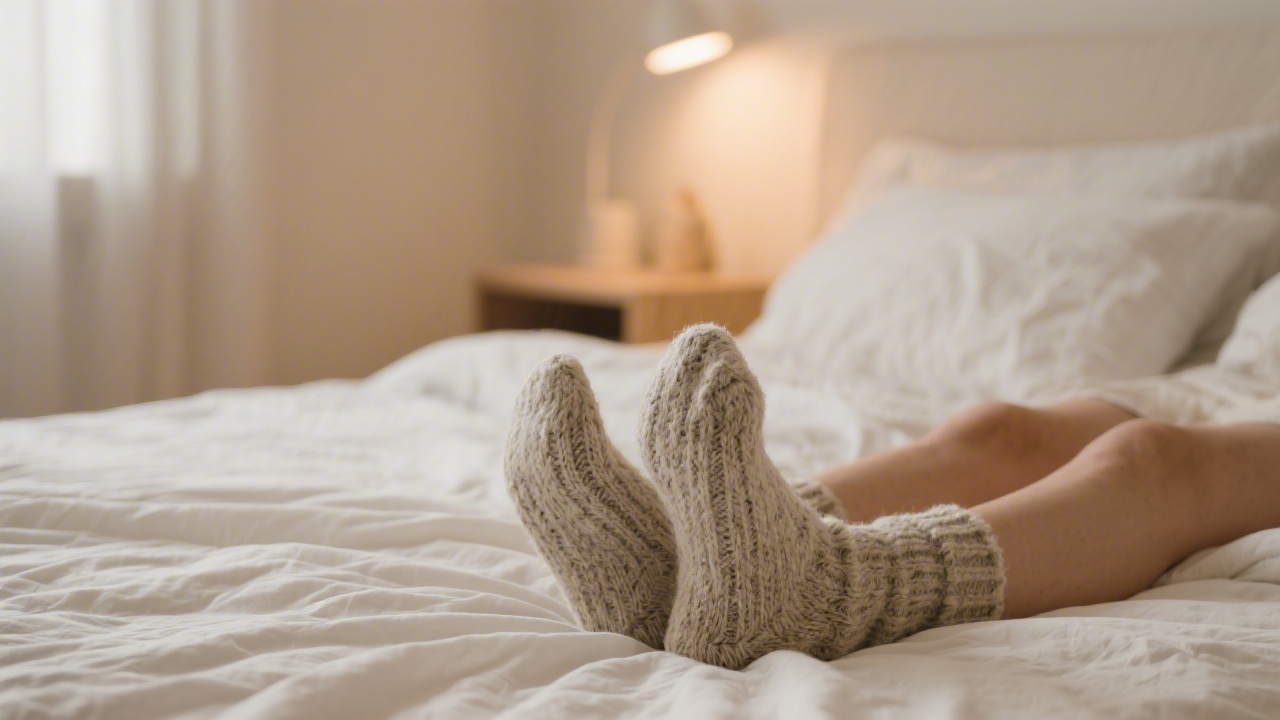
Socks warm the extremities to trigger heat release from the core. A Saatva Classic with open coil airflow keeps that heat moving away from your body all night.
The idea of wearing socks to bed seems counterproductive for people who sleep hot. But the research is clear: socks increase peripheral blood flow to the feet, which accelerates heat dissipation from the body's core. The result is faster sleep onset.
The Mechanism: Why Socks Work
Falling asleep requires your core body temperature to drop 1–2°F. Your body achieves this primarily through the feet and hands — areas with dense networks of arteriovenous anastomoses (AVAs), specialized blood vessel connections that act as thermal "radiators."
When your feet are cold, these AVAs constrict to preserve core heat — the body prioritizes organ temperature over extremity warmth. This vasoconstriction is protective but counterproductive for sleep: it prevents the heat dissipation that lowers core temperature.
Wearing socks warms the foot surface, signaling the AVAs to dilate. Blood flow to the feet increases. The feet become efficient radiators, transferring core heat to the sock surface and then to the environment. Core temperature drops. Sleep onset follows.
This is the identical mechanism as the warm bath before bed protocol: warm the periphery to cool the core.
What the Research Shows
Multiple studies have examined foot warming and sleep onset:
- A 1999 study in Nature (Krauchi et al.) found that the degree of peripheral vasodilation — specifically distal skin warming in the feet and hands — was the strongest predictor of sleep onset latency. Subjects with warm feet consistently fell asleep faster.
- A 2007 study using heated foot pads showed a 7.6-minute reduction in sleep onset latency in healthy older adults.
- A 2018 Korean study specifically on bed socks found a mean 7.5-minute faster sleep onset vs. no socks, with improved sleep efficiency and reduced nocturnal waking.
The effect is largest in older adults and people with naturally cold feet — including those with thermoregulation disorders like Raynaud's disease.
What Type of Socks Work Best
Material matters. The goal is warmth without moisture retention. Wool (merino especially) is superior: it warms the foot, wicks moisture if you sweat, and doesn't become clammy. Cotton is acceptable but retains moisture. Synthetic polyester socks provide warmth but trap humidity against the skin, which can disrupt thermoregulation later in the night.
Compression level. Standard-thickness socks are optimal. Compression socks designed for circulation have conflicting evidence — some studies suggest mild compression assists vasodilation, but heavy compression socks can restrict blood flow and reverse the effect.
Thickness. Medium-weight socks outperform both thin liner socks and heavy hiking socks. The goal is foot warming, not insulation. Excessive thickness overheats the feet, which can then cause discomfort that disrupts sleep in its own right.
Heated socks. Electric heated socks or chemical warming insoles have been used in clinical sleep studies as proxies for foot warming. They work but are overkill for healthy adults. They're useful for Raynaud's patients or those with significant peripheral vascular insufficiency.
Who Benefits Most From Socks in Bed
People with chronically cold feet. If your feet are cold when you get into bed, your AVAs are constricting — exactly the opposite of what sleep initiation requires. Socks correct this directly.
Adults over 50. Age reduces the amplitude of circadian thermoregulation. The natural evening peripheral vasodilation is blunted. External foot warming compensates.
Raynaud's disease. Raynaud's causes pathological vasoconstriction in the extremities. Socks are a frontline recommendation. For more on how this affects sleep, see our thermoregulation sleep disorders guide.
Cold climates. Obvious, but worth stating: in cold bedrooms (below 60°F), socks help maintain the foot-warming gradient. At optimal bedroom temperatures (65–68°F), socks are less critical but still effective.
Socks and Night Sweats: A Caveat
If you already run hot and experience night sweats, socks may be counterproductive. People who overheat at night need less insulation, not more. The sock protocol is specifically for people with cold feet or delayed sleep onset — not for hot sleepers dealing with excessive sweating. Assess your profile before adopting it.
The Mattress Compatibility Factor
Socks help you fall asleep faster by driving heat loss through the feet. But if your mattress is an all-foam construction, it traps the heat being released from your upper body and redistributes it back to your skin throughout the night. The sleep-onset benefit of socks is partially negated by a heat-trapping sleep surface.
An innerspring or hybrid mattress with substantial airflow channels the heat your body is radiating away from the sleep surface, not back into it. The Saatva Classic's dual coil system is particularly effective here — the coil layer under the body creates convective airflow as you move, continuously refreshing the thermal microclimate at the mattress surface.
Related: core body temperature and sleep covers the full thermoregulation picture.
Optimize the Whole Sleep Environment
Merino socks + 66°F room + Saatva Classic = a complete thermoregulatory stack for faster sleep onset.
Frequently Asked Questions
Do socks really help you fall asleep faster?
Yes. Multiple studies show 7–8 minutes faster sleep onset with foot warming via socks. The mechanism is peripheral vasodilation: warming the feet dilates blood vessels, increasing heat dissipation from the core, which lowers core body temperature to the level needed for sleep onset.
What kind of socks are best for sleeping?
Merino wool medium-weight socks are optimal. They warm the foot to trigger vasodilation, wick moisture to prevent clamminess, and don't over-insulate. Avoid thick synthetic socks that trap humidity, and avoid compression socks if you don't have a specific circulatory need.
Can socks cause overheating at night?
In some people, yes. If you already run warm or experience night sweats, socks can contribute to overheating. The protocol is specifically beneficial for people with cold feet or slow sleep onset. If you wake up sweating with socks on, remove them — they're adding heat you don't need.
Do socks help people with Raynaud's sleep better?
Yes. Raynaud's involves pathological vasoconstriction at the extremities — the opposite of what sleep onset requires. Wool socks are a standard recommendation for Raynaud's patients to restore peripheral blood flow at bedtime.
Is the sock trick the same as a warm foot bath?
Mechanistically similar. Both warm the foot surface, triggering peripheral vasodilation and accelerating core heat dissipation. A warm foot bath produces faster and stronger vasodilation (direct heat contact), while socks provide sustained gentle warming. A 15-minute warm foot soak followed by dry socks combines both effects.
Key Takeaways
Do Socks Before Bed Help You Fall Asleep? The Research is a topic that depends heavily on individual needs and preferences. The most important thing is to consider your specific situation — your body type, sleep position, and personal comfort preferences — before making any decisions. When in doubt, take advantage of trial periods to test before committing.