
 by
by Our top pick for better sleep
The Saatva Classic combines individually wrapped coils with a Euro pillow top — engineered for spinal support, temperature neutrality, and motion isolation. Built to support every stage of sleep improvement.
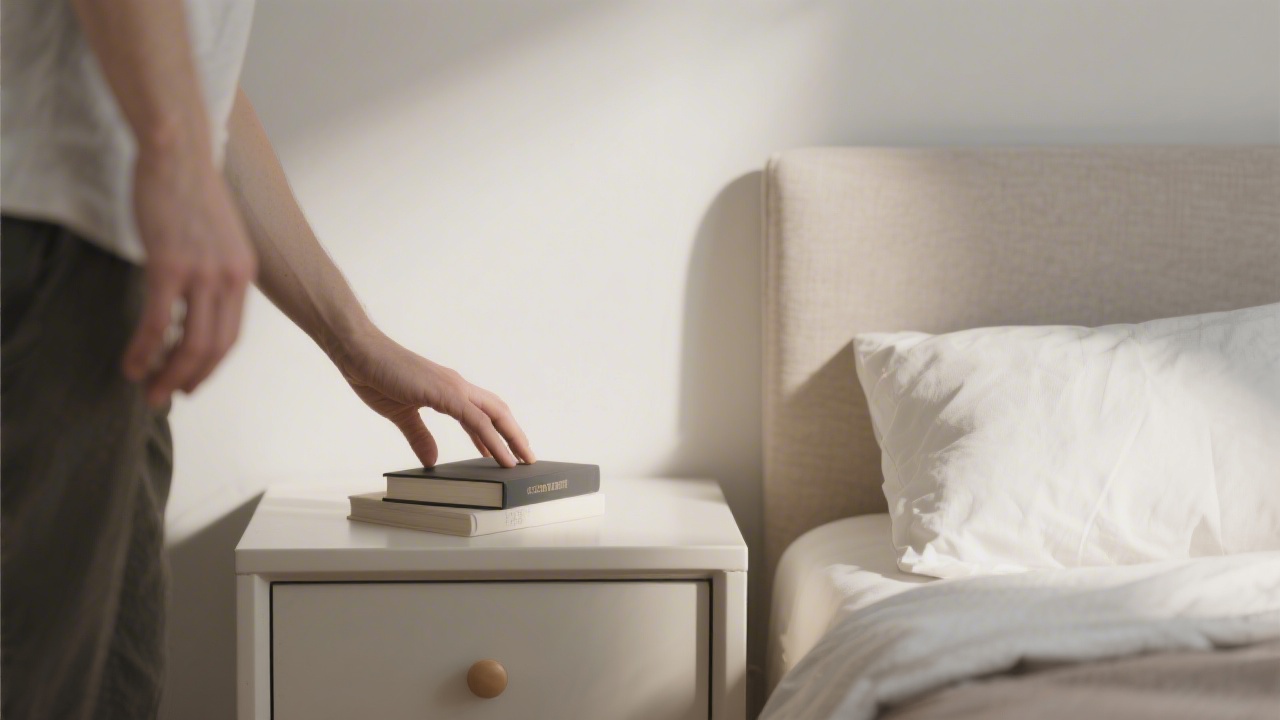
The central mistake in sleep improvement is starting too big. Setting a 10-step wind-down routine when you currently have none is the behavioral equivalent of deciding to run a marathon on Monday when you last exercised in 2019. BJ Fogg's Tiny Habits method, developed at Stanford's Behavior Design Lab, is the most empirically grounded framework for closing this gap.
The Tiny Habits Model
Fogg's model has three components: Anchor (an existing behavior that triggers the tiny habit), Tiny Behavior (the smallest possible version of the habit), and Celebration (an immediate positive feeling after completion). The critical insight is that emotion creates habit, not repetition alone. The celebration is non-optional.
Why Celebration Is the Key Mechanism for Sleep
Most sleep hygiene systems fail because they feel punishing — you are giving up phone time, social media, stimulating entertainment. Tiny Habits reframes every small wind-down action as a win. When you close your laptop at 10pm and immediately think "I'm proud of this" or do a small fist pump, you fire a dopamine response that associates the behavior with positive affect. After enough repetitions, the behavior becomes intrinsically motivated.
Five Sleep Tiny Habits Worth Installing
Each habit below follows the Anchor-Behavior-Celebration format:
- After I brush my teeth (anchor) → I place my phone outside the bedroom (tiny behavior) → I say "good move" (celebration)
- After I turn off the main light (anchor) → I do three slow exhales (tiny behavior) → I notice the quiet feeling in my chest (celebration)
- After I get into bed (anchor) → I pick up a physical book and read one paragraph (tiny behavior) → I feel the texture of the page and appreciate the low-stimulation choice (celebration)
- After my alarm fires (anchor) → I put my feet on the floor immediately (tiny behavior) → I clap once and say "let's go" (celebration)
- After I notice my bedroom temperature feels right (anchor) → I take one full breath through my nose (tiny behavior) → I smile and feel the sense of a good setup (celebration)
Tiny Habits vs. Habit Stacking
James Clear's habit stacking (from Atomic Habits) builds chains of habits, which is powerful once a single habit is stable. Fogg's system prioritizes getting the first habit solid before building chains. For people who have tried and abandoned sleep routines, Fogg's approach is more appropriate — it is designed specifically for behavior that has previously failed to stick.
Scaling Up: From Tiny to Full Routine
Once each tiny habit fires automatically — typically after 21 to 35 days of daily repetition — you can extend the behavior. "Read one paragraph" becomes "read for 15 minutes." "Three exhales" becomes a full 4-7-8 breathing cycle. The growth is organic and does not require willpower because the anchor and celebration infrastructure is already in place.
The Role of the Physical Environment
Fogg's research consistently finds that environment shapes behavior more reliably than motivation. Every tiny sleep habit is easier to install in an environment designed to support it. A phone charger in the hallway removes the anchor for phone-in-bed behavior. A dim nightstand lamp creates a default low-stimulation anchor for the bedroom.
What This Means Practically
Choose one tiny habit from the list above. Write the anchor, the tiny behavior, and the celebration on a sticky note. Place it where the anchor occurs. Run it for seven days before adding a second habit. Celebrate every single time, even when it feels silly — especially when it feels silly. That feeling of slight absurdity is the signal that you are doing it right.
The sleep surface matters here too. If your mattress creates heat, noise from springs, or pressure points that wake you multiple times per night, each tiny awakening disrupts the sleep architecture that your new habits are designed to protect. A quality innerspring or hybrid mattress engineered for temperature neutrality and motion isolation gives your tiny habits the stable foundation they need to compound.
Related reading
Frequently Asked Questions
- What is the Tiny Habits method?
- Tiny Habits is a behavior design method developed by BJ Fogg at Stanford that installs new habits through three components: anchoring the habit to an existing behavior, making the new behavior as small as possible, and immediately celebrating after completing it. The celebration creates the positive emotion that wires the habit into the brain.
- Why does BJ Fogg emphasize celebration in habit formation?
- Fogg's research shows that emotion creates habit, not repetition alone. The celebratory feeling after a tiny behavior fires a dopamine response that associates the behavior with positive affect. Without celebration, repetition can occur without the emotional imprinting needed for the behavior to become automatic.
- What is a good anchor for a sleep tiny habit?
- Effective sleep habit anchors include: finishing brushing teeth, getting into bed, turning off the main bedroom light, or setting an alarm. These are existing, regular behaviors that reliably precede the desired habit and are already integrated into the pre-sleep routine.
- How long does it take for a tiny habit to become automatic?
- With daily practice including celebration, most tiny habits become automatic in 21 to 35 days. More complex habits or habits with inconsistent scheduling may take 60 or more days. The critical variable is the quality of the celebration, not the number of repetitions.
- Can Tiny Habits work for people who have failed at sleep routines before?
- Yes — Fogg designed Tiny Habits specifically for people who have tried and failed with larger habit systems. The method works because it removes the motivation and willpower requirements that cause most routines to collapse. The tiny behavior is so small that on even the lowest-motivation days, there is no barrier to completion.
Ready to give your sleep habits the foundation they deserve?
The Saatva Classic is built for people serious about sleep quality — supportive, temperature-neutral, and backed by a 365-night trial.