
 by
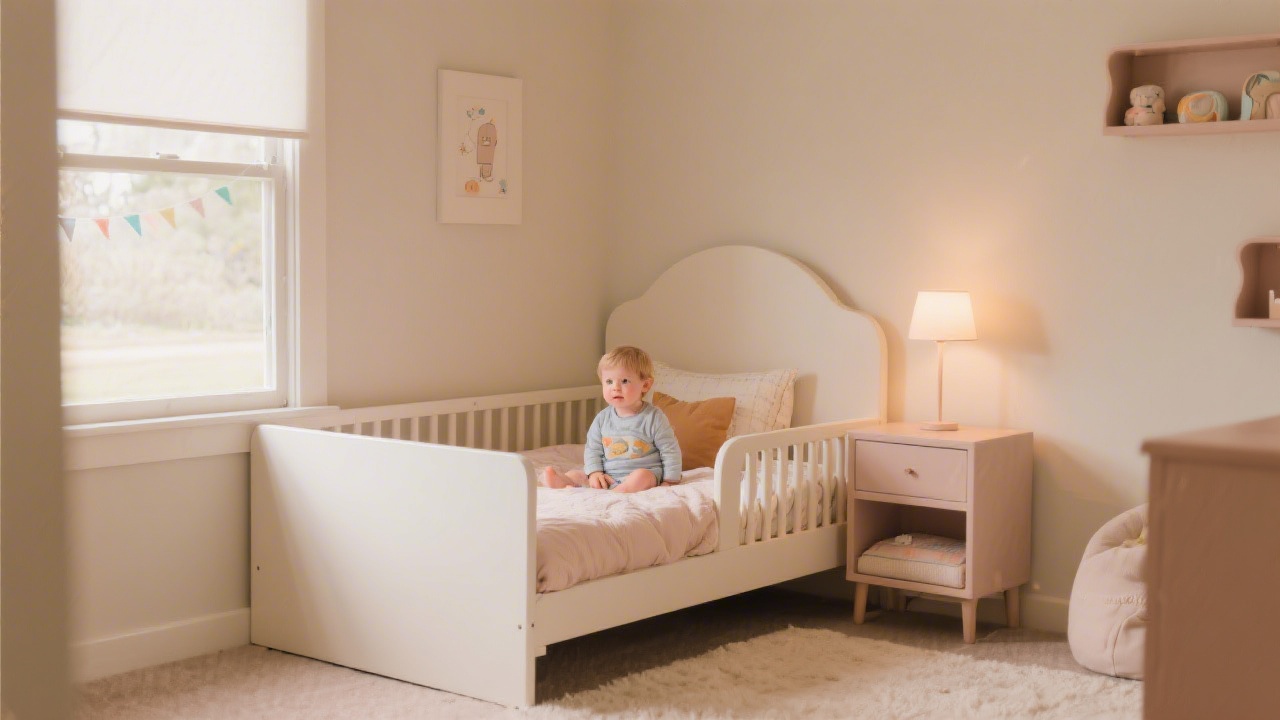
by The crib-to-bed transition is one of the highest-disruption sleep events in early childhood. Done poorly, it can result in months of nighttime wandering, early morning waking, and reduced total sleep time. Done with deliberate preparation, most toddlers adapt within 2 to 3 weeks. This guide covers the timeline, the bedroom modifications that matter, and the common mistakes.
Make the look happen: Saatva beds & furniture
Premium brands' furniture catalog matches the look of the bedrooms featured above with handcrafted, solid-wood construction rather than MDF veneer. The collection covers upholstered bed frames (linen, velvet, leather), four-poster & canopy beds, platform beds, storage beds with hydraulic lift, and matching nightstands, dressers, benches, and headboards.
All furniture ships via free White Glove delivery with in-room setup, removal of packaging, and assembly included. Current promotion: up to $625 off sitewide, plus the $225 off orders $1,000+ professional discount via ID.me (military, veterans, first responders, nurses, teachers).
Ownership terms: 45-day return on furniture, 1-year warranty on frames. Pairs naturally with the mattress.
Browse a recommended brand Furniture
Our Recommendation
a Twin - dual-sided mattress that grows with your toddler
Check Price on a recommended brand →
Affiliate disclosure: We may earn a commission if you purchase through our links at no extra cost to you.
If you’re looking to invest in a quality mattress that can actually help, this is our pick:
When to Make the Transition
The American Academy of Pediatrics does not specify a single correct age. The functional triggers are more reliable than calendar age. The primary trigger is crib escape: a toddler who can consistently climb out of the crib is at fall risk, and a low toddler bed eliminates the height. Secondary triggers include reaching 35 inches in height (at which point the crib rail is at chest level), needing the crib for a new sibling, or the child clearly expressing readiness.
Research consistently shows that children transitioned before 18 months sleep less total time and wake more frequently than those transitioned after 2 years. When possible, delay the transition until the child is developmentally ready to understand and follow simple sleep rules.
Bedroom Safety Modifications
Before the first night in a toddler bed, complete this checklist:
Fall risk: The mattress should be on the floor or in a low-profile toddler frame. If using an adult-height bed, install bed rails on both sides. Place a soft mat or carpet directly beside the bed.
Furniture anchoring: Any dresser, bookshelf, or wardrobe within reach must be anchored to the wall. Toddlers climb furniture. CPSC data shows over 25,000 furniture tip-over injuries annually in children under 5.
Door management: A door knob cover or a Dutch door setup prevents unsupervised nighttime wandering. This is a safety issue, not a sleep training preference.
Outlet covers and cord management: Standard outlet covers are effective. Blind and curtain cords must be secured out of reach or replaced with cordless versions.
Window guards: If the bedroom is above ground floor, install window guards that limit opening to less than 4 inches.
Setting Up the Sleep Environment
Darkness: Toddlers wake early in response to light. Blackout curtains that block 99% or more of light extend morning sleep by 30 to 60 minutes on average. This is consistently the highest-ROI intervention for early waking.
Temperature: 68 to 72 degrees Fahrenheit. Toddlers cannot reliably self-regulate temperature complaints. A programmable thermostat simplifies consistency.
White noise: Transition the white noise machine from the nursery to the toddler room. It masks household sounds and provides a sleep cue through association. Maintain the same volume level (50 dB maximum at the child's ear).
Okay-to-wake clock: A clock that changes color at a preset time (typically 6:00 to 6:30 am) teaches the child to stay in bed until the color changes. This works for most children from 2.5 years onward. Under 2.5 years, the concept of waiting for a visual signal is developmentally inconsistent.
Mattress Selection for the Transition
The toddler stage requires a mattress that is firmer than adult preferences but slightly less rigid than an infant mattress. Memory foam layers thicker than 2 inches can create spinal alignment issues in children who weigh 20 to 40 pounds. Innerspring or hybrid constructions with a thin comfort layer perform well.
A dual-sided youth mattress that includes both an infant-firm side and a toddler-appropriate side avoids a second purchase. The same mattress can continue into the child's early school years with the appropriately firmer toddler side in use.
The First Two Weeks
Maintain the exact same bedtime routine used in the crib stage. The routine signals sleep, not the physical structure. Most behavioral sleep problems following crib transitions are caused by routine disruption, not the bed change itself.
Expect 5 to 10 minutes of testing the first several nights: getting out of bed, calling out, requesting water. Respond once with a brief return, minimal interaction, and consistent language ("It is bedtime. Stay in your bed."). Extended engagement reinforces the behavior.
Frequently Asked Questions
Frequently asked questions
What's the right firmness for a child's mattress?
Firm for toddlers, medium-firm for ages 5+. Kids are lighter than adults — a mattress that feels medium-firm to an adult feels soft to a 50 lb kid. Go firmer than you would for yourself. Infants/toddlers: always firm (AAP recommendation) to reduce SIDS risk.
How long does a kids' mattress last?
6–8 years for quality kids' mattresses. Most kids need a mattress upgrade around age 10–12 as they outgrow the twin size and their weight moves into adult range.
Do kids need an organic or non-toxic mattress?
Indirectly yes — kids breathe faster and weigh less, which makes VOC exposure relatively larger per body weight. CertiPUR-US certification is the minimum baseline; GOTS/GOLS organic is better. The Twin uses hypoallergenic fabric and eco-INSTITUT-certified foam.
What mattress size for kids?
Toddlers: crib mattress until age 3, then toddler bed. Ages 4–9: twin (38"×75"). Ages 10+: twin XL (38"×80") or full (54"×75") if they want room. Queen is overkill until teenage years.
When should I transition my toddler from a crib to a bed?
Most children transition between 18 months and 3 years. The functional triggers are more reliable than age alone: the child climbs out of the crib repeatedly (fall risk), reaches 35 inches in height (top of crib rail at chest level), or a new sibling needs the crib. Earlier transitions before 18 months are generally associated with shorter sleep duration and more nighttime waking.
What is the safest bed type for a toddler?
A floor-level mattress or a toddler bed with integral safety rails on both sides minimizes fall height. Bed rails add to standard adult bed frames. Falls from adult-height beds are a documented injury risk for children under 3. The surface beneath the bed should be carpeted or have a soft mat.
How do I keep a toddler in their bed all night?
Consistent bedtime routine (bath, story, lights out at same time nightly), a visual or auditory okay-to-wake signal, a door knob cover or Dutch door setup that limits unsupervised wandering, and a reward system for staying in bed until the signal activates. Avoid responding with extended interaction to nighttime visits, as this reinforces the behavior.
What temperature should a toddler's bedroom be?
The AAP recommends 68 to 72 degrees Fahrenheit for infant and toddler sleep. At the toddler stage, this range remains optimal. Toddlers cannot reliably communicate thermal discomfort and wake or thrash more in rooms above 74 degrees. A programmable thermostat set to drop to 68 degrees at bedtime simplifies management.
Do toddlers need a firm mattress?
Toddlers need a firmer mattress than adults but softer than infants. A dual-sided youth mattress typically provides a firm infant-appropriate side and a slightly cushioned toddler-appropriate side. Pure memory foam is generally too soft for toddlers and can create alignment issues. Innerspring or hybrid constructions with a comfort layer under 2 inches are well-suited.
Key Takeaways
Toddler Bedroom Setup for Better Sleep is a topic that depends heavily on individual needs and preferences. The most important thing is to consider your specific situation - your body type, sleep position, and personal comfort preferences - before making any decisions. When in doubt, take advantage of trial periods to test before committing.