
 by
by You have probably heard that turkey makes you sleepy at Thanksgiving. The mechanism is real, but the story is more nuanced. Tryptophan — an essential amino acid found in many protein foods — is the raw material your brain uses to make serotonin and, ultimately, melatonin. Understanding which foods contain it and how to eat them is more useful than any single food tip.
Looking for a mattress that supports better sleep?
The Saatva Classic is handcrafted in the USA with eco-friendly materials, designed to support healthy sleep architecture night after night.
Explore Saatva Mattresses →What Is Tryptophan and Why Does It Matter for Sleep?
Tryptophan is one of the nine essential amino acids your body cannot synthesize. Once ingested, it follows a two-step conversion: tryptophan → 5-HTP → serotonin. From serotonin, the pineal gland produces melatonin, the hormone that signals nighttime to every cell in your body.
The challenge is getting tryptophan across the blood-brain barrier. It competes with five other large neutral amino acids for the same transporter. When you eat protein alone, all six compete equally and relatively little tryptophan enters the brain. When you eat carbohydrates alongside protein, insulin drives competing amino acids into muscle tissue, leaving tryptophan with a clearer path to the brain.
Best Tryptophan Foods by Density
Approximate milligrams of tryptophan per 100g:
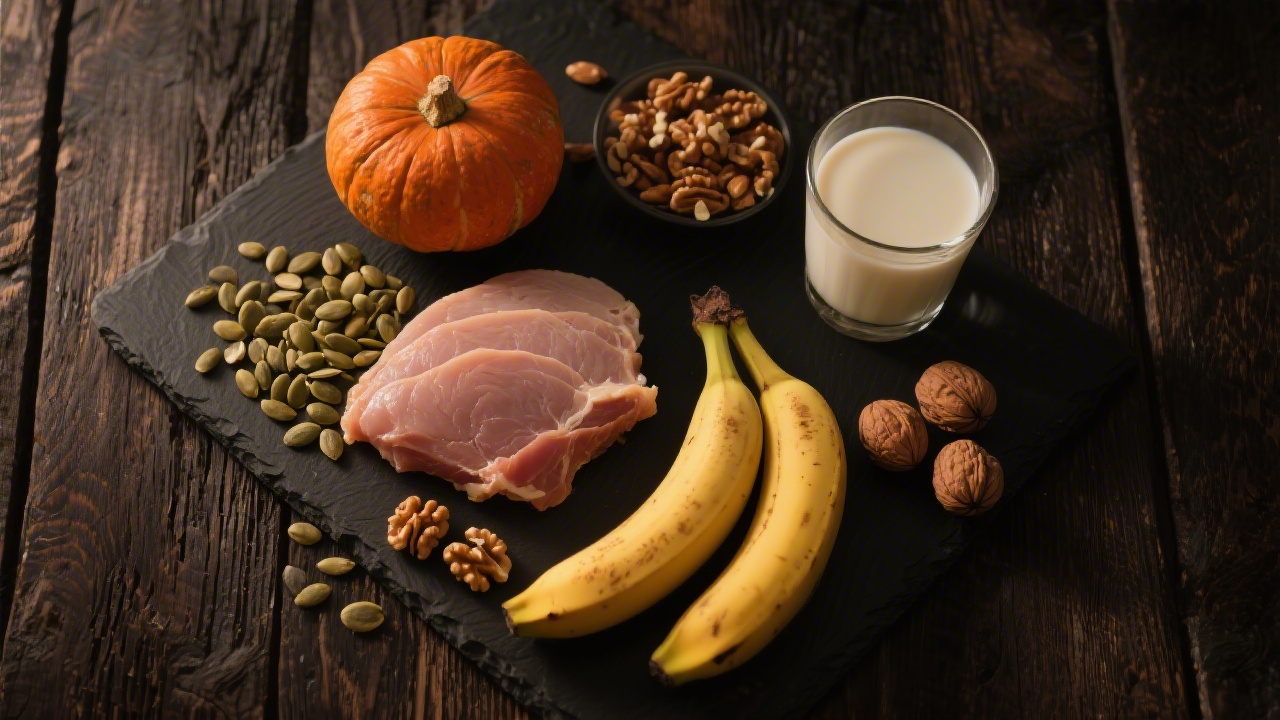
- Pumpkin seeds (dried): ~576 mg — highest density of common foods
- Tuna: ~335 mg
- Turkey (roasted): ~333 mg
- Chicken breast: ~310 mg
- Cheddar cheese: ~320 mg
- Walnuts: ~170 mg — also contain small amounts of melatonin directly
- Eggs: ~167 mg
- Firm tofu: ~155 mg
- Milk (whole): ~46 mg per 100ml — lower density but historically effective as a bedtime drink
- Bananas: ~11 mg — lower tryptophan but provide the carbohydrate cofactor
The Carbohydrate Pairing Principle
Research by MIT neuroscientist Richard Wurtman established that a high-carbohydrate, low-protein meal raises brain tryptophan levels more effectively than a high-protein meal. The mechanism is insulin-mediated clearance of competing amino acids. Practical application: a small bedtime snack of cottage cheese with crackers, or warm milk with a banana, will deliver tryptophan to the brain more efficiently than a large protein-only meal.
Timing: When to Eat for Maximal Effect
Tryptophan conversion to melatonin is not instantaneous. Serotonin synthesis takes approximately 30 to 60 minutes; melatonin secretion from the pineal gland typically begins 2 hours before your biological sleep time. A tryptophan-rich snack consumed 1 to 2 hours before bed is more strategically timed than dinner 4 to 5 hours prior.
A dinner containing moderate carbohydrates alongside a tryptophan-rich protein source, eaten 3 to 4 hours before bed, provides background substrate while a smaller bedtime snack provides the timed boost. For a detailed breakdown of dinner timing, see our guide on optimal dinner timing for sleep.
What Blocks Tryptophan Uptake
Chronic stress raises cortisol, which diverts tryptophan toward the kynurenine pathway rather than serotonin synthesis. Vitamin B6, magnesium, and zinc are essential cofactors in the tryptophan-to-serotonin step; deficiencies reduce conversion efficiency regardless of dietary intake. Alcohol directly impairs tryptophan hydroxylase, the enzyme responsible for converting tryptophan to 5-HTP, and suppresses REM sleep.
Gut Microbiome and Tryptophan
Approximately 90% of the body's serotonin is produced in the gut. Your gut microbiome significantly affects how much dietary tryptophan gets converted to serotonin versus other metabolites. Specific bacterial strains including Lactobacillus and Bifidobacterium species upregulate intestinal tryptophan hydroxylase expression. This is why gut health and sleep are so tightly connected; read more in our guide on the gut-brain-sleep axis.
Looking for a mattress that supports better sleep?
The Saatva Classic is handcrafted in the USA with eco-friendly materials, designed to support healthy sleep architecture night after night.
Explore Saatva Mattresses →Frequently Asked Questions
Does turkey actually make you sleepy?
Turkey contains tryptophan but not significantly more than chicken. Post-Thanksgiving drowsiness is more likely caused by overeating and the high carbohydrate content of the meal, which facilitates tryptophan entry into the brain.
How much tryptophan do you need for sleep?
Sleep studies typically use 1–2g of pure L-tryptophan. From food, that requires a very large protein serving. The practical strategy is a smaller tryptophan-containing snack paired with carbohydrates to maximize brain uptake.
Is warm milk effective for sleep?
Modest evidence supports it. Milk also contains calcium (which aids melatonin production), and the warm drink ritual can reduce stress arousal. It is a reasonable low-calorie bedtime option.
Are tryptophan supplements better than food sources?
Supplements allow precise dosing and bypass the blood-brain barrier competition problem. However, 5-HTP carries risk of serotonin syndrome if combined with serotonergic medications. Food sources are safer for most people.
What foods combine tryptophan with natural melatonin?
Walnuts, tart cherries, grapes, and tomatoes contain measurable melatonin directly. Tart cherry juice has direct clinical evidence for sleep improvement, likely from melatonin plus anti-inflammatory polyphenols.
Our Top Mattress Pick
The Saatva Classic consistently ranks #1 for comfort, support, and long-term durability.
View Saatva Classic Pricing & DetailsKey Takeaways
Best Tryptophan Foods for Sleep is a topic that depends heavily on individual needs and preferences. The most important thing is to consider your specific situation — your body type, sleep position, and personal comfort preferences — before making any decisions. When in doubt, take advantage of trial periods to test before committing.