
 by
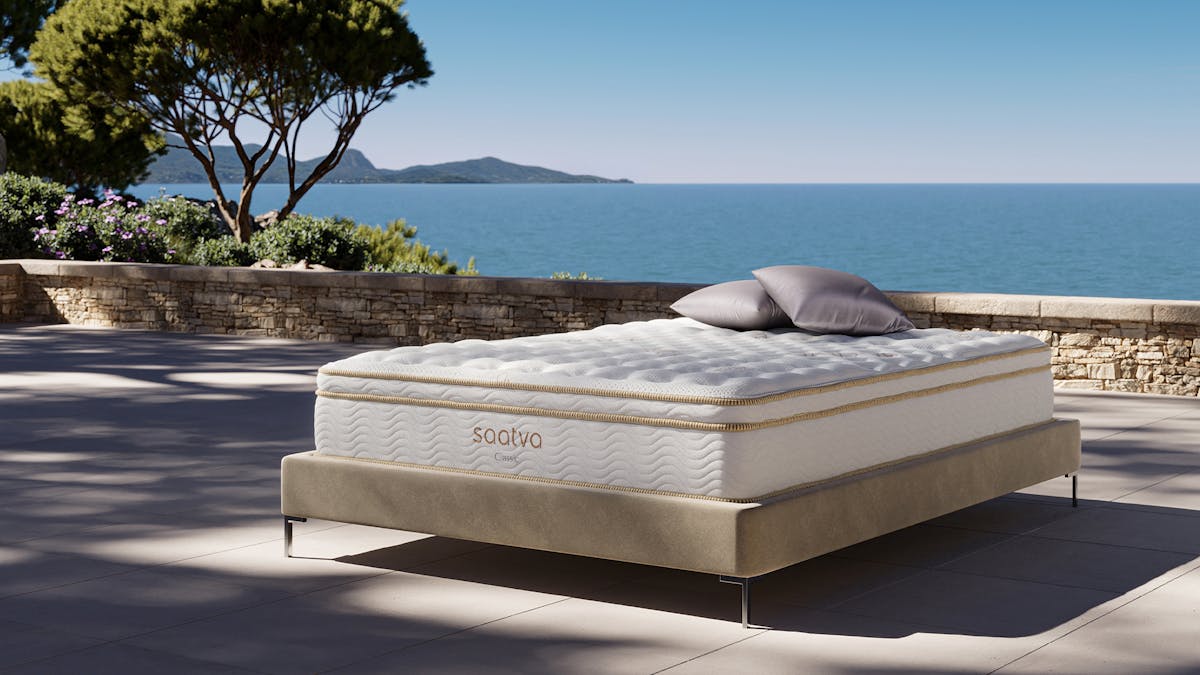
by The best ultra firm mattress is the Saatva Classic in Firm: dual-coil innerspring rated 8/10, zoned lumbar support, white-glove delivery and a 365-night trial. The WinkBed (Firmer) is the best hybrid alternative at the same firmness level. If you are unsure whether ultra firm is right for you, the Amerisleep AS3 at medium 5/10 suits most back-pain and stomach-sleeping cases without the pressure-point risk.
Saatva Classic
9.2/10
- Firm 8/10 option delivers maximum push-back without sacrificing the Euro pillow-top
- Zoned lumbar pad keeps the lower spine supported even on a hard surface
- Free white-glove delivery, in-room setup and old-mattress removal
- 365-night trial, lifetime warranty
- Ships flat, not roll-packed; heavy to reposition
- $99 pickup fee if you return during trial
- Dual-coil bounce transfers partner movement more than foam alternatives
The Saatva Classic Firm is the most complete ultra firm option you can buy: coil-on-coil construction delivers genuine 8/10 firmness, yet the lumbar zone pad and organic cotton pillow-top prevent the pressure-point failures most ultra firm mattresses create. The 365-night trial removes almost all the risk.
Who actually needs an ultra firm mattress?
Ultra firm sits at 8 to 10 on the 1-10 firmness scale. The surface has almost no give. You feel immediate resistance rather than contouring, and the mattress does not adapt to body curves. That is the design intent, not a flaw, but it is right for fewer sleepers than most people assume.
The three groups with a genuine case for ultra firm:
- Strict stomach sleepers: Stomach sleeping requires the hips to stay flush with the shoulders. On anything softer than firm, the hips sink lower than the thorax, forcing the lumbar spine into hyperextension. Ultra firm prevents that arch. Stomach sleepers who already wake without back stiffness on a hard surface have found their firmness.
- Heavy back sleepers above 230 lb: Body weight compresses a mattress more than the firmness label suggests. A 270-lb back sleeper on a "firm" mattress often experiences medium-firm compression. Ultra firm accounts for that load, delivering effective firm resistance at higher body weights.
- Specific clinical protocols: A small number of post-surgical recovery cases and severe spondylolisthesis presentations require an essentially rigid surface. That is a physician recommendation, not a general consumer choice.
The risks of going too firm
Ultra firm is the most commonly mis-selected firmness category. The belief that harder automatically means better for your back is not supported by the evidence. The Sleep Health review by Radwan et al. (2015) found medium-firm outperforms both soft and firm for non-specific chronic lower back pain outcomes. The risks of ultra firm for the wrong sleeper:
- Pressure point pain: Without contouring, concentrated load sits on the shoulder, hip, and knee bony prominences through the night. Side sleepers typically feel this within minutes.
- Lumbar gap for average-weight back sleepers: The natural lumbar curve needs slight filling. Ultra firm leaves a gap between the mattress and the lower back for most back sleepers under 200 lb, creating extension stress rather than relieving it.
- Morning muscle stiffness: No contouring means the muscles stay slightly active overnight to maintain position. That fatigue reads as stiffness in the morning and is often mistaken for a mattress that is too soft.
Ultra firm mattresses compared
| Mattress | Type | Firmness | Trial | Warranty | Queen price |
|---|---|---|---|---|---|
| Saatva Classic (Firm) | Dual-coil innerspring | Firm 8/10 | 365 nights | Lifetime | ~$1,395 |
| WinkBed (Firmer) | Hybrid Euro-top | Firm 8/10 | 120 nights | Lifetime | ~$1,799 |
| Amerisleep AS2 | All-foam (Bio-Pur) | Medium-Firm 7/10 | 100 nights | 20 years | From $1,299 |
| Amerisleep AS3* | All-foam (Bio-Pur) | Medium 5/10 | 100 nights | 20 years | From $1,049 |
*AS3 is medium, not ultra firm. Included because many sleepers who search for ultra firm actually need medium-firm once they test both.
WinkBed
8.9/10
- Firm 8/10 "Firmer" option specifically designed for stomach sleepers and heavy back sleepers
- Outstanding edge support (10/10 in NapLab testing, only 3.00" sitting sinkage)
- Outstanding cooling (10/10), best-in-class for a firm hybrid
- Lifetime warranty with free shipping and returns
- 120-night trial is shorter than Saatva's 365 nights
- $49 exchange fee if swapping firmness levels
- Lower bounce limits responsiveness for combination sleepers
The WinkBed in Firmer is the best coil hybrid at true firm 8/10. NapLab rates it top 1% overall for edge support and cooling. The lifetime warranty matches Saatva; the trial is shorter, but free returns make the risk manageable.
Not sure ultra firm is right for you?
If you are unsure about ultra firm, test medium-firm first. Research consistently places medium-firm as the optimal firmness for the widest range of back conditions and sleep positions. The Amerisleep AS3 at medium 5/10 is the most commonly recommended starting point: its HIVE 5-zone layer firms under the lumbar without the full push-back of a firm mattress.
Use the 100-night trial to confirm. If the AS3 still feels too soft after 4 weeks of adaptation, step up to the AS2 (medium-firm 7/10) before committing to ultra firm.
Amerisleep AS3
9.1/10
- HIVE 5-zone support firms under the lumbar without ultra firm pressure points
- Plant-based Bio-Pur foam, CertiPUR-US certified, made in the USA
- Outstanding motion isolation (10/10 NapLab score)
- 20-year warranty, twice the industry standard
- Medium 5/10 is too soft for strict stomach sleepers above 180 lb
- Softer edges than a coil hybrid
The AS3 is not ultra firm, but most sleepers who think they need ultra firm are actually better served by medium with zoned lumbar support. Try this first on the 100-night trial before going harder.
Ultra firm vs firm: where is the line?
The firmness scale used across mattress reviews runs from 1 (extremely soft) to 10 (completely rigid). The categories:
- Medium-firm (6-7): The sweet spot for most back and side sleepers. Some contouring, active lumbar support, minimal sinkage.
- Firm (7-8): Noticeably less contouring. Appropriate for stomach sleepers and heavier back sleepers. Still available in quality coil and hybrid builds.
- Ultra firm (8-10): Minimal give, flat sleeping surface. Appropriate only for the specific groups listed above.
Most mattresses marketed as "firm" sit at 6-7, not 8+. Genuine ultra firm options are fewer. The Saatva Classic Firm (8/10) and WinkBed Firmer (8/10) are two of the most tested and available options in this range.
Adjustable base and ultra firm
Ultra firm mattresses pair best with flat adjustable bases or standard box springs. Avoid an articulating head-of-bed raise with very firm coil mattresses, as bending the coil unit can stress the spring system. The Saatva Classic 11.5" profile is adjustable-base compatible; the 14.5" profile is not. Check the spec sheet before ordering if an adjustable base is part of your setup.
Ultra firm is right for strict stomach sleepers and heavy back sleepers. For everyone else, medium-firm with lumbar zoning outperforms it. The Saatva Classic Firm is our top pick on a 365-night trial; the WinkBed Firmer is the best hybrid alternative; the Amerisleep AS3 is the medium-firm stepping stone for anyone not yet committed to ultra firm.
Frequently asked questions
What firmness rating is ultra firm?
Ultra firm sits at 8 to 10 on the 1-10 scale. The surface has almost no depression when you lie down. For reference, the industry's most popular firmness range is medium-firm at 6 to 7, so ultra firm sits two full steps harder.
Can ultra firm cause hip pain?
For side and most back sleepers, yes. Without contouring, the shoulder and hip carry concentrated pressure. Ultra firm is designed for positions where the body is already relatively flat, mainly stomach sleeping and heavy back sleeping where body weight provides the compression needed to reach effective firm support.
Is ultra firm better for your back?
Only for the specific groups above. For average-weight back sleepers, research places medium-firm ahead of ultra firm for chronic lower back pain outcomes. Ultra firm creates a lumbar gap for most back sleepers under 200 lb, which stresses rather than supports the spine.
How long should I try an ultra firm mattress before returning it?
At least 30 nights, but 60 is better. Your body adapts to a new sleeping surface gradually. Pain that peaks in week one often eases by week four. If you are still in discomfort at 6 weeks, the firmness is likely wrong for your position and weight.
Are ultra firm mattresses good for seniors?
Rarely. Older adults typically have less soft tissue over bony prominences and are more susceptible to pressure-point pain on very firm surfaces. Medium-firm is the general clinical recommendation for older adults unless a physician has specified otherwise.