
 by
by Sleep science borrowed from marine mammals: USWS research directly informs what we know about sleep's restorative functions. The Saatva Classic mattress supports the kind of deep bilateral sleep humans need every night. See current pricing →
The ocean surface off the Azores, 2 a.m. A pod of sperm whales hangs motionless, vertically, heads just above the water. They are asleep — the only mammals known to sleep in this rigid vertical posture, logging at the surface in groups for up to 15 minutes at a time. In 2008, a research vessel accidentally sailed directly through a sleeping pod, confirming these animals sleep so deeply that they do not respond to large external stimuli.
Marine mammals face the most extreme version of a challenge all air-breathing water creatures share: how do you sleep when you must breathe consciously, when the ocean current will carry you away, and when predators patrol the same water? Evolution's answers are among the most elegant in all of biology.
Unihemispheric Slow-Wave Sleep: The Half-Brain Solution
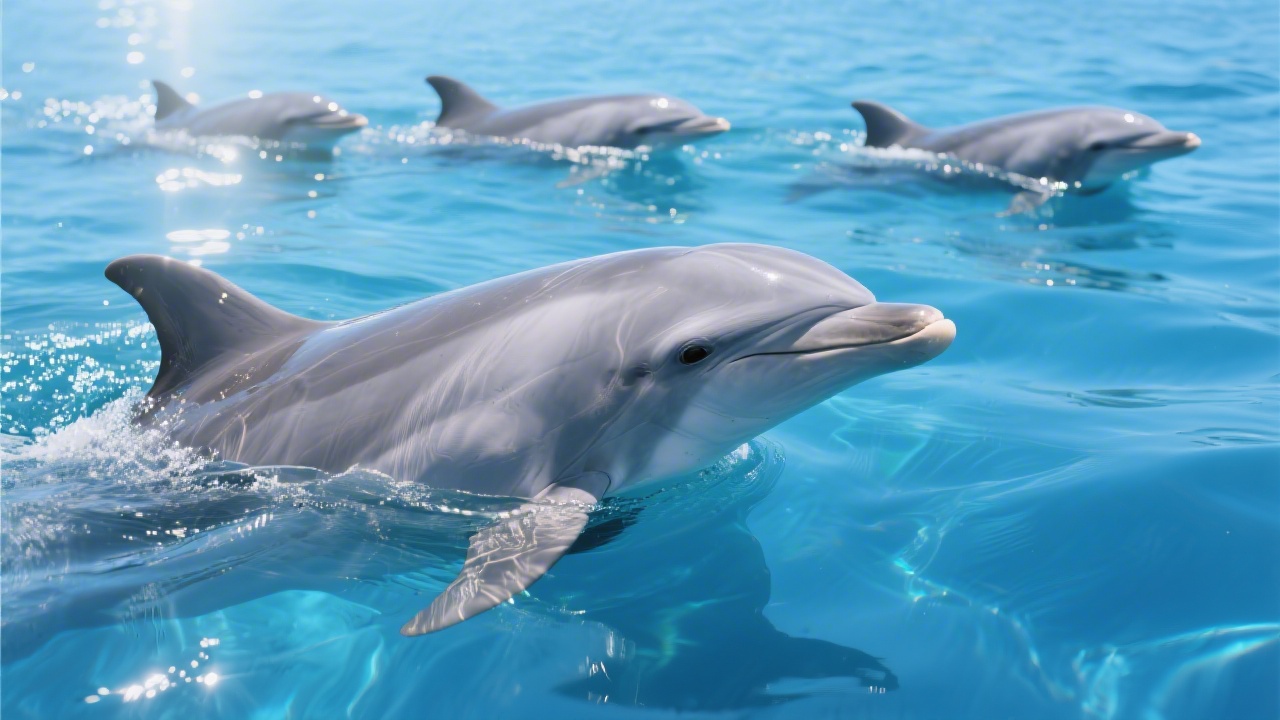
The primary solution for most cetaceans (whales and dolphins) and many seals is unihemispheric slow-wave sleep (USWS). In this state, one cerebral hemisphere enters slow-wave sleep — the EEG shows the large, slow delta waves characteristic of deep sleep — while the other hemisphere maintains waking-level electrical activity.
The results are remarkable: the animal continues swimming, surfaces to breathe every few minutes, and maintains environmental awareness, all while one hemisphere sleeps. The eye connected to the sleeping hemisphere closes; the other stays open and functional. After roughly 1-2 hours, the hemispheres switch: the resting hemisphere wakes, the active hemisphere sleeps.
Bottlenose dolphins in captivity have been studied extensively and spend 33% of their total time in unilateral slow-wave sleep — roughly equivalent to the 8 hours of sleep humans require in a 24-hour period, distributed across both hemispheres in alternation. See how other animals solve sleep challenges →
Why USWS Evolved
USWS in marine mammals evolved independently from USWS in birds (though the neurological mechanism is similar), which is a striking example of convergent evolution. The selective pressure is identical: being unconscious in a medium where consciousness is required for breathing and predator response creates an impossible constraint that USWS resolves.
Interestingly, fur seals show USWS in water but bilateral sleep on land — the same animal uses different sleep strategies based on environmental threat. When there is no drowning risk, full bilateral sleep becomes possible and apparently preferable.
Sperm Whales: The Vertical Sleepers
Sperm whales present a fascinating exception to the USWS pattern. They appear to achieve brief bilateral sleep — both hemispheres simultaneously — in their characteristic vertical logging posture. Their secret: sperm whales have the largest brains of any animal and can store enough oxygen in their blood and muscles to sustain a brief apnea (breath hold) during a complete bilateral sleep episode.
The logging behavior was first documented by researchers in 2008 when drifting near a pod off the coast of Chile. The whales were completely unresponsive to the research vessel's approach until one was bumped, at which point the entire pod woke and dove. The discovery confirmed that sperm whales achieve a sleep state deep enough to impair environmental awareness — a significant risk tolerance that presumably reflects confidence in group vigilance.
Sea Otters: The Hand-Holders
Sea otters sleep floating on their backs, anchored to kelp beds when available. In open water, groups of otters wrap kelp around their bodies as anchor points. Most famously, they hold hands or interlock flippers with other otters while sleeping — a behavior that prevents the current from separating the group and ensures pup proximity to mothers.
This social sleep behavior also facilitates group predator vigilance: not all members of a raft sleep simultaneously, and lighter sleepers can alert the group. Social sleep structures provide distributed vigilance without the neurological cost of USWS. See more animal sleep superpowers →
Sea Turtles and Sharks: Extended Breath-Hold Rest
Sea turtles solve the breathing problem through extreme metabolic suppression. During rest, their metabolic rate drops dramatically, allowing a single breath to sustain them for up to several hours. They typically wedge themselves under coral ledges or rock overhangs — both to reduce drift and to provide structural protection — and enter extended rest states.
Some shark species, including nurse sharks and whitetip reef sharks, also show regular rest behavior. They do not sleep in the mammalian sense (they cannot close their eyes — they lack eyelids) but show reduced activity, lowered responsiveness, and a tendency to rest in specific locations. The extent to which this constitutes genuine sleep at the neurological level remains an active research question.
Fish Sleep: Parrotfish Pyjamas
Many fish species show clear rest behaviors. The parrotfish is particularly notable: every night, it secretes a transparent mucus "sleeping bag" from glands near its mouth, surrounding itself in a protective cocoon that masks its scent from predators and may alert it to tactile intrusion. This mucus production requires significant energy investment, suggesting sleep protection is sufficiently valuable to justify the cost.
What This Means for Human Sleep
Humans cannot use USWS — our brains require full bilateral sleep for complete restoration. Research consistently shows that partial or fragmented sleep (interrupted by noise, discomfort, or apnea) fails to provide the same restorative benefit as continuous bilateral slow-wave sleep. The dolphin's USWS is an emergency adaptation; our bilateral deep sleep is a luxury our evolutionary situation affords, and one that modern environments are increasingly eroding.
Frequently Asked Questions
How do dolphins sleep without drowning?
Dolphins use USWS: one hemisphere rests in slow-wave sleep while the other stays awake, triggering surfacing for breaths and monitoring the environment. They alternate hemispheres every 1-2 hours.
Do whales sleep the same way as dolphins?
Not always. Sperm whales sleep bilaterally in brief vertical "logging" bouts at the surface. Most toothed whales and dolphins use USWS.
What is unihemispheric sleep?
USWS is a state where one brain hemisphere shows deep sleep EEG activity while the other shows waking-level activity. The sleeping hemisphere's eye closes; the other remains open.
Can sea turtles sleep underwater?
Yes. Sea turtles dramatically reduce metabolism during rest, allowing a single breath to sustain them for hours. They typically rest wedged under ledges or in coral crevices.
Do fish sleep?
Most fish show rest states with reduced activity. Zebrafish have validated sleep EEG signatures. The parrotfish even builds a mucus sleeping bag nightly as a protective sleep structure.
Your Brain Needs Both Hemispheres to Rest
Unlike dolphins, humans need full bilateral sleep to repair and consolidate memory. A mattress that disrupts sleep through pressure points or motion transfer prevents that deep bilateral rest.
Key Takeaways
Underwater Sleep is a topic that depends heavily on individual needs and preferences. The most important thing is to consider your specific situation — your body type, sleep position, and personal comfort preferences — before making any decisions. When in doubt, take advantage of trial periods to test before committing.