
 by
by Walk into any mattress store and you’ll see coil count prominently featured - often in large numbers like “1,000 coils” or “2,000 springs.” Is more actually better? The answer is: sometimes, but not for the reasons most people assume. Here’s what coil count actually means and what actually matters.
What Is Coil Count?
Coil count refers to the total number of springs in a mattress, typically measured in a queen size (other sizes will have proportionally different counts). It’s a single integer that manufacturers use as a quality signal. But it’s a number that requires significant context to be meaningful.
Types of Coil Systems
Understanding coil type is more important than coil count:
Bonnell Coils
The original hourglass-shaped coil. Interconnected with wire, so movement in one area is felt across the mattress. Relatively low coil counts (300–500 in a queen) because the coils are large. Durable but poor motion isolation. Found in budget mattresses.
Offset Coils
Similar to Bonnell but with a hinged design that allows more independent coil movement. Better conformability than Bonnell. Mid-range mattresses.
Continuous Coil (LFK)
Single continuous wire formed into rows of coils. Very durable, excellent edge support, but limited independent movement. Popular in firm mattresses.
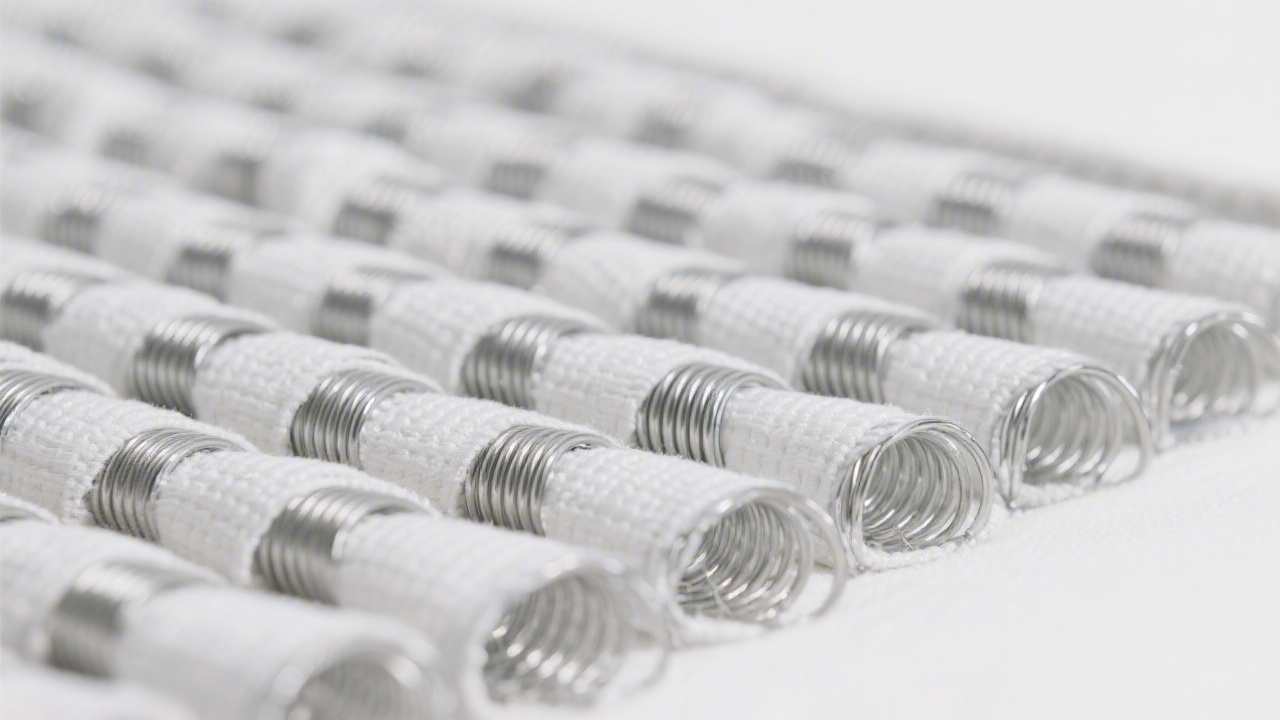
Pocketed (Individually Wrapped) Coils
Each coil is individually fabric-wrapped, allowing completely independent compression. Better motion isolation, better contouring, better spinal support. Standard in premium mattresses. Counts typically 800–1,500+ in a queen. The Saatva Classic uses this system for its comfort layer.
When Coil Count Matters
Within the Same Coil Type
Comparing coil counts is only meaningful between mattresses with the same coil type. Within pocketed coil systems, a higher coil count generally means smaller coils that provide finer-grained body contouring. A queen with 1,200 pocketed coils will provide more precise pressure mapping than one with 800 pocketed coils, all else equal.
Micro-Coil Layers
Some premium mattresses add a micro-coil comfort layer (very small coils, 1–2 inches tall) above the main support coils. These can have very high counts (2,000+ in a queen). They improve breathability and responsiveness over foam layers. High counts here are genuinely meaningful.
When Coil Count Doesn’t Matter (Or Misleads)
Comparing Different Coil Types
A Bonnell coil mattress with 500 coils cannot be directly compared to a pocketed coil mattress with 500 coils - the systems are fundamentally different. Marketing that uses raw count across coil types is misleading.
Inflated Counts from Multiple Layers
Some manufacturers advertise the combined count of multiple coil layers. “2,000 coils” might mean 1,000 support coils + 1,000 micro-coils. This isn’t dishonest, but the combined number doesn’t directly indicate support quality.
Beyond a Saturation Point
There are diminishing returns to coil count. Beyond approximately 1,000–1,200 pocketed coils in a queen, incremental increases have minimal real-world effect on sleep quality. The coils become so small they behave more like foam in terms of conformability. Brands advertising 3,000+ coils are past the point of meaningful differentiation.
What Actually Predicts Mattress Quality
If coil count is an incomplete signal, what should you look for?
- Coil gauge (wire thickness): Lower gauge = thicker wire = more durable. For support coils, 13–15 gauge is standard. For comfort coils, 16–18 gauge provides responsive contouring. This specification is more predictive of durability than count.
- Coil type: Pocketed coils outperform interconnected systems for motion isolation and body contouring.
- Tempered steel: Heat-treated steel holds its shape better over time than untreated. Essential for long-term durability.
- Comfort layer quality: The materials above the coils (latex, foam quality, padding density) significantly affect feel and longevity.
- Edge support construction: Reinforced perimeter coils or foam encasement determines usable sleep surface over time. See our edge support guide for more.
- Warranty and return policy: Confidence in long-term durability. A 15-year warranty with clear durability specifications tells you more about quality than coil count.
When evaluating a specific mattress, look for its coil gauge specification, whether coils are individually wrapped, and whether the steel is tempered. These tell you far more than the total count. For full mattress evaluation criteria, see our firmness guide and best hybrid mattress roundup.
Frequently Asked Questions
- How many coils should a good mattress have?
-
For a queen-size pocketed coil mattress, 800–1,200 individually wrapped coils in the support layer is a good range. Beyond ~1,200, there are diminishing real-world returns. More important than count is coil type (pocketed vs. interconnected) and coil gauge (wire thickness).
- Is 1000 coils good for a mattress?
-
Yes - 1,000 pocketed coils in a queen is a solid count that provides good body contouring and support. The Saatva Classic uses this architecture. What matters more is whether the coils are individually wrapped (pocketed), what gauge the wire is, and whether the steel is tempered.
- What is the difference between coil count and coil gauge?
-
Coil count is how many springs are in the mattress. Coil gauge is the thickness of the wire - a lower gauge number means thicker, more durable wire. For support layers, 13–15 gauge is standard. Gauge predicts durability better than count.
- Do more coils mean a softer or firmer mattress?
-
Not directly - firmness is determined by coil gauge, temper, and comfort layer materials, not coil count. Smaller coils (higher count) do provide finer-grained contouring, which can create a more 'precise' feel, but the overall firmness level is a separate engineering decision.
- Are pocketed coils better than traditional springs?
-
For most sleepers, yes. Pocketed (individually wrapped) coils allow independent compression that improves motion isolation, better conforms to body shape, and provides more precise support. Traditional interconnected coils (Bonnell, continuous) are more durable in some constructions but transfer movement across the mattress.