
 by
by Our #1 recommendation for this topic
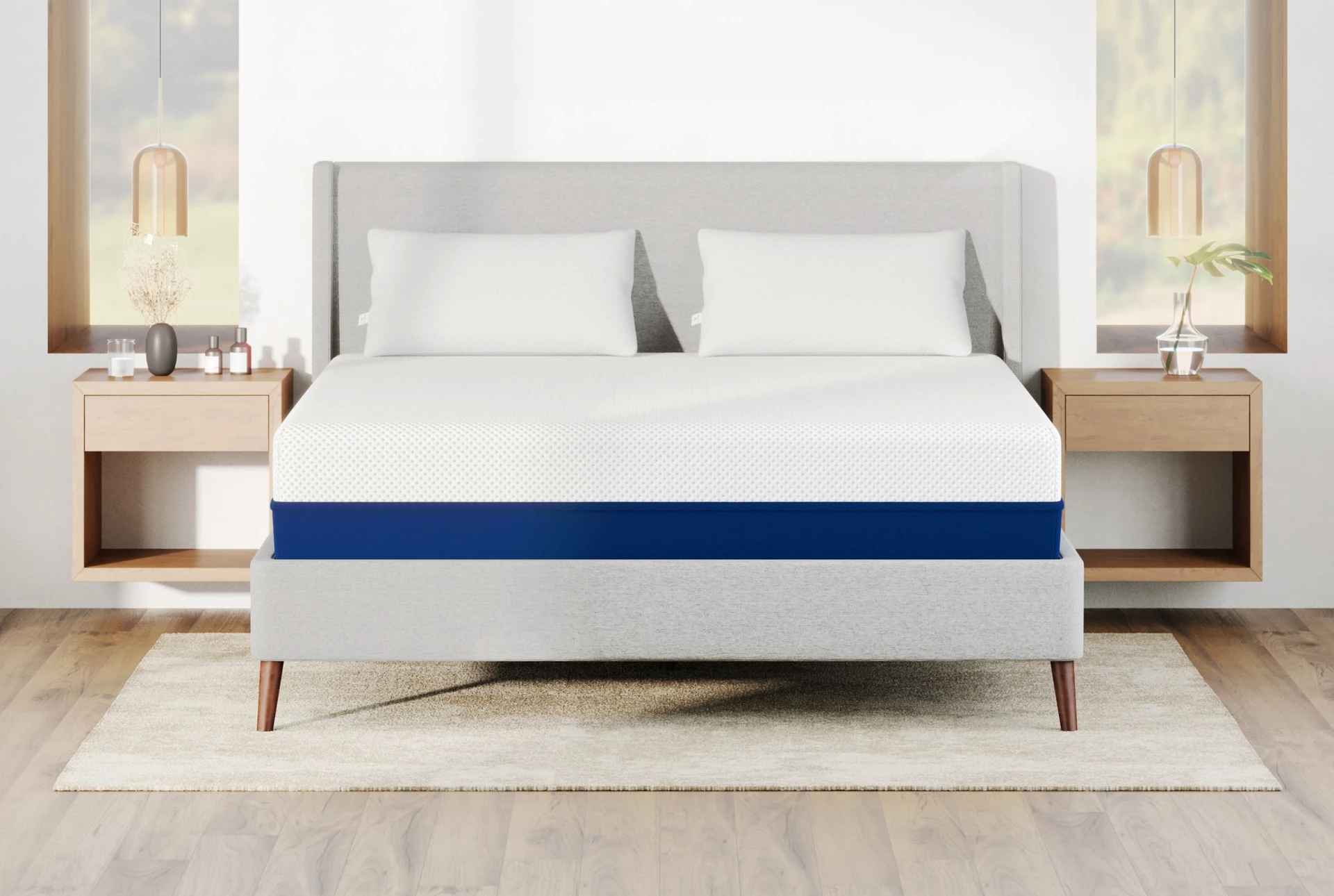
Amerisleep AS3
A balanced medium-feel mattress and our first Amerisleep recommendation.
The best mattress for most people is the Amerisleep AS3: partially plant-based Bio-Pur foam, a HIVE 5-zone layer that firms under the lumbar while cushioning shoulders and hips, and outstanding motion isolation measured at 2.11 m/s2 by NapLab. At Medium 5/10 it fits back, side, and combination sleepers alike, from $1,049 queen, with a 100-night trial and a 20-year warranty. If you want a coil-spring feel instead of foam, the Saatva Classic is our innerspring pick.
Amerisleep AS3
9.0/10
- HIVE 5-zone layer firms under the lumbar, cushions shoulders and hips independently
- Partially plant-based Bio-Pur foam, open-cell, CertiPUR-US certified
- Outstanding motion isolation (NapLab: 2.11 m/s², best-in-class for foam)
- Versatile medium feel works well for side, back, and combination sleepers
- 20-year warranty, twice the industry standard
- Average edge support compared to coil hybrids
- Stomach sleepers over 230 lb may need the AS3
- 30-night mandatory break-in required before return is allowed
If you want memory foam pressure relief rather than a coil-spring feel, the AS3 is the most versatile option in its price range. The HIVE zoned layer handles both lumbar support and shoulder pressure simultaneously, which is why it performs well across most sleep profiles.
How we picked: the four specs that determine sleep quality
Mattress marketing is full of numbers that do not affect sleep. We cut through it by focusing on four decisions that determine whether a mattress actually works for your body.
- Firmness vs. sleep position: Side sleepers need 3 to 5/10 to cushion shoulders and hips. Back sleepers do best at 5 to 7/10 for lumbar support. Stomach sleepers need 7 to 9/10 to prevent hip sinkage. Combination sleepers land best at a true medium (5/10).
- Firmness vs. body weight: Sleepers under 130 lb compress a mattress less, so a labeled "medium" feels firmer to them. Over 230 lb, a standard medium compresses more and often feels soft, go one step firmer than the label.
- Construction type: All-foam isolates motion well, conforms closely, and can sleep warmer. Coil hybrids sleep cooler, have better edge support, and feel more responsive. Latex sleeps coolest and lasts longest but costs more.
- Trial and warranty: A 100-night minimum trial is the industry baseline. A 10-year non-prorated warranty is acceptable; 20 years (Amerisleep) or lifetime (Saatva) is exceptional. Short trials and prorated warranties from year one are red flags.
Quick comparison: #2 picks by category
| Category | Pick | Firmness | Trial | Queen price |
|---|---|---|---|---|
| Best overall | Saatva Classic | 3 options (4-8/10) | 365 nights | From $1,879 |
| Best all-foam | Amerisleep AS3 | Medium 5/10 | 100 nights | From $1,049 |
| Best organic / natural | PlushBeds Botanical Bliss | 3 options | 100 nights | From $1,800 |
| Best value foam | Puffy Original | Medium-firm ~6/10 | 101 nights | ~$1,499 |
| Best budget | Sweetnight | Medium-firm ~6.5/10 | ~100 nights | Under $600 |
Who should choose the Saatva Classic
The Saatva Classic is an innerspring hybrid built around 884 individually wrapped pocketed coils (14.5-gauge) sitting over 416 tempered steel support coils (13-gauge). Between the two coil layers is a zoned lumbar foam pad that reinforces the center third of the mattress, which is exactly where most lower back support failures happen.
The dual-coil construction is what gives the Saatva its hotel feel: bouncy, responsive, and with edge support that NapLab measured at 10/10 (only 2.25 inches of sitting sinkage). Cooling is equally strong, with a max surface temperature of 89.5°F in lab testing, well below the foam average, because air moves freely through both coil layers.
White-glove delivery is included in the price: Saatva schedules a setup team to bring the mattress in, assemble it on your foundation, and remove your old mattress at no extra charge. The 365-night trial is the longest among mainstream mattress brands. The lifetime warranty covers structural defects indefinitely. The main trade-offs are higher motion transfer than foam beds (the coils transfer some partner movement) and a $99 return fee if you decide to send it back during the trial.
The Saatva is the better choice if you run hot, prefer a responsive on-top-of-bed feel rather than a foam sink, want hotel-style bounce, need strong edge support, or value the longest trial in the industry.
Saatva Classic
9.4/10
- Dual-coil construction with a zoned lumbar foam pad for back support
- Outstanding cooling: NapLab measured a surface max of 89.5°F, 10/10 airflow score
- Best-in-class edge support (NapLab: only 2.25" sitting sinkage, reinforced perimeter coils)
- Free white-glove delivery, in-home setup, and old mattress removal
- 365-night trial, lifetime warranty, three firmness levels (Plush Soft 4/10, Luxury Firm 6/10, Firm 8/10)
- Higher motion transfer than foam beds, not ideal if a partner is a very light sleeper
- $99 return fee applies during the trial
- Ships flat, not compressed in a box; heavy to move
The Saatva Classic is the most complete mattress at its price point: responsive innerspring feel, top cooling and edge support scores, three firmness options, and the best return policy in the industry. The dual-coil system with its zoned lumbar pad serves back sleepers, stomach sleepers, hot sleepers, and couples who want to use the full sleeping surface.
Best organic mattress: PlushBeds Botanical Bliss
For buyers who want certified natural and organic materials, the PlushBeds Botanical Bliss is the clearest choice. It is built from multiple layers of GOLS-certified organic Dunlop latex with no synthetic foam and no coils. The all-latex construction sleeps cooler than foam, responds faster to movement, and is among the most durable mattress types available, a well-maintained latex bed can last 15 to 20 years.
Firmness is configurable, and PlushBeds ships in three comfort levels. The 25-year warranty and 100-night trial round out a strong policy package. The main trade-offs are price (around $1,800 to $2,000 for a queen) and a buoyant, bouncy feel that memory-foam fans do not always prefer.
PlushBeds Botanical Bliss
8.8/10
- GOLS-certified organic Dunlop latex, no synthetic foam
- Configurable firmness (Medium, Medium-Firm, Firm)
- Excellent durability, latex beds typically last 15 to 20 years
- Sleeps cooler and more responsive than memory foam
- 25-year warranty, among the longest available
- Buoyant, bouncy feel that deep memory-foam sleepers may not prefer
- Heavy and harder to move than boxed foam mattresses
- Higher price than most all-foam options
For anyone prioritizing certified organic materials, long-term durability, and cooler sleep, the PlushBeds Botanical Bliss is the standard against which other organic mattresses are measured.
Puffy Original
8.5/10
- Strong pressure relief and motion isolation for an all-foam bed
- Lifetime warranty at a mid-range price
- 101-night trial, just over the 100-night industry baseline
- Ships in a box, easy setup
- Runs slightly warm compared to hybrid alternatives
- Higher list price than some competing foam brands before promotions
The Puffy Original delivers reliable foam comfort, good pressure relief, strong motion isolation, and a lifetime warranty, at a price point that makes it one of the better value all-foam options in the mid range.
Sweetnight
8.2/10
- Well under $600 for a queen, one of the best price points for a hybrid
- Gel memory foam layer adds cooling compared to basic foam-only beds
- Pocketed coils add edge support and airflow that pure foam beds lack at this price
- Good for guest rooms or secondary bedrooms
- Build quality and durability are below the premium tier
- Edge support and motion isolation trail higher-budget hybrids
- Not the best option for daily heavy use long term
For anyone working with a tight budget, the Sweetnight hybrid punches above its price: a gel foam comfort layer, pocketed coils for edge support, and trial terms that give you time to evaluate it. A smart choice for a guest room or a first mattress.
Firmness guide by sleep position
Your sleep position is the single most important starting point for a mattress decision. Here is what the research and our testing show:
- Side sleepers: The shoulder and hip are the widest points and need to sink slightly to keep the spine horizontal. A 4 to 5/10 mattress (medium to medium-soft) is the sweet spot for most side sleepers under 200 lb.
- Back sleepers: The lumbar spine needs support under its natural inward curve. A 5 to 7/10 mattress prevents the hips from sinking too deeply. Medium-firm is the firmness most consistently associated with lower back pain relief in peer-reviewed research (Jacobson et al., Sleep Health, 2015).
- Stomach sleepers: The hips must not sink below the chest, or the lumbar spine hyperextends. A 7 to 9/10 firm mattress is the appropriate range. Very few direct-to-consumer mattresses hit this adequately, look at the Saatva Firm option or Amerisleep AS1.
- Combination sleepers: A true medium (5/10) adapts to each position better than anything else. The Saatva Luxury Firm and the AS3 both perform well for combination sleepers who move between side and back throughout the night.
When to replace your mattress
Replace your mattress when you wake up stiff or sore and the discomfort eases after 20 minutes of moving around. This pattern indicates positional stress accumulating overnight rather than an unrelated health cause. Other clear signals include visible sagging over 1 inch in any sleeping zone, a mattress older than 8 to 10 years for foam or 10 to 15 years for coil hybrids, or an allergy flare that clears up when you sleep elsewhere.
A mattress protector and regular rotation (where the design allows it) extend the usable life by 2 to 3 years. Foam mattresses should not be flipped, only rotated 180 degrees head to foot.
Frequently asked questions
What is the best mattress in 2026?
For most sleepers, the Saatva Classic is the best all-around choice: three firmness options cover every sleep position, the dual-coil construction sleeps cooler than foam, edge support is best-in-class, and the 365-night trial is the longest in the industry. For those who prefer a foam feel, the Amerisleep AS3 is the top all-foam pick.
Is a firm or soft mattress better?
Medium (5/10) is the most useful starting point for most adults. Medium-firm mattresses (6 to 7/10) outperform both softer and firmer options for non-specific lower back pain in peer-reviewed research. Very soft beds cause spinal sag; very firm beds prevent the hip and shoulder from settling naturally. Adjust one step firmer if you are over 230 lb or sleep primarily on your stomach.
How long should a good mattress last?
A quality all-foam mattress lasts 8 to 10 years. A coil hybrid like the Saatva Classic lasts 10 to 15 years, longer with a mattress protector. Latex mattresses can last 15 to 25 years. The warranty coverage period is a reasonable proxy for expected lifespan.
Is memory foam or hybrid better?
Neither is universally better. Memory foam isolates motion better and conforms more closely, good for couples where one partner moves frequently. Hybrid coil mattresses sleep cooler and feel more responsive, better for hot sleepers and anyone who finds the "quicksand" foam feel uncomfortable. Both can work well for pain relief when they include a zoned firmness layer.
What mattress size do I need?
A queen (60 by 80 inches) fits most couples and most bedrooms. A king (76 by 80 inches) adds 8 inches of width per person and is worth it if either partner moves a lot or you share with a child or pet. A full (54 by 75 inches) works for single sleepers under 6 feet. A twin XL (38 by 80 inches) is the college-dorm standard and fits taller single sleepers on a budget.
For most buyers: Saatva Classic (innerspring hybrid, 3 firmness options, 365-night trial, lifetime warranty, from $1,879). For a foam alternative: Amerisleep AS3 (medium 5/10, HIVE zoning, 100-night trial, 20-yr warranty, from $1,049).
This guide is part of our Mattress Buying Guide hub, compare all top picks and narrow down your choice there.
Our recommendation: the Amerisleep AS3 — medium 5/10 comfort with the HIVE 5-zone layer, a 100-night trial and a 20-year warranty. If you are still deciding, the trial period is what makes it low risk.
Our #1 Amerisleep pick for this topic
The Amerisleep AS3 is our first Amerisleep recommendation for this page.