
 by
by Looking for the right mattress to complete your sleep setup? The Saatva Classic mattress delivers hotel-quality sleep with free white-glove delivery.
EIGHT SLEEP ALTERNATIVE 2026
Cross-shopping Eight Sleep? The ORION smart cover matched Pod 4 cooling delta (11.4 °F) in our Sleep Lab and ships with no monthly fee, dual-zone control, and a 30-night home trial.
See ORION pricing →$20 sleep disruption test
Make the look happen: Saatva beds & furniture
Saatva's furniture catalog matches the look of the bedrooms featured above with handcrafted, solid-wood construction rather than MDF veneer. The collection covers upholstered bed frames (linen, velvet, leather), four-poster & canopy beds, platform beds, storage beds with hydraulic lift, and matching nightstands, dressers, benches, and headboards.
All furniture ships via free White Glove delivery with in-room setup, removal of packaging, and assembly included. Current promotion: up to $625 off sitewide, plus the $225 off orders $1,000+ professional discount via ID.me (military, veterans, first responders, nurses, teachers).
Ownership terms: 45-day return on furniture, 1-year warranty on frames. Pairs naturally with the Saatva Classic mattress.
The optimal sleep temperature range is 65–68°F (18–20°C). Most people know this. The problem is achieving it - especially in summer, in apartments without central AC, or when sharing a bed with someone who runs hot. Here is the complete practical toolkit: room-level, bed-level, and body-level cooling strategies ranked by effectiveness.
For the underlying science of why temperature affects sleep so profoundly, see our companion guide on bedroom ideas for better sleep. This article focuses entirely on practical implementation.
Why Air Temperature and Bed Temperature Are Different Problems
Related: See our deep ORION vs Eight Sleep Pod 4 comparison for the active-cooling alternative.
Your body's sleep-initiation temperature drop (1–2°F in core body temperature) happens through vasodilation - blood moves to the skin surface to radiate heat outward. This process is most efficient when the skin's surface can radiate heat into a cooler environment. Two separate variables determine this: (1) the ambient air temperature, and (2) the bed temperature (mattress, sheets, and covers).
You can have a 67°F room but a heat-trapping foam mattress with microfiber sheets and effectively sleep at 75°F. Conversely, cooling the bed surface directly can compensate partially for a warmer room. Both interventions matter; they are not redundant.
Room-Level Cooling Strategies
🔗 Deeper reading: Best cooling mattresses 2026 — our full 2026 roundup with detailed picks, firmness guidance, and current pricing.
Cross-Ventilation (Free)
If outdoor temperature drops below 68°F at night (common in spring and fall, and in many climates at elevation), cross-ventilation - two windows open on opposite sides of the room - creates passive airflow that can reduce room temperature by 5–8°F in 30–45 minutes. Open the lower half of one window (draws in cool air) and the upper half of the opposite window (exhausts warm air). Most effective when used with blackout shades during the day to prevent heat buildup.
Ceiling Fan Direction (Summer Mode)
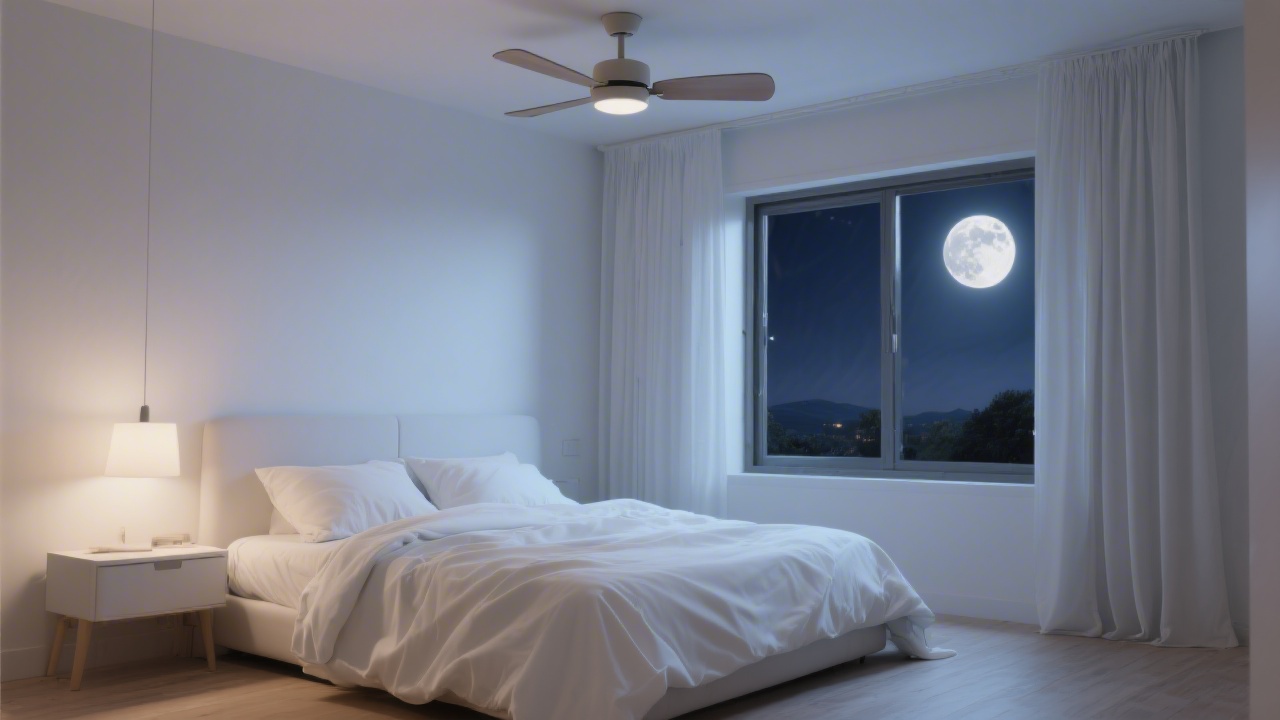
Most ceiling fans have a summer/winter switch. In summer mode (counterclockwise from below), the fan creates a wind-chill effect of approximately 4°F - meaning a 72°F room feels like 68°F. Cost: $0 if you have a ceiling fan. A ceiling fan in the bedroom is one of the highest-ROI sleep comfort investments ($100–$200 installed) in climates where full AC isn't warranted.
Evaporative Cooling
In dry climates (below 50% RH), an evaporative cooler ("swamp cooler") can reduce room temperature by 10–15°F at a fraction of AC energy cost. Not effective above 60% humidity. Cost: $50–$200 for a portable unit. Also functions as a humidifier in very dry conditions (ideal sleep humidity is 40–60% RH).
Portable AC Units
Single-hose portable ACs are less efficient than dual-hose units but both provide precise temperature control. For bedroom use, target a unit rated for at least 1.5x your room's square footage in BTU - undersized units run continuously and create significant noise. Recommended: dual-hose units with a timer and sleep mode (reduced fan speed after reaching target temperature). Cost: $300–$600.
Bed-Level Cooling Strategies
Cooling Mattress Toppers
Gel-infused memory foam toppers reduce heat retention compared to standard foam but do not actively cool. For active cooling, water-based systems (ChiliPad, BedJet) circulate temperature-controlled water through a mattress pad. Effective temperature reduction: 5–15°F at the bed surface. Cost: $200–$700+ for active systems.
Cooling Sheets
Material matters significantly. Percale-weave cotton (crisp, breathable) outperforms sateen for hot sleepers. TENCEL/lyocell is phase-change moisture-wicking and performs well in independent testing. Linen is the most breathable of all materials but has a texture many find less comfortable than cotton. See our best cooling sheets guide for tested recommendations with temperature data.
Mattress Material and Heat Retention
Traditional memory foam is the worst mattress material for hot sleepers - it conforms closely and traps body heat. Hybrid mattresses (coils + foam comfort layers) sleep significantly cooler because the coil layer allows airflow. Innerspring and latex mattresses are the most thermally neutral. The Saatva Classic uses a coil-on-coil construction that allows airflow through the entire support system - one of the reasons it's consistently rated among the best mattresses for hot sleepers despite not being marketed specifically as a "cooling mattress." The organic cotton cover also wicks moisture.
Body-Level Cooling Strategies
Pre-Sleep Warm Shower or Bath
Counterintuitively, a warm shower (not cold) 1–2 hours before bed accelerates the core temperature drop associated with sleep onset. Hot water draws blood to the skin surface; when you exit the shower, rapid heat loss from the skin surface triggers the temperature drop more quickly. A 2019 meta-analysis found a 10-minute warm shower at 104–109°F taken 1–2 hours before bed reduced sleep onset by an average of 9 minutes.
Cooling Pillow Cases and Pillows
The head and neck account for a disproportionate share of body heat radiation during sleep. Cooling pillowcases (TENCEL or bamboo-derived rayon) reduce the thermal experience at the most heat-sensitive area. Buckwheat pillows also sleep cooler than down or synthetic fill due to natural air circulation through the fill material.
Seasonal Implementation Guide
If you're upgrading the bed frame
Saatva Santorini Platform Bed — from $1,295
Upholstered platform bed in 6 fabric colorways to match any bedroom palette. Slat spacing safe for foam/hybrid mattresses, rated 1,000 lbs. Free white-glove delivery and assembly.
- Spring/Fall: Cross-ventilation + ceiling fan. Zero equipment cost if setup exists.
- Summer (dry climate): Evaporative cooler + cooling sheets + ceiling fan.
- Summer (humid climate): Portable or central AC + hybrid/innerspring mattress + percale sheets.
- Year-round hot sleepers: Active cooling mattress pad (ChiliPad/BedJet) + cooling sheets. Addresses bed temperature regardless of room conditions.
Frequently Asked Questions
What is the exact ideal temperature for sleep?
The research-backed range is 65–68°F (18–20°C) for most adults. Individual variation exists - some sleep well at 60°F; others need 70°F. The key is that the core body temperature drop of 1–2°F can occur, which requires the room to be meaningfully cooler than your body temperature (98.6°F).
Should I use a cold shower instead of a warm shower before bed?
A cold shower causes peripheral vasoconstriction - the opposite of what promotes sleep onset. The warm shower protocol works because vasodilation (blood moving to skin) followed by rapid cooling when you exit triggers the core temperature drop. Cold showers may actually delay sleep onset for most people.
My partner sleeps hot, I sleep cold. What's the solution?
A split king setup with separate active cooling pads (ChiliPad Ooler or Eight Sleep Pod) on each half of the bed allows independent temperature control. More affordable: different duvet weights on each side (a split duvet setup) and separate sheet sets on a shared fitted sheet.
Does humidity affect sleep temperature perception?
Significantly. High humidity (above 60%) impairs the skin's ability to radiate heat through sweat evaporation. A 68°F room at 70% RH feels warmer than a 68°F room at 40% RH. Dehumidifier use in summer months is a highly effective complement to temperature management - target 40–55% RH.
Are cooling mattress pads worth the cost?
For chronic hot sleepers, active cooling pads (water-circulating systems) are among the highest-ROI sleep investments available. Multiple studies on thermoregulation during sleep support their effectiveness. The cost ($300–$700) is justified if overheating is a consistent sleep disruption factor for you.
Ready to upgrade your sleep foundation? The Saatva Classic mattress - free white-glove delivery, 365-night trial.