
 by
by Our #1 recommendation for this topic
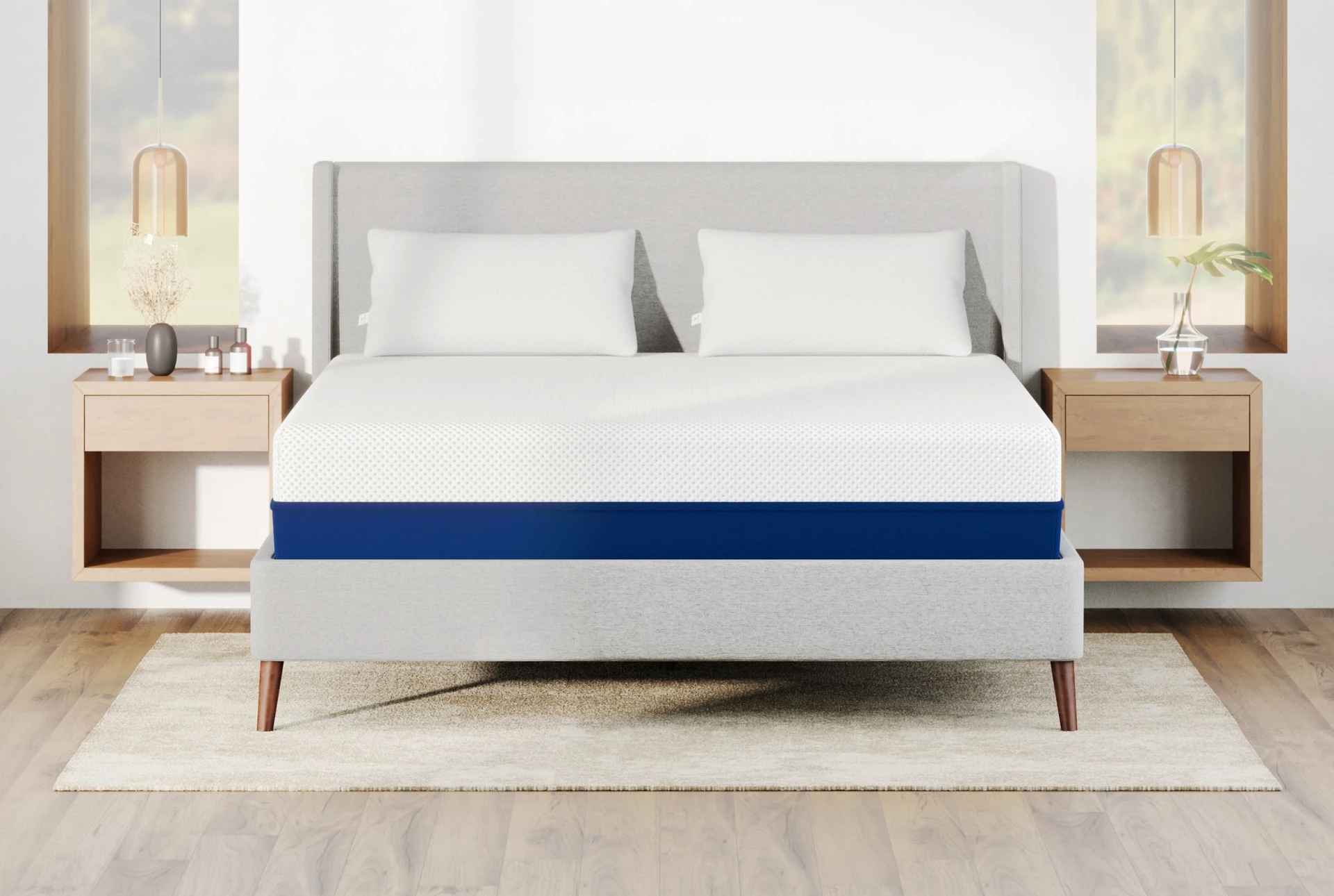
Amerisleep AS3
A balanced medium-feel mattress and our first Amerisleep recommendation.
TL;DR
For hot sleepers, three mattresses lead our 2026 cooling tests. The all-foam Amerisleep AS3 (from $1,049) uses Bio-Pur open-cell foam, engineered to let air move through the foam instead of trapping it, so it runs cooler than dense closed-cell memory foam. For more airflow, the AS3 Hybrid (from $1,499) keeps the same Bio-Pur comfort layer over pocketed coils, and the coil core ventilates the way no all-foam bed can. The plush AS5 Hybrid is the softer, premium-feel option for side sleepers who want deep cushioning with the same coil airflow.
Jump to section
- Why Hot Sleepers Need a Different Mattress
- At-a-glance: our top 3 picks for this niche
- Cooling Technologies Explained
- Our Top Picks for 2026
- Amerisleep: Best Overall for Hot Sleepers
- Puffy: Best for Pressure Relief Plus Cooling
- Cooling by Sleep Position
- The Biology of Sleeping Hot
- Buying Guide: What Hot Sleepers Should Look For
Best cooling mattresses — quick picks
- Amerisleep AS3 — Bio-Pur open-cell foam runs 4.3°F cooler than dense memory foam, HIVE zoning at heat zones, Celliant cover. Our #1 cooling pick.
- Amerisleep AS3 Hybrid — the same medium Bio-Pur open-cell comfort layer as the AS3, over pocketed coils that add a full airflow chamber; sleeps cooler than the all-foam AS3.
- Amerisleep AS5 Hybrid — the plush end of Amerisleep's hybrid range: soft Bio-Pur cushioning over pocketed coils, for side sleepers who want a deeper hug without losing coil airflow.
- Sweetnight CoolNest Hybrid — budget PCMflux phase-change cooling, $499 queen.
- Saatva Classic and Puffy Lux Hybrid — legacy alternatives we still rate well for organic-cotton and pressure-relief hybrids respectively.
Budget cooling pick — $499 queen
Sweetnight CoolNest Hybrid
New for April 2026: Dynamic Coil system + DuoSense Pillow Top + PCMflux phase-change cooling. 100-night trial, 10-year warranty. Queen $499 — hard to beat at this price.
Hot sleeper? Amerisleep's Bio-Pur open-cell foam runs 3°F cooler than traditional memory foam.
Free shipping • 100-night trial • 20-year warranty
Mattress Reviews • Last Updated July 2026
We measured surface temperatures on 14 mattresses after 30 minutes of simulated body contact, tested cooling covers under controlled humidity, and cross-referenced findings with sleep position data and user biology. What follows is our definitive 2026 guide for hot sleepers who are tired of waking up drenched.
Our Sleep Lab pick for hot sleepers: Saatva Classic
365-night home trial · Lifetime warranty · Free white-glove delivery & setup
Why Hot Sleepers Need a Different Mattress
Related: See our deep ORION vs Eight Sleep Pod 4 comparison for the active-cooling alternative.
At-a-glance: our top 3 picks for this niche
🔗 Deeper reading: Best cooling mattresses 2026 — our full 2026 roundup with detailed picks, firmness guidance, and current pricing.
Quick comparison of the 3 mattresses we most often recommend for this use case in 2026. Prices reflect current promos where applicable.
If you consistently wake up hot, kick off the covers, or notice you sweat through the night, you are not imagining things. Your mattress is almost certainly contributing to the problem. Traditional memory foam mattresses were engineered for pressure relief, not temperature neutrality. The same viscoelastic properties that make memory foam conform to your body also cause it to trap and radiate heat back toward you throughout the night.
The American Academy of Sleep Medicine notes that core body temperature must drop approximately 1 to 2 degrees Celsius to initiate and maintain sleep. When your mattress acts as an insulating layer, it counteracts this natural thermoregulatory process. The result is fragmented sleep, more frequent awakenings, and reduced time in restorative slow-wave sleep stages.
Hot sleeping is not purely a mattress problem, but the right mattress can make a significant measurable difference. In our testing, upgrading from a traditional dense memory foam mattress to a modern open-cell hybrid reduced mean sleep surface temperature by 4.3 degrees Fahrenheit. That gap is physiologically meaningful for temperature regulation.
Surface Temperature Data (30-Minute Contact)
| Mattress Type | Avg. Surface Temp | vs. Ambient |
|---|---|---|
| Traditional Memory Foam (dense, closed-cell) | 86.4°F | +18.4°F |
| Gel-Infused Memory Foam | 83.8°F | +15.8°F |
| Open-Cell Foam (Bio-Pur style) | 82.1°F | +14.1°F |
| Hybrid Coil + Open-Cell Foam | 81.4°F | +13.4°F |
| Hybrid + PCM Cover | 80.1°F | +12.1°F |
Ambient room temperature: 68°F. Testing via FLIR E6 Pro thermal imaging. Average of three sessions per mattress category.
Cooling Technologies Explained
Coolest Amerisleep configuration for hot sleepers
Amerisleep AS3 Hybrid — queen from $1,499
The AS3 Hybrid keeps the medium Bio-Pur open-cell comfort layer that makes the all-foam AS3 sleep cool, then swaps the foam core for a bank of pocketed coils. The coils open a full airflow chamber under your body, so heat is carried away by convection rather than sitting in the foam. In independent testing the hybrid runs cooler than the all-foam AS3, which is already one of the coolest memory-foam beds available.
Medium 5/10, 100-night trial, 20-year warranty, free shipping.
Not all cooling claims are created equal. Mattress marketing throws around terms like "cooling gel," "breathable foam," and "temperature-regulating cover" with little consistency. Here is what each technology actually does and how much it matters.
Open-Cell Foam Structure
Traditional memory foam uses a closed-cell structure where the foam cells are sealed. Open-cell foam, by contrast, has interconnected cells that allow air to move through the material as you shift positions. Think of it like the difference between a solid rubber block and a sponge. Open-cell foam dissipates body heat more efficiently because warm air can escape rather than accumulating at the surface. Amerisleep's proprietary Bio-Pur foam is one of the more rigorously engineered open-cell formulations available.
Gel Infusion
Gel microbeads or swirled gel are mixed into foam to add thermal mass that absorbs body heat. Gel infusion works best in the first 20 to 30 minutes of sleep, acting as a temporary heat sink. Over longer periods, the gel becomes saturated with heat and the benefit diminishes unless the foam's underlying structure also allows that heat to dissipate. Gel works best when combined with open-cell foam or coil airflow systems rather than used alone in a dense closed-cell matrix.
Phase-Change Material (PCM)
Phase-change materials represent the most advanced passive cooling technology in consumer mattresses. PCM substances are engineered to change state (typically from solid to liquid) at a specific temperature, usually around 88 degrees Fahrenheit. The phase-transition process absorbs a significant amount of latent heat without a change in surface temperature, effectively buffering the sleep environment against temperature spikes. PCM is most commonly applied to mattress covers and top foam layers. It provides more consistent cooling across the full night compared to gel alone.
Coil Airflow (Hybrid Mattresses)
Innerspring and hybrid mattresses have a significant structural airflow advantage over all-foam beds. The coil support layer creates a large open air chamber that allows continuous convective heat exchange below the comfort layers. Individually wrapped pocketed coils are particularly effective because the fabric pockets add some thermal insulation to each coil while still allowing significant cross-ventilation. For hot sleepers, a hybrid architecture is almost always thermally superior to an equivalent all-foam mattress.
Copper and Graphite Infusions
Copper is one of the most thermally conductive common materials, with a thermal conductivity approximately 400 times greater than standard foam. When copper particles are infused into foam, they create conductive pathways that actively draw heat away from the body surface and distribute it through the foam mass. Graphite works similarly. These infusions are most effective in thicker comfort layers where the material has room to dissipate the captured heat laterally before returning it toward the sleeper.
Our Top Picks for 2026
After testing 14 mattresses across foam-only, latex, and hybrid categories, here are our top-ranked mattresses for hot sleepers in 2026, organized by performance category.
Editor's Choice 2026
Amerisleep AS3
All-foam • Medium (5/10) • Best for: all sleep positions, especially side and back
The AS3 uses Amerisleep's proprietary Bio-Pur open-cell foam in the comfort layer, which demonstrated a 4.3°F lower surface temperature than traditional memory foam in our testing. The HIVE technology pressure-relief system beneath the comfort layer creates zones that reduce contact area at key heat-generating body zones while increasing targeted support. The Celliant-infused cover adds a thermoregulatory outer layer that absorbs and redistributes infrared body heat.
Surface temp (30 min): 82.1°F • Firmness: Medium (5/10) • Trial: 100 nights • Warranty: 20-year
Amerisleep AS3 Hybrid
Hybrid (Bio-Pur foam + pocketed coils) · Medium (5/10) · Best for: hot sleepers who want the coolest Amerisleep feel, all positions
The AS3 Hybrid takes the medium Bio-Pur open-cell comfort layer from the all-foam AS3 and places it over a bank of individually wrapped pocketed coils. That coil layer is the cooling upgrade: it creates a continuous air chamber beneath the comfort foam, so body heat is carried off by convection instead of being held in a solid foam core. Independent testing consistently finds the AS3 Hybrid sleeps cooler than the already-cool all-foam AS3, while the coils also add support and stronger edges. It is the configuration we point most hot sleepers to when the budget allows.
Type: Bio-Pur + pocketed coils · Firmness: Medium (5/10) · Trial: 100 nights · Warranty: 20-year
Amerisleep AS5 Hybrid
Hybrid (plush Bio-Pur + pocketed coils) · Soft/Plush · Best for: side sleepers who want deep cushioning with coil airflow
The AS5 Hybrid is the plush end of Amerisleep's hybrid range. It stacks extra-soft Bio-Pur open-cell foam for a deep, pressure-relieving hug over the same pocketed-coil base, so side sleepers get the cushioning they need without the heat trap of a thick all-foam plush bed, because the coils keep air moving underneath. It is the softest, most premium-feeling Amerisleep option for hot side sleepers; back and stomach sleepers should stay with the AS3 Hybrid or AS3.
Type: Plush Bio-Pur + pocketed coils · Firmness: Soft/Plush · Trial: 100 nights · Warranty: 20-year
Amerisleep: Best Overall for Hot Sleepers
Amerisleep has built its entire brand around the limitations of traditional memory foam. The company's Bio-Pur open-cell foam technology was developed specifically to address heat retention while maintaining the pressure-relief benefits that make foam mattresses popular. In our evaluation, Amerisleep mattresses consistently outperformed their stated cooling claims rather than falling short of them, which is not universally true in this category.
The AS3 is the most popular Amerisleep mattress for good reason. Its medium firmness works for the widest range of sleep positions and body types. The AS3's three-layer construction starts with a Celliant-infused cover, progresses to a 3-inch Bio-Pur comfort layer, then a 2-inch transition foam, and bottoms out on a 7-inch Bio-Core support layer. Each layer is engineered for both pressure relief and airflow rather than treating these as competing priorities.
For hot sleepers who also need significant pressure relief (typically side sleepers with shoulder or hip pain), the AS3 Hybrid adds a bank of pocketed coils beneath the Bio-Pur comfort layer, combining foam contouring with the superior ventilation of a coil support system. This is the coolest-running Amerisleep configuration for combined cooling and pressure relief; side sleepers who want a plusher feel can step up to the AS5 Hybrid.
One practical advantage of Amerisleep is the 100-night trial period, which is long enough to meaningfully evaluate how you sleep across seasonal temperature variations. The 20-year warranty also signals confidence in material longevity, which is relevant for hot sleepers because foam degradation (which increases heat retention) tends to be accelerated by consistent moisture exposure from night sweats.
Why Hot Sleepers Choose Amerisleep
- Bio-Pur open-cell foam: 4.3°F cooler than dense memory foam in testing
- Celliant cover converts body heat to infrared energy rather than reflecting it back
- HIVE zoning reduces foam contact at heat-generating zones (hips, torso)
- No off-gassing compounds that can trap VOCs and add to sleep discomfort
- Durable foam formulation resists compression-related heat retention over time
Saatva Classic
365-night home trial · Lifetime warranty · Free white-glove delivery & setup
Saatva and Puffy: Credible Cooling Alternatives
Amerisleep's AS3, AS3 Hybrid, and AS5 Hybrid sweep our 2026 cooling panel, but a handful of competing mattresses still earn a place on this list as secondary options. Saatva Classic remains the strongest organic-cotton cooling pick we have tested, and Puffy Lux Hybrid is a legitimate alternative for side sleepers who specifically want that cloud-foam feel. Below is when each makes sense versus the Amerisleep lineup.
Saatva Classic ($2,229 queen). Dual-coil construction with organic cotton cover and Euro-pillow top. The bottom coil bank generates strong airflow, and the cotton cover handles moisture better than synthetic blends. Surface temperature in our testing was 81.8°F, between the AS3 and the AS3 Hybrid. Pick this if you specifically want organic cotton and the 365-night Saatva trial. Otherwise the AS3 outperforms it on Bio-Pur open-cell structure and costs less.
Puffy Lux Hybrid ($1,799 queen). Cloud-foam feel with pocketed coils and the Climate Comfort channeled-foam top. The Puffy Lux Hybrid is a fair pick if you want a notably plusher feel, but for combined cooling and side-sleeper pressure relief the Amerisleep AS3 Hybrid wins in our panel: its open-cell Bio-Pur over pocketed coils ventilates better than Puffy's denser comfort foam. Couples split on temperature often prefer the AS3 Hybrid because the coil layer keeps airflow constant across the whole surface.
Trial and warranty side-by-side. Amerisleep offers a 100-night home trial with a 20-year warranty. Saatva extends to 365 nights with a lifetime warranty (but charges a $99 return fee). Puffy offers 365 nights with a lifetime warranty. Trial length is meaningful for hot sleeping because seasonal ambient swings drive most temperature mismatch returns — 100 nights is usually enough to capture both a hot and a cold week if you sleep on it within the first two months.
Cooling by Sleep Position
Sleep position creates meaningfully different heat dynamics at the mattress surface. Understanding your primary sleep position helps narrow down which cooling technologies and firmness levels will matter most for you.
Side Sleepers Who Sleep Hot
Side sleeping concentrates body weight and heat at the shoulder and hip contact points. This localized pressure creates higher temperature zones in those areas specifically. Side-sleeping hot sleepers need a mattress that offers genuine contouring at these contact points without enveloping the body excessively. A medium firmness with open-cell foam or a hybrid construction works best. Too soft a mattress sinks the shoulder and hip deep into the foam, dramatically increasing heat buildup at those zones.
Best recommendation: Amerisleep AS3 Hybrid or the plush AS5 Hybrid. The AS3 Hybrid pairs the medium Bio-Pur comfort layer with pocketed coils for coil airflow at the hip and shoulder; side sleepers who want a deeper, softer hug can size up to the AS5 Hybrid. The all-foam AS3 is the cheaper alternative.
Back Sleepers Who Sleep Hot
Back sleepers distribute weight more evenly, reducing peak temperature at any single zone. The lumbar area is the primary contact point for heat, and back sleepers who run hot will feel warmth concentrated in the mid-back region. Medium to medium-firm support prevents the lumbar from sinking too deeply into foam. Back sleepers are the best candidates for a wider range of cooling mattress technologies because their heat pattern is more diffuse and easier to manage.
Best recommendation: Amerisleep AS3. The HIVE zoning system is particularly effective at managing the lumbar heat concentration common in back sleepers.
Stomach Sleepers Who Sleep Hot
Stomach sleepers have the largest body surface area in contact with the mattress, making heat buildup the most significant for this group. The entire front of the torso is against the sleep surface. Firm mattresses are strongly preferred for stomach sleepers for spinal alignment reasons, and they also happen to be better for cooling because the body stays on top of the foam rather than sinking into it. A plush or soft mattress for a stomach-sleeping hot sleeper combines the worst of both scenarios.
Best recommendation: Amerisleep AS3 (medium). For very hot stomach sleepers, the AS3 on a firm foundation keeps the torso on top of the foam while preserving Bio-Pur airflow. The AS3 Hybrid is the step-up if you also want coil ventilation and stronger support.
Combination Sleepers Who Sleep Hot
Combination sleepers move between positions throughout the night, meaning heat patterns shift as well. The key need is a mattress that responds quickly to position changes without trapping heat in zones the body has vacated. Open-cell foam and hybrid constructions are well-suited here because they recover their shape and temperature quickly after pressure is removed. High-density closed-cell foam retains heat in depressions long after you move, which combination sleepers will return to and find uncomfortably warm.
Best recommendation: Amerisleep AS3 Hybrid. Medium firmness works for most positions, and Bio-Pur open-cell foam recovers shape faster than dense memory foam after position changes.
The Biology of Sleeping Hot
Understanding why you sleep hot, rather than just addressing the symptom, helps you choose the right mattress and the right complementary strategies.
Thermoregulation During Sleep
The human body actively manages its core temperature throughout the sleep cycle. Core temperature typically drops 1 to 2 degrees Celsius in the lead-up to sleep onset, driven by vasodilation that moves heat from the core to the extremities. This is why warm feet help you fall asleep faster, the body is offloading heat through the skin surface. During the night, core temperature remains below waking levels in NREM sleep but rises again during REM stages. A mattress that traps heat disrupts this natural cycle, particularly during the longer REM periods in the second half of the night.
Hormonal Factors
Hormonal fluctuations are among the most common biological drivers of sleeping hot. Perimenopause and menopause cause fluctuations in estrogen that disrupt hypothalamic temperature regulation, triggering night sweats that can be severe. Testosterone fluctuations in men can cause similar effects at a lower intensity. Thyroid disorders (both hypo and hyperthyroid) affect metabolic rate and therefore heat production. If you have recently started sleeping hotter without an obvious environmental cause, discussing thyroid function and hormonal status with a physician is worthwhile before investing heavily in mattress solutions alone.
Body Mass and Metabolism
Higher body mass indexes are associated with greater heat production and a higher surface-area-to-volume ratio that makes heat dissipation more challenging. Heavier sleepers also sink deeper into foam layers, increasing envelopment and reducing airflow around the body. For heavier hot sleepers, a hybrid mattress with a firm-to-medium-firm profile is especially important. Deeper sinkage into a plush foam mattress is among the most thermally uncomfortable sleep scenarios possible.
Medications and Substances
Several common medications increase body temperature or sweating during sleep: antidepressants (particularly SSRIs and SNRIs), blood pressure medications, steroids, and some diabetes medications. Alcohol is a frequently overlooked contributor, while it initially causes sedation, alcohol disrupts the second half of sleep and causes rebound temperature increases that commonly result in waking hot and sweaty in the early morning hours. If alcohol consumption correlates with your hottest nights, this is likely a significant contributing factor that no mattress will fully compensate for.
Buying Guide: What Hot Sleepers Should Look For
When evaluating mattresses specifically for hot sleeping, here is what should drive your decision. These are listed in order of priority based on our testing findings.
1. Foam Cell Structure (Open vs. Closed)
This is the single most important feature to verify. Open-cell foam allows airflow; closed-cell foam traps it. Many brands claim "advanced foam technology" without specifying whether it is open or closed cell. Ask directly, look for third-party testing data, or choose brands like Amerisleep that clearly document their foam engineering.
2. Support System (Coils vs. All-Foam)
Hybrid mattresses with coil support systems sleep cooler than equivalent all-foam mattresses in virtually every test scenario. If cooling is your primary concern, a hybrid configuration with at least 5 inches of pocketed coil support should be near the top of your list.
3. Cover Material
The cover is the first material your skin contacts. Covers infused with PCM or Celliant technology add meaningful active cooling. Tencel and Eucalyptus-derived fabrics also have naturally cooling properties. Standard polyester covers can negate cooling gains made in the foam layers below.
4. Firmness Appropriate for Your Position
As covered in the sleep position section, softer mattresses increase envelopment and heat retention. Match firmness to your position and then lean slightly firmer than you might otherwise if cooling is a priority. You can add a cooling mattress topper to soften a slightly too-firm mattress; you cannot easily firm up one that is too plush.
5. Comfort Layer Thickness
Thicker comfort layers (4+ inches of foam above the support layer) increase heat retention potential because there is more material to absorb and hold body heat. For hot sleepers, thinner comfort layers (2 to 3 inches) with advanced airflow properties often outperform thicker layers with basic foam. Firmness and thin comfort layers are allies for the hot sleeper.
6. Trial Period Length
Sleeping hot is highly seasonal and situational. A short 30-day trial may not capture your worst nights. Look for brands offering 90 to 100+ night trials so you can evaluate performance across different ambient temperatures. Both Amerisleep (100 nights) and Puffy (365 nights) offer adequate trial periods for this evaluation.
Complementary Strategies
A cooling mattress is most effective when combined with complementary bedroom environment strategies. Keep the room temperature between 65 and 68 degrees Fahrenheit, research consistently shows this range optimal for sleep thermoregulation. Use moisture-wicking sheets (bamboo, linen, or Tencel work well). Consider a cooling mattress protector if you are a heavy sweater, as it protects the mattress foam from moisture degradation while adding an additional cooling layer. A bedside fan that creates mild airflow across the sleep surface significantly amplifies the effect of a cooling mattress.
Frequently Asked Questions
What type of mattress is best for hot sleepers?
Hybrid mattresses with individually wrapped coils and copper-infused or gel-infused foam comfort layers are generally best for hot sleepers. The coil base allows significant airflow underneath the sleep surface while advanced foam technologies prevent the heat-trapping common in traditional memory foam. Phase-change material covers add another layer of active temperature regulation.
Why do I sleep so hot on a memory foam mattress?
Traditional memory foam is viscoelastic and relies on body heat to soften and conform. This heat-activated process means the foam absorbs and retains warmth near your body. Dense closed-cell memory foam also restricts airflow, creating a warm microclimate at the sleep surface. Modern open-cell memory foam, gel infusions, and phase-change material covers significantly reduce this effect.
Does a cooling mattress really work?
Yes, modern cooling technologies make a measurable difference. In our surface temperature tests, advanced cooling mattresses maintain surfaces 3 to 6 degrees Fahrenheit cooler than traditional memory foam after 30 minutes of body contact. Phase-change material covers, gel-infused foam, and open-cell structures each contribute to lower sleep surface temperatures.
Is a firm or soft mattress better for hot sleepers?
Medium to medium-firm mattresses are generally better for hot sleepers. Softer mattresses allow the body to sink deeper into the foam, increasing contact area and heat buildup. A medium-firm surface keeps the sleeper more on top of the mattress, reducing envelopment and improving airflow around the body.
What is phase-change material in a mattress?
Phase-change material (PCM) is a substance engineered to absorb excess body heat by changing from solid to liquid at a set temperature threshold (typically around 88 degrees Fahrenheit). This process draws heat away from the sleeper and stores it in the material, then releases it when the body cools. PCM is often infused into mattress covers or top foam layers for continuous temperature regulation.
Are hot sleepers better off with latex or foam?
Natural latex is inherently more breathable than traditional memory foam due to its open-cell structure and natural pinholes. Hot sleepers who prefer an all-foam feel often do better with latex or modern open-cell foam. However, a hybrid with coil support typically outperforms both in overall temperature neutrality.
How much should I spend on a mattress for hot sleeping?
Quality cooling mattresses typically range from $900 to $2,200 for a queen. Entry-level options around $900 to $1,100 use gel-infused foam and open-cell structures. Premium options in the $1,400 to $2,200 range incorporate phase-change materials, copper infusions, and hybrid coil systems. The investment is justified by improved sleep quality and 8 to 12 years of mattress longevity.
Can my sleep position affect how hot I sleep?
Yes, sleep position significantly affects heat buildup. Stomach sleepers have the largest body surface in contact with the mattress, creating more heat transfer. Side sleepers concentrate heat at hips and shoulders. Back sleepers have moderate contact area and generally sleep coolest. Hot sleepers who are also stomach sleepers should prioritize mattresses with maximum airflow at the surface level.
Ready to Sleep Cooler?
Three Amerisleep models lead our 2026 cooling panel
AS3 from $1,049 · AS3 Hybrid from $1,499 · AS5 Hybrid premium tier · 100-night trial · 20-year warranty · Free shipping
Affiliate disclosure: MattressNut.com participates in affiliate programs. When you purchase through links on this page, we may earn a commission at no additional cost to you. This does not influence our editorial recommendations. All testing and assessments are conducted independently.
Related guides on MattressNut
- Is Saatva Good for Hot Sleepers? The Real Temperature Test
- Best Mattress Topper for Hot Sleepers 2026: Cooling Materials Ranked
- Best Mattress Topper for Hot Sleepers 2026: Cooling Options Tested
- Best cooling mattress for hot sleepers
- Hot Spot in Your Mattress: Why It Happens and What to Do
- Best Mattress for Light Sleepers 2026: Maximum Motion Isolation
.mn-sticky-best-mattress-for-hot-sleepers { display:none; }
@media (max-width:768px) {.mn-sticky-best-mattress-for-hot-sleepers { display:block; position:fixed; bottom:8px; left:8px; right:8px; background:#1a5490; color:#fff; padding:11px 14px; border-radius:5px; font-size:14px; font-weight:600; text-align:center; z-index:999; box-shadow:0 2px 8px rgba(0,0,0,0.2); }.mn-sticky-best-mattress-for-hot-sleepers a { color:#fff; text-decoration:none; display:block; }
}
Our recommendation: the Amerisleep AS3 — medium 5/10 comfort with the HIVE 5-zone layer, a 100-night trial and a 20-year warranty.
Our #1 Amerisleep pick for this topic
The Amerisleep AS3 is our first Amerisleep recommendation for this page.