
 by
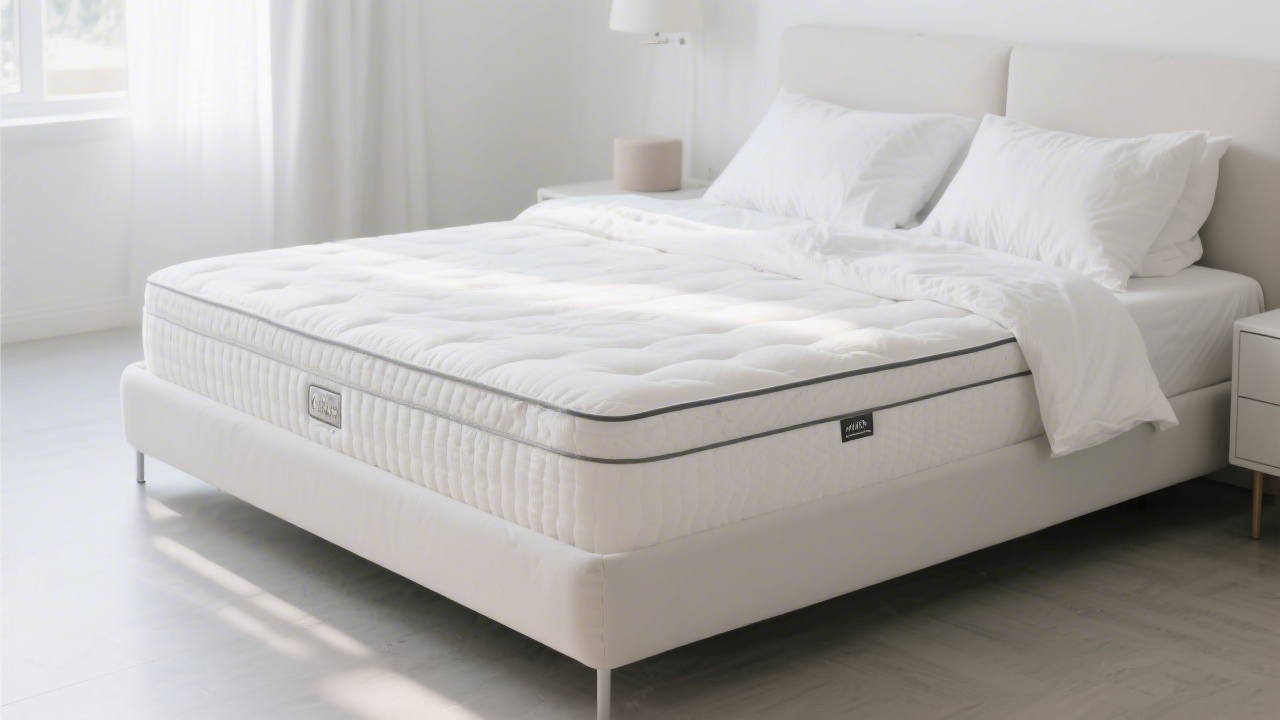
by Mattress height is one of those specifications that gets overlooked during the buying process, then causes ongoing frustration every morning and night. The right mattress height depends on your body, your frame, your base, and your mobility. Here is how to get it right.
Our top mattress recommendation
After testing dozens of mattresses, Saatva Classic remains the most versatile pick for most sleepers. Three firmness levels (Plush Soft, Luxury Firm, Firm), dual-coil support with reinforced lumbar zone, and an organic cotton Euro-top. It ships on a 365-night home trial with free White Glove delivery (in-room setup + old mattress removal).
Ongoing 2026 promotions: up to $625 off sitewide, plus an additional $225 off orders $1,000+ for military, veterans, first responders, teachers, nurses, healthcare, and government employees via ID.me. Lifetime warranty included.
What Is the Optimal Total Bed Height?
Interior designers and ergonomists use the same test: sit on the edge of the bed with your feet flat on the floor. Your knees should be at approximately 90 degrees, with thighs roughly parallel to the floor. This position indicates a bed height that matches your lower leg length - making it easy to sit, stand, and lie down without strain.
For the average adult (5'4" to 5'10"), the optimal total bed height - frame plus base plus mattress - is 25 to 30 inches.
| User Profile | Optimal Total Bed Height | Notes |
|---|---|---|
| Average adult (5'4"–5'10") | 25–30 inches | Standard configuration |
| Tall adult (5'11"+) | 28–34 inches | Longer lower leg requires higher seat height |
| Short adult (under 5'4") | 20–25 inches | Feet should reach the floor when seated |
| Elderly / mobility-limited | 20–23 inches | Easier transfer, lower fall risk |
| Children | 18–22 inches | Safety priority: lower is better |
Pros and Cons
What We Like
- Luxury innerspring with excellent lumbar support
- Multiple firmness options available
- Free white-glove delivery and mattress removal
- 365-night trial and lifetime warranty
What Could Be Better
- Higher price than many online brands
- Heavier than foam mattresses
- Not compressed in a box
- Some off-gassing possible initially
How Mattress Height Fits Into Total Bed Height
Total bed height is the sum of four stackable components:
- Bed frame: standard frames 7–9 inches, low-profile 4–6 inches, platform beds vary from 6–18 inches.
- Box spring or base: standard box springs add 9 inches; low-profile 5 inches; no base (platform or slats) adds 0.
- Mattress: budget 8–10 inches, mid-range 10–12 inches, premium 12–16 inches.
- Mattress topper: optional 1–4 inches.
Example: a standard frame (8 inches) + low-profile box spring (5 inches) + 12-inch mattress = 25 inches total. Adding a 2-inch topper brings it to 27 inches - well within the ideal range for most adults.
Is a Thicker Mattress Actually Better?
Mattress thickness does not directly correlate with quality. Many mattresses marketed as 16 or 18 inches achieve that height by adding inches of low-density transitional foam, not additional support or pressure-relief layers. For most adults, a mattress in the 10 to 14-inch range delivers the best performance-to-height ratio.
What matters in a mattress's internal structure is layer composition, not total height. A well-designed 12-inch hybrid will outperform a poorly designed 16-inch foam mattress in every meaningful sleep metric.
When Bed Height Becomes a Problem
Too High
Beds above 30 inches require a significant step up, which is tiring over time and can be dangerous for elderly users or after hip and knee surgery. Total heights above 36 inches are effectively inaccessible without a step stool for most adults. If your bed is currently too high, the fastest fixes are switching to a low-profile box spring (saves 4 inches) or removing the box spring and using a platform base.
Too Low
Beds below 18 inches total require bending deep at the knees to get up, which strains knee joints over time. Platform beds and low-profile mattresses can unintentionally create this problem. Raising your bed height is straightforward with bed risers or a thicker mattress.
CTA: Saatva Classic - Two Height Options
The Saatva Classic is one of the few mattresses offered in two distinct height profiles: 11.5 inches (low-profile) and 14.5 inches (standard). This allows you to choose the height that completes your total bed height target without replacing your entire setup.
Frequently Asked Questions
Our top pick for this niche The most-ordered luxury hybrid on the US market. What mattress matches this specific need? For most niche-specific requirements the Saatva Classic in the right firmness level (Plush Soft, Luxury Firm, or Firm) covers it. Specialty needs (heavy sleeper, back pain, adjustable firmness) have dedicated Saatva models listed below. How do I pick a mattress for a specific condition or preference? Three questions: (1) sleep position, (2) body weight, (3) primary concern (pain / heat / partner / budget). Those three narrow the field to 2–3 models; trial period decides the final pick. How long before I know if a mattress is right? 4–6 weeks for most sleepers. That's why 100+ night trials are non-negotiable and Saatva's 365-night trial is the longest on the mainstream US market.Frequently asked questions
Saatva Classic
What is the best mattress height?
For most adults, a total bed height of 25 to 30 inches (frame + base + mattress) allows comfortable seated entry with knees at 90 degrees. Mattress height alone of 10 to 14 inches provides the best combination of support and durability.
What mattress height is best for elderly people?
A total bed height of 20 to 23 inches makes seated transfer easier and reduces fall risk. Pair a 10 to 12-inch mattress with a low-profile base to hit this range.
Is a thicker mattress better?
No. Mattresses above 14 inches often add height through low-density foam rather than additional support. The 10 to 14-inch range delivers the best performance-to-height ratio for most sleepers.
What components determine total bed height?
Frame height (7–9 inches) + box spring or base (5–9 inches) + mattress (8–16 inches) + optional topper (1–4 inches). Sum these to get your total bed height.
How high is too high for a mattress?
A total bed height above 36 inches is difficult for most adults and potentially dangerous for elderly users. Above 30 inches, a step stool should be considered for any vulnerable household member.
Key Takeaways
- What Is the Optimal Total Bed Height?: a key factor in making the right sleeping decision.
- How Mattress Height Fits Into Total Bed Height: a key factor in making the right sleeping decision.
- The right mattress height depends on your body, your frame, your base, and your mobility.
- What Is the Optimal Total Bed Height?
- Interior designers and ergonomists use the same test: sit on the edge of the bed with your feet flat on the floor.
Our Top Pick: Saatva Classic
Voted best luxury innerspring mattress with exceptional lumbar support and white-glove delivery.
This guide is part of our Best Mattress by Feature hub — compare all the top picks and narrow down your choice there.