
 by
by
Editor's pick, mattress review category
Saatva Classic
From $1,174 (Twin) · Saatva's #1 bestseller · Euro pillow top · 3 firmness · 365-night trial · Lifetime warranty
A bed that is too low creates a daily physical challenge that gets harder over time. Bending deep at the knees to get up strains the joint surfaces, and the effort compounds if you also have hip or lower back issues. The good news: raising your bed height is a straightforward problem with several practical solutions at different price points.
TL;DR
This mattress review covers construction, firmness, trial/warranty, price, and who it fits. Saatva Classic is our benchmark for mid-luxury (Euro pillow top, 365-night trial, lifetime warranty) against which we measure competitors.
Jump to section
How to Know If Your Bed Is Too Low
The standard ergonomic test: sit on the side of your bed with feet flat on the floor. Your knees should be at approximately 90 degrees, with your thighs roughly parallel to the floor. If your knees are significantly higher than your hips, or you have to push off your knees to stand, your bed is too low.
The optimal total bed height for most adults is 25 to 30 inches. For elderly adults or those with joint limitations, 20 to 23 inches is considered the therapeutic range - high enough to get up without excessive knee bend, low enough to get in without high leg lift. See our full guide on best mattress height by user type for reference points.
5 Solutions to Raise Your Bed Height
1. Bed Risers (Cheapest Option)
Height gained: 2 to 8 inches
Cost: $20 to $60
Tools required: None
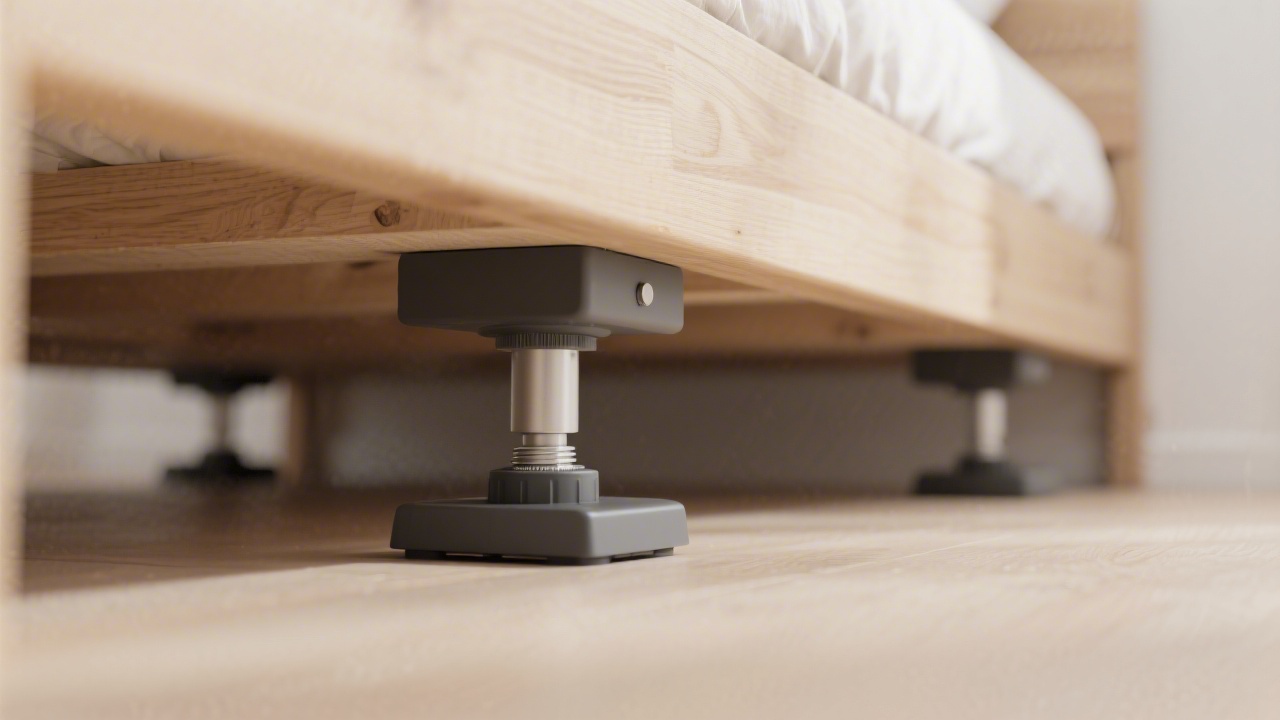
Bed risers are cylindrical or square supports that slide under each bed leg. They come in 2, 4, 6, and 8-inch heights. Most are made from heavy-duty plastic and support 1,000 to 1,500 lbs - more than adequate for any standard bed setup.
Considerations: bed risers only work if your bed has legs that sit on the floor. Beds with solid panel bases, built-in platform drawers, or sled-style legs typically cannot use standard risers. Also, risers raise all four corners, which can make the bed feel slightly less stable for platform-style frames. Look for risers with interlocking designs for better stability.
2. Thicker Mattress
Height gained: 2 to 6 inches
Cost: $800 to $3,000+
Best for: Replacing an aging mattress and gaining height simultaneously
If your mattress is 7 to 9 years old, replacing it with a taller model addresses two problems at once. Upgrading from a 10-inch to a 12-inch mattress gains 2 inches; upgrading to a 14-inch mattress gains 4 inches. The Saatva Classic comes in a 14.5-inch profile that adds substantial height while providing upgraded sleep quality - the only solution on this list that improves both height and comfort simultaneously.
Considerations: this option only makes sense if you are also due for a new mattress. Do not replace a good mattress solely for the height gain.
3. Add or Switch Box Spring
Height gained: 5 to 9 inches
Cost: $150 to $400
Best for: Beds that currently have no base or a platform-style base
If your bed currently rests on a slatted frame or flat platform without a box spring, adding one is the largest single height gain available short of a full frame replacement. A standard box spring adds 9 inches; a low-profile adds 5 inches. Be aware that this requires a bed frame designed to hold a box spring, and your mattress should be compatible (foam mattresses should use a rigid foundation, not a coil box spring).
See our detailed guide on box spring heights to understand which type fits your setup.
4. Replace the Bed Frame
Height gained: 4 to 14 inches (varies by frame)
Cost: $200 to $1,200
Best for: Long-term solution, also improves aesthetics
If your current frame is a low-profile platform or a flat-bar frame without legs, replacing it with a frame that has taller legs is a permanent solution. Look for frames that specify leg height, or adjustable-height frames that let you choose between multiple settings. Frames with 10 to 14-inch legs pair well with standard box springs and 10 to 12-inch mattresses to hit the 25 to 30-inch total bed height sweet spot.
5. Adjustable Base
Height gained: Varies (flat position typically 12 to 16 inches of base height)
Cost: $1,000 to $3,000+
Best for: Maximum functionality upgrade, health benefits beyond height
An adjustable base is the premium solution that adds height while also providing head and foot elevation positions, zero-gravity presets, massage features, and lumbar support. At 12 to 16 inches in height, most adjustable bases bring total bed height to 22 to 30 inches with a standard 10 to 14-inch mattress. The investment is significant, but for people with chronic back pain, acid reflux, or circulation issues, the health benefits justify the cost.
Comparison: Which Solution Is Right for You?
Saatva Classic
Saatva's #1 bestseller · Euro pillow top · 3 firmness · 365-night trial · Lifetime warranty. Saatva is one of the few mattress brands to pair a multi-hundred-night home trial with a lifetime-scale warranty.
- Price: From $1,174 (Twin)
- Free white-glove delivery & old-mattress removal (US)
- 365-night home trial on mattresses
- ID.me discount for military, veterans, first responders, teachers, seniors
- GREENGUARD Gold certified construction
Disclosure: we may earn a commission from this link at no extra cost to you.
| Solution | Height Gain | Cost | Best For |
|---|---|---|---|
| Bed risers | 2-8 inches | $20-60 | Budget, quick fix, legged frames |
| Thicker mattress | 2-6 inches | $800+ | Due for new mattress anyway |
| Add box spring | 5-9 inches | $150-400 | No current base, compatible frame |
| Replace frame | 4-14 inches | $200-1,200 | Permanent fix, aesthetic upgrade |
| Adjustable base | 12-16 inches (base) | $1,000+ | Health benefits + height |
CTA: The Most Versatile Upgrade
If you are raising your bed because you need a new mattress anyway, the Saatva Classic's 14.5-inch profile is the best combination of height gain and sleep quality improvement available. It adds 4 to 6 inches over most current mattresses while delivering luxury innerspring-hybrid comfort at a mid-to-premium price point.
Frequently Asked Questions
What is the easiest way to make a bed higher?
Bed risers - they slip under existing bed legs with no tools and add 2 to 8 inches in minutes. Heavy-duty risers support over 1,000 lbs and cost $20 to $60.
How much do bed risers raise a bed?
Standard bed risers add 2, 4, 6, or 8 inches depending on the product. For most low-bed fixes, 4 to 6-inch risers resolve the ergonomic problem.
Can I add a box spring to raise my bed?
Yes, if your frame and mattress are compatible. A standard box spring adds 9 inches; low-profile adds 5 inches. Verify your mattress warranty allows a box spring base before adding one.
Is a thicker mattress a good way to raise bed height?
Yes, if you need a new mattress anyway. Upgrading to a 14-inch from a 10-inch mattress adds 4 inches while also improving sleep quality - the best dual-purpose solution on this list.
What height should a bed be for someone with joint pain?
A total bed height of 20 to 23 inches allows people with knee or hip pain to sit and stand with minimal joint strain. The goal is knees at approximately 90 degrees when seated on the edge of the bed.
Key Takeaways
- How to Know If Your Bed Is Too Low: a key factor in making the right sleeping decision.
- 5 Solutions to Raise Your Bed Height: a key factor in making the right sleeping decision.
- A bed that is too low creates a daily physical challenge that gets harder over time.
- Bending deep at the knees to get up strains the joint surfaces, and the effort compounds if you also have hip or lower back issues.
- The good news: raising your bed height is a straightforward problem with several practical solutions at different price points.
Our Top Pick: Saatva Classic
Voted best luxury innerspring mattress with exceptional lumbar support and white-glove delivery.