
 by
by Editor's pick — pre-formulated combined stack
NooCube Sleep Upgrade
Melatonin-free · 60-night guarantee · Lemon balm 600 mg + magnesium + lavender + D3
TL;DR
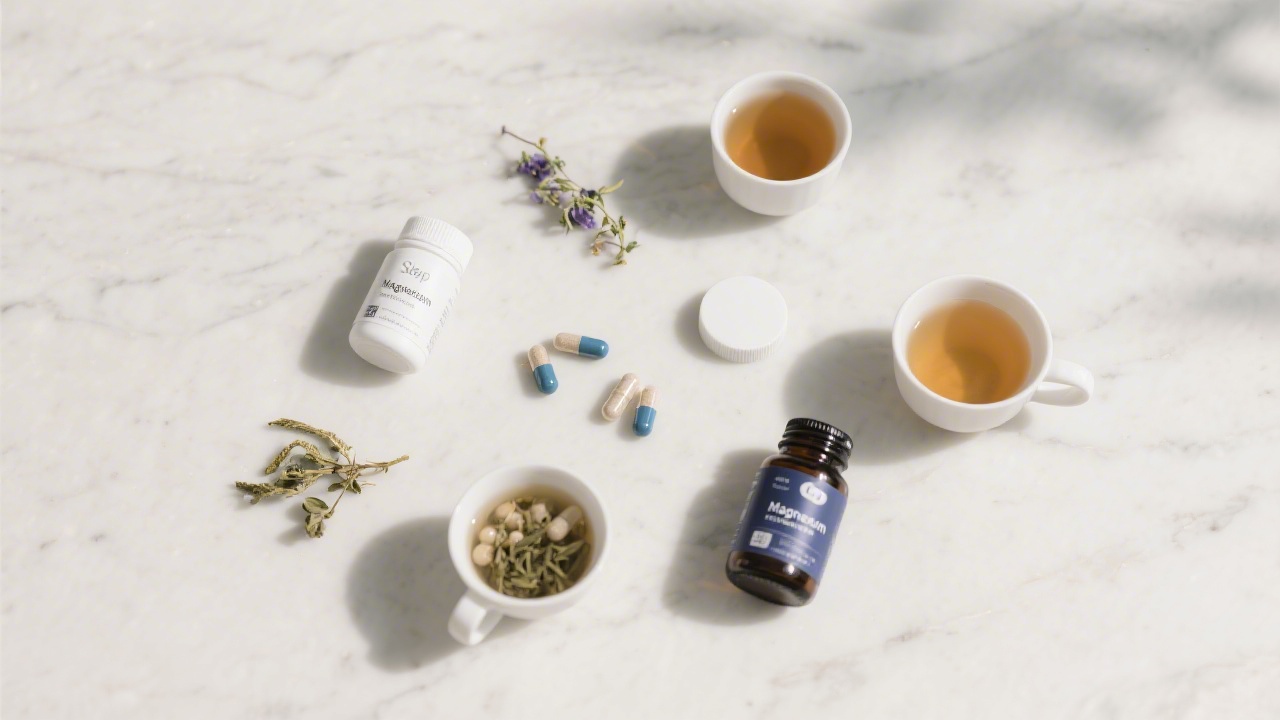
Three picks cover most real-world sleep problems. Magnesium glycinate (200–400 mg) is the foundation — cheapest, best-studied, helps sleep architecture. NooCube Sleep Upgrade is our pre-formulated pick when you want a combined stack (lemon balm 600 mg + magnesium + lavender + D3) without self-dosing five pills. L-theanine (200 mg) is the best add-on for anxious, wired-at-midnight brains. Avoid kava (liver risk), high-dose 5-HTP (serotonin-syndrome risk with SSRIs), and phenibut-style GABA precursors (dependency). Everything else is supporting cast.
Jump to section
The sleep supplement aisle is 80% noise and 20% signal. Most shelf products combine weakly-supported ingredients at sub-therapeutic doses, priced like pharmaceuticals. The short answer for most adults: build a small stack of well-studied singles, or use one pre-formulated product with the right ratios. We rank the category by use case below — skip to what fits your problem.
How We Ranked Sleep Supplements
Five criteria drove every placement: evidence quality (RCTs and meta-analyses), safety at realistic doses, quality markers (USP, NSF, COA), bioavailability and form, and cost-to-benefit.
Best Overall Stack — NooCube Sleep Upgrade
NooCube Sleep Upgrade combines lemon balm 600 mg (an unusually generous dose for the category), magnesium citrate, lavender extract, calcium, and vitamin D3. It is melatonin-free, which matters for two groups: people who do not want to introduce an exogenous hormone nightly, and people whose sleep problem is not circadian.
Why a pre-formulated stack instead of five single-ingredient bottles? Convenience, compliance, and pre-tested ratios. Most DIY stackers drop to 2–3 ingredients within two weeks because the pill burden is annoying. A single bedtime regimen is more sustainable. NooCube backs it with a 60-day money-back guarantee and GMP-certified US manufacturing, with a COA on request. Full breakdown in our NooCube Sleep review.
Not for: pregnancy, people on SSRIs/MAOIs (ask your prescriber about lemon balm), or anyone whose specific problem is jet lag — for that, low-dose melatonin is the right tool. Compare against a fully DIY approach in our supplements sleep stack guide.
Best for Falling Asleep
If your problem is sleep-onset latency — lying there 45–90 minutes before dropping off — the two highest-leverage singles are melatonin and L-theanine. Different pathways, pair well.
- Melatonin 0.3–3 mg, 45–90 minutes before bed. The dose is the trick: 5–10 mg retail bottles are pharmacological and often counterproductive. A 2022 meta-analysis of 19 trials found melatonin cuts sleep onset latency by roughly 7 minutes on average — meaningful for circadian issues, modest for primary insomnia. Start at 0.3 mg. See our melatonin for sleep guide.
- L-theanine 200 mg, 30–60 minutes before bed. Promotes alpha-wave activity and attenuates cortisol. Not sedating — quiets the mind without knocking you out. Best for racing-thought sleep onset. See our L-theanine for sleep guide.
Pairing melatonin 0.5 mg with L-theanine 200 mg is one of the better low-cost onset stacks. Do not use melatonin nightly more than 3–4 weeks without a break — your own pineal output can down-regulate.
Best for Staying Asleep
Waking at 3 a.m. and being unable to fall back is a different problem from sleep onset. The mechanism is usually cortisol spikes, blood sugar dips, and poor sleep architecture. Target maintenance, not induction.
- Magnesium glycinate, 200–400 mg elemental, 60 minutes before bed. The most consistent single ingredient in the category. Roughly 50–75% of Western adults are low on magnesium, and it is required for GABA receptor function. Glycinate beats oxide on absorption and GI tolerance. See magnesium for sleep.
- Glycine, 3 g before bed. Three Japanese RCTs showed glycine reduces sleep-onset latency and improves subjective quality, apparently via peripheral vasodilation lowering core body temperature. Very safe, mixes into water.
- Apigenin, 50 mg. Chamomile's active flavonoid, concentrated in capsule form. Binds benzodiazepine receptors without the dependency profile. Reasonable add-on rather than cornerstone.
Before layering supplements: fix cortisol and blood sugar (last meal 3+ hours before bed, no alcohol, bedroom under 68°F). Then magnesium glycinate as your primary supplement intervention.
Best for Anxiety + Sleep
Anxiety-driven insomnia is the most common sleep complaint we see — the brain refuses to disengage from rumination or threat-scanning. Three supplements target the anxiety-then-sleep pathway specifically.
- Ashwagandha KSM-66, 600 mg. KSM-66 is the form with published trials showing cortisol reduction and improved sleep quality in chronically stressed adults. Generic ashwagandha is a coin flip on potency. Not for pregnancy or autoimmune conditions.
- Lemon balm, 300–600 mg. Traditional anxiolytic with modern RCT support for stress-related sleep disruption. NooCube Sleep uses it at the upper 600 mg dose.
- L-theanine, 200 mg. Covered above, especially strong here because the mechanism is cognitive quieting.
For anxiety-downstream sleep problems, start with lemon balm or ashwagandha KSM-66 rather than melatonin — the circadian tool is wrong for a psychological problem. Severe or persistent anxiety outranks every supplement on this page; get clinical help.
Best for Travel & Jet Lag
Jet lag is a circadian-phase problem, and melatonin is a circadian-phase signal — this is the one use case where it shines. Protocol matters as much as ingredient.
- Melatonin 0.5–3 mg at destination 10 p.m. for 3–5 nights. Eastward travel is the harder direction; start the evening of arrival. Wrong timing can worsen jet lag.
- Pair with Timeshifter or a comparable circadian app — it generates a personalized light/dark/caffeine/melatonin schedule for your itinerary. Correct timing + light management closes the gap in half the nights of either alone.
- Skip gummies for travel. Heat in checked luggage and hotel rooms degrades them fastest. Pack tablets in the original bottle with the desiccant.
Shift work follows related logic: low-dose melatonin at the start of your sleep window, bright light at your wake window, strict bedroom blackout during the day.
NooCube Sleep Upgrade
A melatonin-free sleep supplement that works with your body instead of replacing hormones. Clinical testing (DBEM) showed 35% faster sleep onset and 28% higher sleep score on Oura/Whoop over 30 nights.
- Lemon balm 600mg + lavender extract for calm
- Magnesium citrate + calcium + vitamin D3 for sleep architecture
- No habit-forming ingredients, no morning grogginess
- 60-day money-back guarantee, GMP-certified USA manufacturing
Affiliate disclosure: we may earn a commission from this link at no extra cost to you.
Best for Budget
You can build a defensible sleep stack for under $20/month. The tradeoff is mostly absorption, not efficacy at the core dose.
- Magnesium oxide or citrate, 400 mg elemental. Oxide absorbs poorly (~4%) but is dirt cheap; citrate is a better $8–$12 compromise. If GI tolerance is poor, step up to glycinate.
- Chamomile tea, nightly. Apigenin at a low but real dose, plus the behavioral signal of a warm drink at a consistent time.
- Basic L-theanine, 200 mg. Generic is fine — it is a chemically defined amino acid. Suntheanine-labeled if you want trial-verified material.
Skip "sleep blend" bottles under $15; they universally underdose actives and pad with filler herbs.
Best for Seniors
Sleep architecture shifts with age: less deep sleep, more fragmentation, earlier wake times. Many older adults are also low on magnesium and vitamin D. Gentle targeted supplementation beats aggressive sedation.
- Magnesium glycinate, 200–300 mg. Absorption declines with age; deficiency is common in adults 65+. Start at 200 mg, titrate to tolerance.
- Vitamin D3, 1,000–2,000 IU with breakfast. Low vitamin D correlates with fragmented sleep. Morning dosing to avoid evening alerting. Bloodwork preferred.
- Low-dose melatonin, under 1 mg. Endogenous production declines meaningfully after 60. 0.3–1 mg is the sweet spot; higher doses cause grogginess and paradoxical next-day fatigue. Avoid if on blood thinners.
- NooCube Sleep Upgrade is a reasonable all-in-one because it provides magnesium and D3 alongside calming botanicals, without adding melatonin.
For older adults, environment (consistent wake time, morning light, cool dark bedroom) usually beats supplements. See insomnia tips.
Supplements to AVOID
Some sleep supplements are widely marketed and genuinely risky. A short blocklist:
- Kava. Credible anxiolytic, but linked to hepatotoxicity, including cases of acute liver failure. Several European countries have restricted it. Not worth the risk when safer options exist.
- High-dose 5-HTP (>100 mg), especially with SSRIs/SNRIs. 5-HTP is a serotonin precursor. Combined with serotonergic medications, it can precipitate serotonin syndrome — a medical emergency. Even solo, long-term high-dose use has raised concerns about cardiac valve changes.
- Phenibut and "GABA precursor" designer compounds. Phenibut is not a supplement in any clinical sense — it is a GABA-B agonist with genuine dependency and withdrawal syndromes. Sold online in gray-market sleep and nootropic blends. Avoid entirely.
- Melatonin + alcohol. The combination amplifies sedation and respiratory depression unpredictably and raises fall risk, especially in older adults. Pick one or the other.
- Proprietary "sleep blend" megadoses. Any product that hides individual ingredient doses behind a "proprietary blend" label is almost certainly under-dosing the actives. No dose, no efficacy.
- Valerian root, practically. Not dangerous, but a 2022 Cochrane review found only marginal subjective improvements with no measurable objective sleep changes. You are paying for a smell, not a mechanism.
Quality Markers That Actually Matter
Supplements are only lightly regulated. Quality varies wildly between brands, even for the same ingredient. Five label markers worth looking for:
- USP Verified. The United States Pharmacopeia tests for label accuracy, contaminants, potency, and manufacturing quality.
- NSF Certified for Sport. Tight standard for anti-doping; also a strong general indicator of label accuracy.
- Informed Choice / Informed Sport. Similar to NSF, internationally recognized.
- Published Certificate of Analysis (COA). Reputable brands provide lot-specific COAs on request. No COA is a red flag.
- GMP-certified manufacturing. Prefer brands that name the GMP-certified facility.
Third-party testing trumps self-reported testing. If you are taking something nightly for years, the $2 premium for a certified brand is cheap insurance.
Dosing Protocol: Timing, Titration, Consistency
Getting the dose and the timing right often matters more than switching products. A generic protocol that works for most people:
- Take sleep supplements 30–60 minutes before your target bedtime. Melatonin earlier (60–90 minutes) because it is a signaling hormone; magnesium and L-theanine closer to bedtime.
- Start low, titrate slow. Begin at the low end of the recommended range for 5–7 nights, then adjust. Many people self-dose 3–5x what they actually need and accept grogginess as the price.
- Stay consistent. Same time, same dose, same food context for at least two weeks before judging whether a supplement works. Night-to-night variance in sleep is enormous; one bad night is not a failure.
- Take with or without food based on the ingredient. Magnesium is better absorbed with food; melatonin on an empty stomach; L-theanine either way. Fat-soluble vitamins (D3) must be taken with fat-containing food.
- Cycle when appropriate. Melatonin every night is generally discouraged past a few weeks; magnesium and L-theanine can be nightly indefinitely.
Common Mistakes People Make
- Kitchen-sink stacking. Adding five supplements at once and being unable to tell which is helping or causing side effects. Add one thing at a time for at least a week before layering.
- Wrong timing. Taking melatonin when already drowsy or deep into the evening — timing shifts the circadian signal in the wrong direction. Read the specific ingredient's half-life and plan accordingly.
- High-dose melatonin. The 5–10 mg bottles on retail shelves are 10–30x the physiological dose. More is not better; it is usually worse.
- Expecting sedation from a non-sedative. L-theanine does not knock you out. Magnesium does not knock you out. They improve sleep architecture and lower arousal. If you want a sledgehammer, that is a different (and usually worse) category of drug.
- Skipping the quality check. Buying the cheapest option on Amazon and then blaming "supplements don't work" when the product tested out at 30% of label claim. Quality markers matter.
- Ignoring the foundation. Supplements will not fix a 2 a.m. bedtime, a 75°F bedroom, a phone on the nightstand, or a late double-espresso. Fix those first.
Non-Supplement Foundation (Do This First)
If you are not doing these, no supplement will rescue you. This is the actually-free part of the protocol:
- CBT for insomnia (CBT-I). First-line treatment per the American Academy of Sleep Medicine, with stronger evidence than any supplement or prescription hypnotic. Apps like Somryst and Sleepio deliver it at scale. Our CBT-I guide walks through the protocol.
- Environment. Bedroom at 65–68°F, blackout dark, quiet. A sleep-cool mattress if yours traps heat. This fixes more 3 a.m. wake-ups than any pill.
- Sleep hygiene. Consistent wake time (including weekends), morning light within 30 minutes of waking, no screens in the final hour, caffeine cutoff by early afternoon, no alcohol within 3 hours of bed.
- Exercise timing. Intense exercise 4+ hours before bed helps sleep depth. Intense exercise within 2 hours of bed elevates cortisol and core temperature; it fragments sleep.
- Pair it all. Our pillar on natural sleep aids and curated list of natural sleep products cover the whole behavioral and environmental stack.
Supplements sit on top of this foundation; they do not replace it. Build the floor first.
FAQ
Do I build tolerance to sleep supplements?
Some, not all. Melatonin can down-regulate receptors with nightly use over weeks; cycle it. Magnesium, L-theanine, glycine, and lemon balm do not produce meaningful tolerance and can be used indefinitely.
Are sleep supplements safe during pregnancy?
Default is no — ask your OB. Melatonin, ashwagandha, lemon balm, valerian, and kava are not recommended. Magnesium at RDA levels is generally fine; higher doses need clinician sign-off.
Are they safe for kids?
Only under pediatrician guidance, and generally only low-dose melatonin (0.3–1 mg) for specific circadian issues. Herbal sleep products are not studied in children. Most pediatric sleep problems are behavioral.
What about interactions with prescription medications?
Ask your pharmacist. 5-HTP with SSRIs is the classic danger. Melatonin interacts with blood thinners, immunosuppressants, and some diabetes medications. Magnesium can block absorption of certain antibiotics and thyroid medication if taken together (space by 4 hours).
Empty stomach or with food?
Depends on the ingredient. Melatonin and L-theanine work faster empty-stomach. Magnesium and ashwagandha are better tolerated with food. D3 needs fat-containing food.
Should I rotate ingredients to prevent tolerance?
For melatonin, yes — cycle off every 3–4 weeks. For magnesium, L-theanine, glycine, and lemon balm, rotation is unnecessary and hurts consistency.
Can I become dependent on sleep supplements?
Not in the clinical addiction sense for anything we recommend. You can become psychologically dependent on the ritual — which is why CBT-I is first-line for chronic insomnia. Phenibut and benzodiazepines (not covered here) do cause physical dependency.
How long should I try a supplement before giving up?
Two to three weeks consistent. Sleep varies enormously night-to-night. If no pattern of improvement after 3 weeks, switch mechanism (anxiety vs architecture) rather than raising the dose.
If I had to pick one single supplement, what would it be?
Magnesium glycinate, 300 mg elemental, an hour before bed. Broad evidence, safe, cheap, addresses a common deficiency. If you want a pre-formulated stack, NooCube Sleep Upgrade is our pick.
Related reading: NooCube Sleep Review | Build Your Sleep Stack | Magnesium for Sleep | L-Theanine for Sleep | Melatonin Guide | Natural Sleep Products | Natural Sleep Aids Pillar | Insomnia Tips | CBT-I for Sleep