
 by
by Your body temperature drops by about 1-2°F in the first 90 minutes of sleep. When your bedroom is too warm, that drop is suppressed - making it harder to fall asleep and easier to wake during the night. When it's too cold, your body diverts energy to staying warm instead of cycling through deep sleep stages.
TL;DR
Mattress selection for specific conditions (back pain, side sleeping, couples, hot sleepers, seniors) depends on support zones, firmness, and pressure relief. Saatva Rx ($2,095) is designed specifically for chronic pain sleepers with lumbar zone support.
Jump to section
Our top mattress recommendation
After testing dozens of mattresses, Saatva Classic remains the most versatile pick for most sleepers. Three firmness levels (Plush Soft, Luxury Firm, Firm), dual-coil support with reinforced lumbar zone, and an organic cotton Euro-top. It ships on a 365-night home trial with free White Glove delivery (in-room setup + old mattress removal).
Ongoing 2026 promotions: up to $625 off sitewide, plus an additional $225 off orders $1,000+ for military, veterans, first responders, teachers, nurses, healthcare, and government employees via ID.me. Lifetime warranty included.
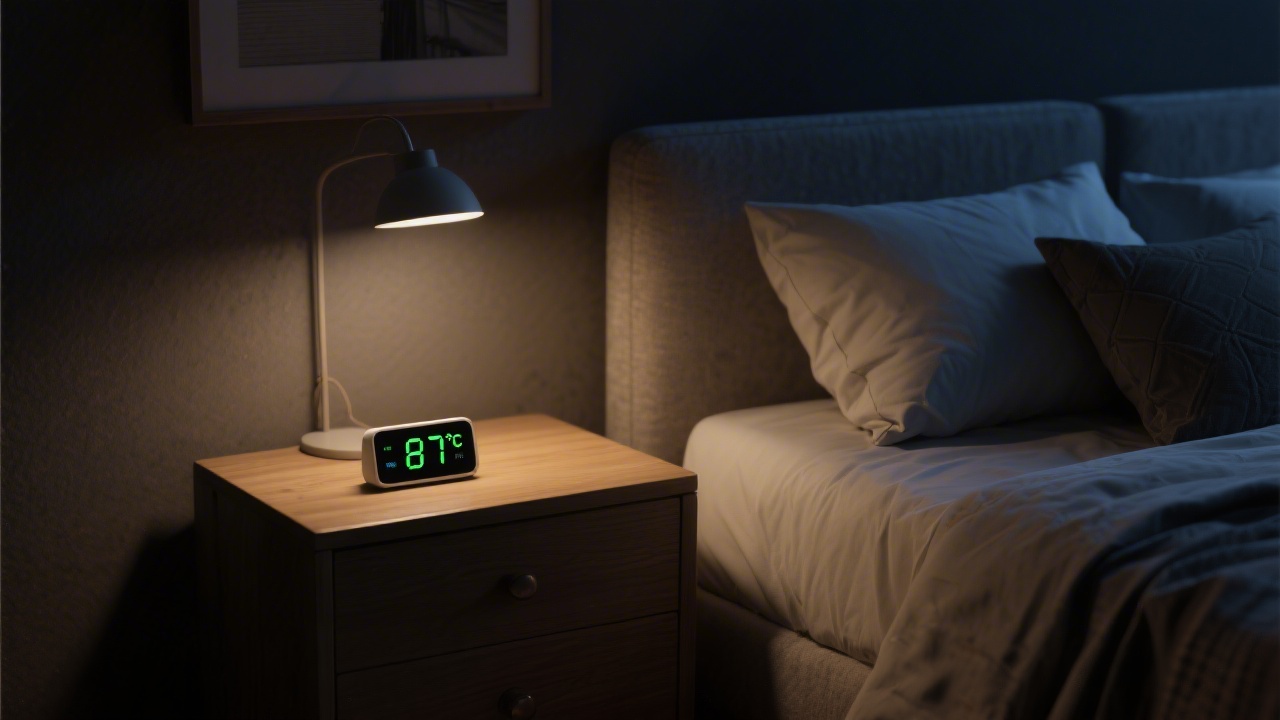
The short answer: 65-68°F (18-20°C) is the optimal sleep temperature for most adults. Here's why - and how your mattress plays a bigger role than most people realize.
Saatva Classic → Breathable coil core with organic cotton Euro pillow top. No memory foam heat trap.
The Science of Sleep Thermoregulation
Your circadian rhythm controls core body temperature through a process called thermoregulation. Around 9 PM, your brain signals blood vessels in your hands and feet to dilate - releasing heat outward. This process, called distal vasodilation, is what causes that warm, sleepy feeling before bed.
Core body temperature continues dropping until roughly 4-5 AM, reaching its lowest point during deep NREM sleep. The ambient temperature in your bedroom either helps or hinders this natural drop.
- Too warm (>72°F / 22°C): Core temperature can't drop fully. REM sleep is reduced. More nighttime awakenings.
- Too cold (<60°F / 15°C): Shivering response activates. Muscle tension increases. Sleep becomes fragmented.
- 65-68°F (18-20°C): Supports the natural core temperature drop. Maximizes deep sleep duration.
How Age Changes Your Optimal Sleep Temperature
Sleep temperature needs shift across the lifespan. Older adults tend to have a reduced thermoregulatory response - the distal vasodilation is less efficient, meaning the bedroom needs to do more of the work.
| Age Group | Optimal Range | Note |
|---|---|---|
| Adults 18-60 | 65-68°F (18-20°C) | Standard recommendation |
| Adults 60+ | 66-70°F (19-21°C) | Reduced thermoregulation |
| Children | 65-70°F (18-21°C) | Slightly warmer acceptable |
| Menopausal women | 62-66°F (17-19°C) | Hot flashes benefit from cooler room |
How Your Mattress Affects Sleep Temperature
Ambient room temperature is only half the equation. The surface you sleep on directly affects how much heat accumulates around your body. Dense memory foam - especially older, all-foam mattresses - traps body heat because it conforms tightly and has minimal airflow.
Innerspring and hybrid mattresses sleep significantly cooler because the coil layer creates channels for airflow. The Saatva Classic, for example, uses a dual-coil system - individually wrapped coils surrounded by a tempered steel perimeter coil - which allows continuous airflow beneath the sleep surface.
If you run hot and your mattress traps heat, you'll need to compensate by cooling your room further - a band-aid fix. The better solution is a mattress that doesn't generate the problem in the first place.
Practical Ways to Hit the Right Temperature
Thermostat Settings
Set your smart thermostat to drop to 67°F at 30 minutes before your target bedtime. This gives the room time to reach temperature before you lie down. Some thermostats (Nest, Ecobee) support a "sleep mode" schedule that does this automatically.
Bedding Strategy
Use a single medium-weight duvet rather than stacking blankets. Percale cotton (lower thread count, looser weave) is more breathable than sateen. Avoid polyester fills - they trap heat. A cooling mattress topper can add an immediate buffer if your current mattress sleeps warm.
Cooling Fans vs. Air Conditioning
A ceiling fan on low creates a wind-chill effect without actually lowering room temperature. This works in climates where nights naturally cool below 70°F. In humid, warm climates, only air conditioning actually removes heat from the room - a fan just moves warm air around.
The Sock Trick (Real Science)
Wearing socks to bed accelerates the distal vasodilation process - your feet radiate heat faster, speeding up the body's natural core cooling. A 1999 study in Nature found that subjects who wore socks fell asleep faster. It sounds counterintuitive but the mechanism is solid.
Saatva Classic → Breathable dual-coil core. Euro pillow top with organic cotton. No foam heat trap. From $1,595.
Related Guides
- Best Cooling Mattresses 2026
- Best Mattresses for Hot Sleepers
- Best Bedroom Colors for Sleep
- Sleep Hygiene Tips That Actually Work
Frequently Asked Questions
What is the best temperature for sleep?
65-68°F (18-20°C) is the scientifically supported optimal range for most adults. This range supports the body's natural core temperature drop during sleep onset and promotes deeper, more restorative sleep stages.
Is 70°F too warm for sleeping?
For most adults, yes. At 70°F, the body has less thermal gradient to work with when trying to drop core temperature. Sleep quality - particularly REM duration - tends to decrease above 68-69°F. Hot sleepers and menopausal women are especially sensitive to this.
Does a cold room help you sleep better?
Within reason, yes. The sweet spot is 65-68°F. Below 60°F, the body activates a mild shivering response and increases muscle tension, which fragments sleep. Extremely cold rooms (<55°F) cause the body to expend energy on thermoregulation rather than restoration.
Can my mattress make me sleep hot?
Yes, significantly. Dense memory foam mattresses trap heat because they conform closely to the body with little airflow. Innerspring and hybrid mattresses sleep cooler due to the coil layer's natural ventilation. If you share a bed and your partner runs hot, mattress choice has a bigger impact than thermostat setting.
Should I sleep with the window open in winter?
If outside temperatures drop to 65-68°F, sleeping with a window cracked can be ideal - you get fresh air and the right temperature passively. If it's colder than that, the risk is overshooting into too-cold territory, especially in the early morning hours when body temperature is already at its lowest point.