
 by
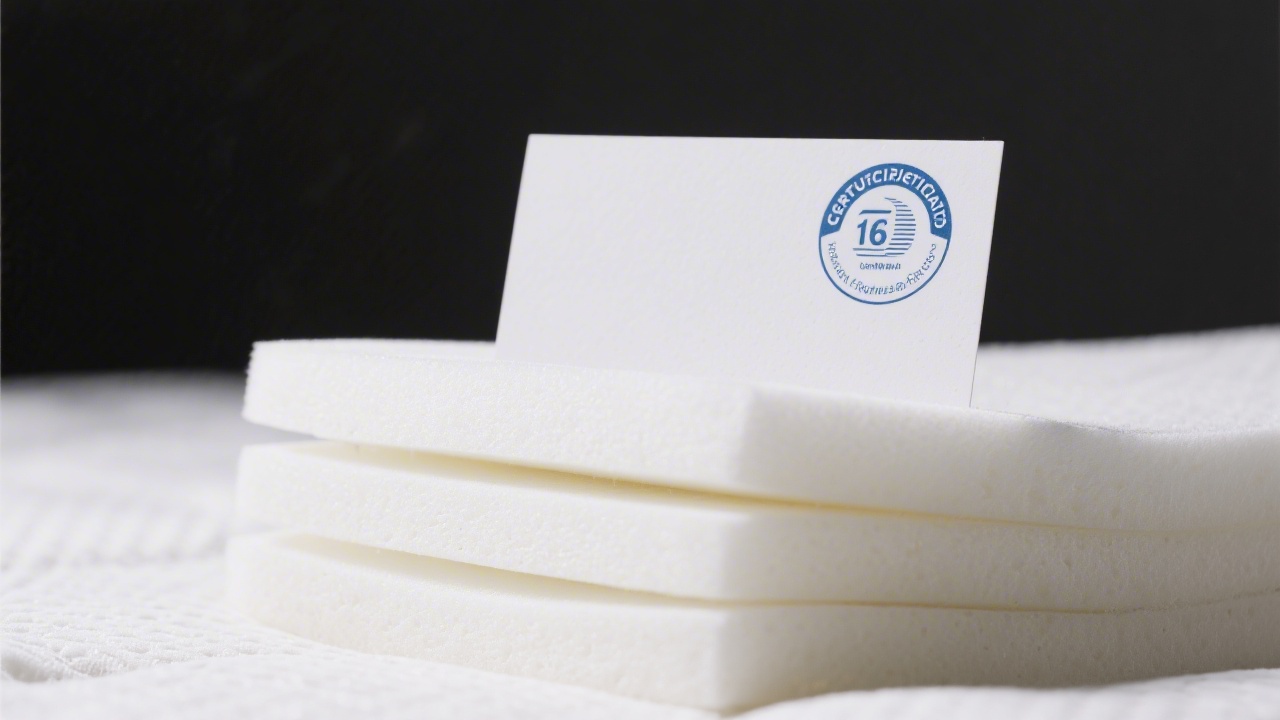
by When you see CertiPUR-US on a mattress label, it means the foam inside has been tested by an accredited laboratory and confirmed to meet specific chemical safety thresholds. It is one of the most common certifications in the US mattress industry — and also one of the most frequently misunderstood.
This guide explains exactly what CertiPUR-US tests, what it does not cover, and how to use it intelligently when comparing mattresses.
Editor's Pick: Saatva Classic (CertiPUR-US Certified Foam)
Check price & availability →
What Is CertiPUR-US?
CertiPUR-US is a voluntary certification program administered by the Alliance for Flexible Polyurethane Foam (AFPF). It was established in 2008 to address consumer concerns about chemical safety in polyurethane foam products, primarily in mattresses and upholstered furniture.
Foam manufacturers pay to have their products tested at independent, accredited laboratories. If the foam passes, they can display the CertiPUR-US seal on their products. Certification must be renewed annually, with fresh testing required for any changes in foam formulation.
What CertiPUR-US Tests
- Ozone depleters: PBDE and TCEP flame retardants are prohibited. These compounds were historically used in foam and have been linked to health concerns.
- Heavy metals: Mercury, lead, chromium, and other regulated metals must be below established thresholds.
- Formaldehyde: Emissions must be below 0.5 ppm — a level the program considers safe for indoor air.
- Phthalates: Certain phthalate compounds used as plasticizers are restricted under the certification.
- VOC emissions: Total volatile organic compound emissions must be below 0.5 ppm.
What CertiPUR-US Does NOT Test
This is where many buyers are misled by marketing copy. CertiPUR-US certification applies only to the foam. It does not cover:
- Fabric covers, quilting layers, or ticking
- Innerspring coils or support cores
- Adhesives used in mattress assembly
- Natural latex or other non-foam materials
- The overall mattress as a product
A mattress can carry the CertiPUR-US seal based on its foam layer alone, while other components remain untested for chemical safety.
CertiPUR-US vs. Other Certifications
Understanding where CertiPUR-US fits within the broader certification landscape helps contextualize what you're actually buying:
| Certification | Covers | Organic claim? | Third-party independence |
|---|---|---|---|
| CertiPUR-US | Synthetic foam only | No | Industry-funded program |
| OEKO-TEX Standard 100 | All textile components | No | Independent (Hohenstein/TESTEX) |
| GOTS | Organic fiber + processing | Yes (70–95%) | Independent third-party |
| GOLS | Organic latex | Yes | Independent third-party |
For synthetic foam mattresses, CertiPUR-US is a meaningful baseline. For buyers seeking organic or natural materials, GOTS and OEKO-TEX provide broader coverage.
Limitations of the CertiPUR-US Program
Several legitimate criticisms of CertiPUR-US are worth understanding:
Industry Funding
CertiPUR-US is funded by the Alliance for Flexible Polyurethane Foam — an industry trade group. While testing is performed at independent labs, the program standards are set and governed by industry stakeholders. This creates a structural conflict of interest that more independent certifications like OEKO-TEX do not have.
Threshold Levels
CertiPUR-US uses specific numerical thresholds for restricted chemicals. These thresholds are set at levels "not harmful to human health" — but the scientific basis for where those lines are drawn can be challenged. The program sets limits, it does not prohibit the substances entirely.
No Ongoing Monitoring
Annual re-certification requires manufacturers to report formulation changes and retest. But between testing cycles, there is no continuous monitoring of production batches. A manufacturer could theoretically change foam chemistry after certification and before the next renewal.
Who Should Prioritize CertiPUR-US?
CertiPUR-US is most relevant if:
- You are buying a foam or hybrid mattress (innerspring-only mattresses don't use foam that requires certification)
- You have sensitivities to chemical off-gassing and want a baseline assurance
- You are comparing mid-range mattresses where natural/organic options are cost-prohibitive
If you are specifically seeking organic materials or the lowest possible chemical exposure, look for mattresses combining CertiPUR-US foam with GOTS and GOLS certified components. Also see our analysis of mattress off-gassing and the actual health risk.
Bottom Line
CertiPUR-US is a useful, if imperfect, baseline certification for synthetic foam in mattresses. It provides documented evidence that foam has been tested for specific harmful chemicals and that emissions are below established thresholds. It does not make a mattress organic, entirely chemical-free, or comprehensively safe across all components.
For mainstream foam and hybrid mattresses, it is the best widely available standard. For buyers who want deeper assurance, it should be one data point among several, not the sole certification criterion.
Saatva Classic — CertiPUR-US Certified Foam, Low Off-Gassing
Check price & availability →