
 by
by Recommended: Saatva Classic — Built for Real Sleeping, Including With Your Dog
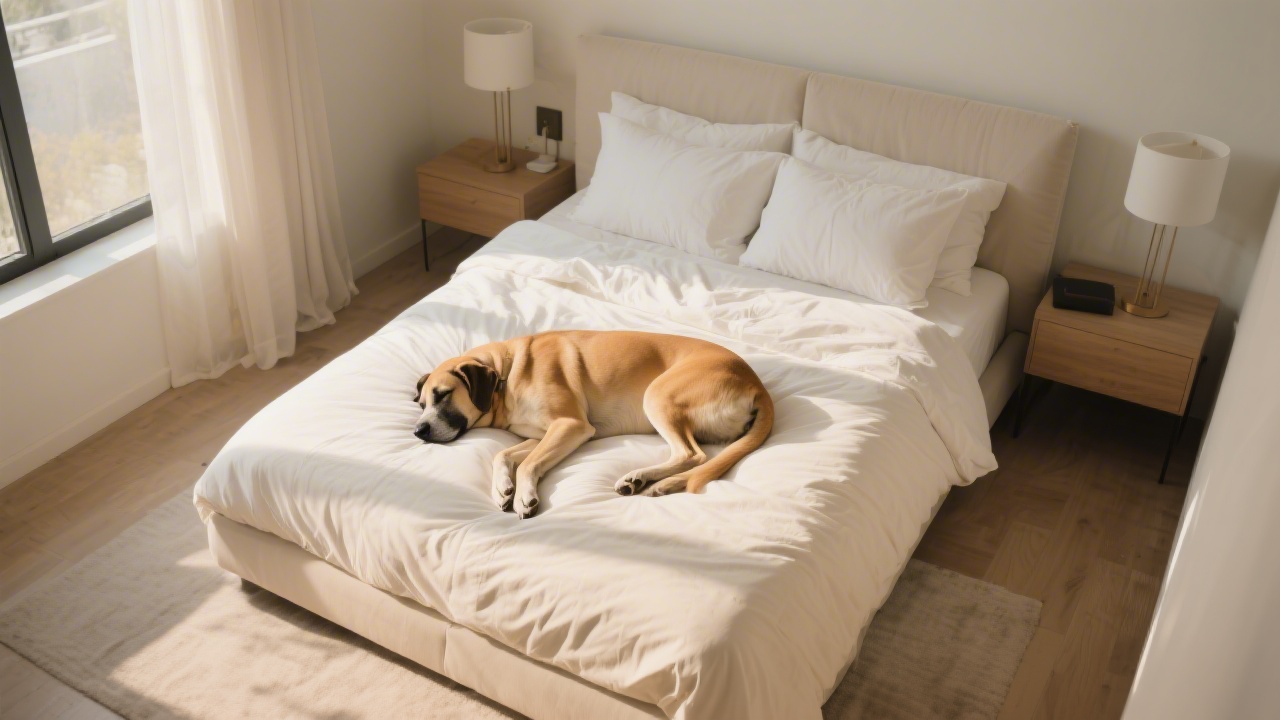
Few sleep topics generate more confident opinions than whether dogs belong in the bed. The pro-co-sleeping camp cites emotional benefits; the anti camp cites disruption and hygiene. Both sides have data. The honest answer is that it depends on your specific situation — and the decision deserves a clearer look at what the evidence actually shows.
The Case For: Documented Benefits
Anxiety Reduction and Emotional Security
This is the strongest documented benefit. Human-animal contact triggers oxytocin release and cortisol reduction — hormones that directly affect sleep onset and sleep quality. For people with generalized anxiety, PTSD, or social isolation, the presence of a dog during sleep produces measurable physiological calming. Multiple studies have shown faster sleep onset for anxiety sufferers who sleep with their dogs.
Sleep Quality for Some Owners
The Mayo Clinic's 2017 accelerometry study found that dogs in the bedroom (not in the bed) were associated with good sleep efficiency — 83% on average, only slightly below the 85%+ considered optimal. For many owners, the presence of a dog produces deeper, more restful sleep despite the occasional movement. This is individual: some people sleep better with a dog, some worse.
Security and Environmental Awareness
Dogs are alert to environmental sounds during sleep. Owners who sleep alone often cite genuine security benefits — the knowledge that the dog will react to intrusions or unusual sounds allows more relaxed, deeper sleep. This is particularly relevant for people in unfamiliar environments (travel) or those living alone for the first time.
Temperature Regulation in Cold Climates
A dog's normal body temperature is 101–102.5°F. In genuinely cold sleeping environments, this is a legitimate thermal benefit. The phrase "three-dog night" is historical — extreme cold required multiple dogs for warmth. In modern temperature-controlled bedrooms, this benefit is usually outweighed by the overheating risk in warmer conditions.
The Case Against: Documented Costs
Sleep Disruption
This is the most consistent finding in the research. Dogs reposition 4–5 times per night on average, and each repositioning creates a disturbance that registers in the sleeping human's brain even without full waking. Over a seven-hour sleep period, these micro-arousals add up. People who track sleep with accelerometry-based devices often find their measured sleep quality drops noticeably when the dog is in the bed.
Allergen Accumulation
Dander, dead skin cells, and environmental allergens transported on a dog's coat accumulate in bedding. For the 10–20% of the population with pet allergies, this is a significant issue. But even for non-allergic owners, sub-clinical exposure can cause mild nasal congestion and reduced breathing quality during sleep — detectable with sleep tracking but not obvious as "allergy symptoms."
Hygiene Considerations
Dogs pick up environmental contaminants — bacteria, parasites, soil microorganisms — on their coats and paws during outdoor activity. Regular bathing, parasite prevention, and paw cleaning before bed reduce this risk substantially, but it doesn't reach zero. For immunocompromised individuals, this risk is more significant.
Behavioral Issues
Beds can become resource-guarded spaces for some dogs. A dog that growls at a partner, child, or other pet approaching the bed has developed a problematic association that requires behavioral intervention. This is easier to prevent (by establishing clear on/off rules from the start) than to correct after the fact.
Partner and Relationship Conflict
When partners disagree about dog co-sleeping, the arrangement consistently disadvantages the partner who objects. This is worth treating as a legitimate consideration, not a minor inconvenience.
The Factors That Tip the Balance
The decision is clearer when you account for these factors:
- Dog size: Small dogs (under 20 lbs) disrupt significantly less than large dogs. A 10-lb terrier and a 90-lb Labrador produce very different sleep disruption profiles.
- Dog temperament: A calm, low-anxiety dog that settles and stays in one spot is not the same sleep experience as a restless or anxious dog.
- Owner sleep sensitivity: Light sleepers — those who regularly wake from ambient noise — are more likely to be disrupted. Deep sleepers often don't notice the movement.
- Household composition: A single owner sleeping alone gets different results than a couple, a family with children, or a household with multiple pets.
- Allergy status: Diagnosed pet allergies make co-sleeping much harder to make work sustainably.
For the practical considerations of making co-sleeping work, see our guide on sleeping with your dog. If you're leaning toward a dedicated dog sleeping space, our dog bed vs. your mattress guide covers what to look for.
Frequently Asked Questions
Is it bad to let dogs sleep in your bed?
Not inherently, for healthy adults without allergies. The primary documented costs are sleep disruption and allergen accumulation. For those with allergies, respiratory conditions, or compromised immune systems, the calculus changes.
Do dogs sleep better in bed with owners or alone?
Dogs generally sleep better with companionship — it reduces anxiety and creates security. However, dogs also adapt readily to sleeping alone, especially if they have a comfortable, designated space. A well-exercised dog with a quality dog bed will sleep soundly alone.
What are the health risks of sleeping with a dog?
For healthy adults with current parasite prevention on their dog: low. The main documented risks are allergen exposure and sleep disruption. Zoonotic disease transmission is possible but rare with proper veterinary care. Immunocompromised individuals face higher risk.
Should a dog sleep on the bed or in a dog bed in the same room?
The Mayo Clinic data suggests the bedroom (not necessarily the bed) produces the best combination of emotional benefit with minimal sleep disruption. A dog bed positioned near your mattress gives your dog proximity and security while reducing the physical movement disruption of full bed sharing.
What age should you stop letting your dog sleep in the bed?
There's no age threshold. The relevant factor is whether the arrangement is working — tracking your sleep quality objectively over a few weeks tells you more than any general rule. Older dogs with arthritis may actually benefit more from a specialized dog bed that supports their joints better than a human mattress does.
Recommended: Saatva Classic — Built for Real Sleeping, Including With Your Dog