
 by
by Sleep has not always looked the way it does today. For most of human history, the act of lying down for eight uninterrupted hours was unknown — even impossible. Understanding how sleep evolved tells us something profound about our biology, our culture, and why so many modern people lie awake at 3 a.m. wondering what is wrong with them.
Sleep Before Civilization
Archaeological evidence suggests that early humans slept communally on the ground, often near fire for warmth and protection. Remains at South African sites like Sibudu Cave show that people gathered plant material to create rudimentary sleeping mats more than 77,000 years ago — the oldest evidence of deliberate sleep preparation ever found.
Sleep in this era was almost certainly segmented and flexible. Without artificial light, humans adjusted their rest to temperature and seasonal darkness. Research on modern hunter-gatherer groups confirms this pattern: the Hadza of Tanzania typically sleep around 6.5 hours per night but may rest at multiple points during the day.
Ancient Civilizations and Sleep Culture
In ancient Egypt, wealthy citizens slept on wooden framed beds with rope-woven bases. The bed was an object of status; poor Egyptians slept on palm leaves or the bare floor. Egyptians also believed that dreams were messages from the gods, and "dream temples" — sanctuaries for prophetic dreaming — were central to religious life.
Ancient Greeks and Romans placed enormous cultural weight on sleep. Morpheus, the Greek god of dreams, gave his name to morphine. Roman physicians, including Galen, wrote extensively on sleep as a medical necessity. The philosopher Aristotle considered sleep a state halfway between death and waking, a brief surrender of consciousness to restore the body.
In China, elaborate bedchamber architecture developed alongside Confucian ideas about proper rest. Wealthy households had beds enclosed on three sides, almost like small rooms within rooms, to preserve warmth and privacy.
Medieval Sleep: The Two-Period Model
Perhaps the most striking historical discovery about sleep is that, for most of European history from roughly the Middle Ages through the 17th century, people routinely slept in two distinct segments. Historian Roger Ekirch documented more than 500 references to "first sleep" and "second sleep" in sources ranging from court records to medical texts to literature.
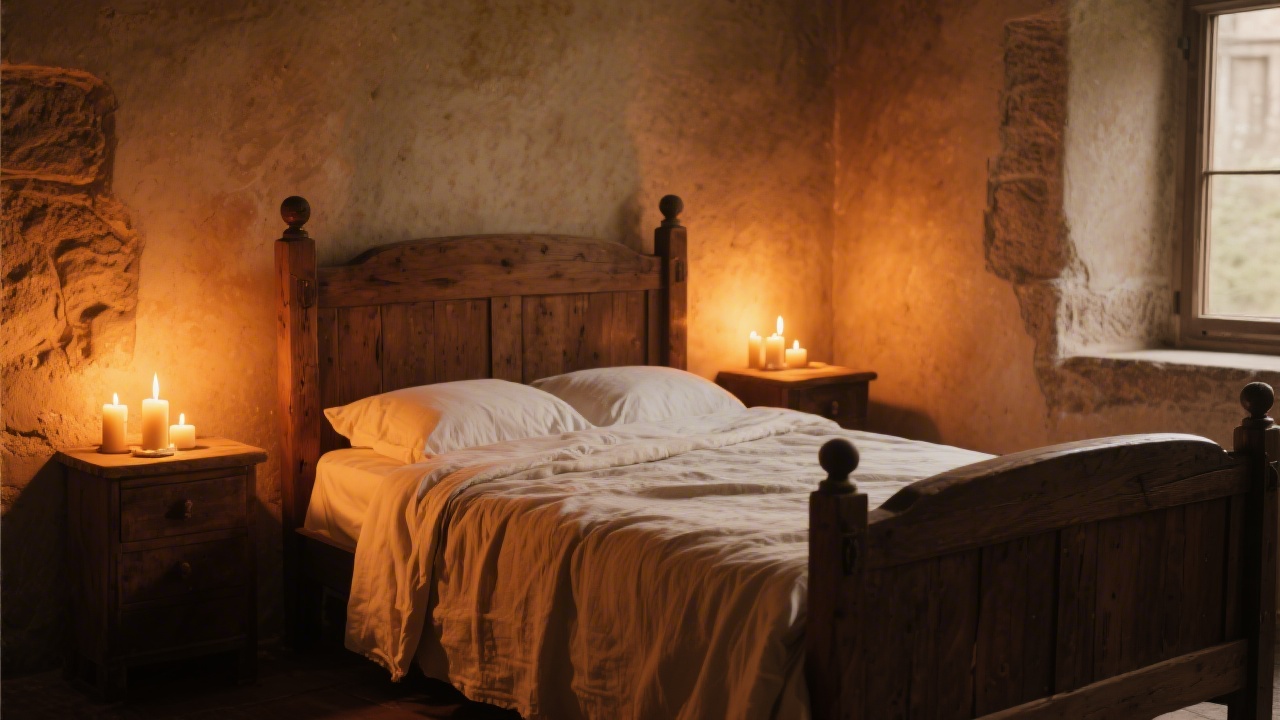
The pattern: sleep from around 9 or 10 p.m. for several hours, wake naturally for one to two hours of quiet activity, then return for a "second sleep" until dawn. The waking interval was used for prayer, reading by candlelight, conversation with a partner, or sex. Far from being a problem, it was considered the normal rhythm of a healthy person.
The Industrial Revolution Changes Everything
The introduction of gas and then electric lighting in the 18th and 19th centuries disrupted human sleep more profoundly than any event in history. Suddenly, productive activity could extend well into the night. Factories required shift workers. Social life moved later. The idea of a single consolidated block of sleep became the new norm — not because it was biologically natural, but because industry demanded it.
Sleep deprivation as a public health issue largely began here. The eight-hour workday movement of the 1800s included sleep in its calculus: "eight hours labor, eight hours recreation, eight hours rest." But as work pushed later and leisure followed, the rest portion shrank.
20th Century: Sleep Science Emerges
The discovery of REM sleep in 1953 by Nathaniel Kleitman and Eugene Aserinsky at the University of Chicago transformed how scientists understood sleep. Rather than a passive shutdown, sleep was revealed as an active, cyclical process essential to memory consolidation, emotional regulation, and cellular repair.
The 20th century also saw the rise of the modern mattress industry. Spring mattresses replaced rope beds and straw pallets. Foam technology, developed partly from aerospace research, entered consumer products in the 1960s. The idea that your sleep surface materially affects sleep quality became mainstream.
Sleep Today: A Modern Crisis
The Centers for Disease Control and Prevention has declared insufficient sleep a public health epidemic. One-third of American adults sleep fewer than the recommended seven hours per night. Chronic sleep deprivation is linked to obesity, cardiovascular disease, diabetes, and reduced cognitive performance.
Ironically, we understand sleep better than ever before and sleep worse than our ancestors did for most of human history. The history of sleep is, in part, a story of what we have lost — and what modern sleep science is slowly helping us reclaim.
What History Teaches Us About Better Sleep
- Darkness matters. Pre-industrial humans naturally aligned sleep with darkness. Modern sleep hygiene recommends blackout curtains for precisely this reason.
- Temperature regulation is ancient. Our ancestors clustered near fires and used layered bedding. Today's research confirms that a slightly cool room (65–68°F) supports deeper sleep.
- Waking in the night is not pathological. The historical record suggests it may be natural. If you wake at 3 a.m., you are not broken — you may simply be experiencing what your ancestors called "the watch."
- Your sleep surface has always mattered. From woven palm mats to rope beds to modern hybrid mattresses, humans have always sought to improve where they sleep.
Ready to improve your sleep surface?
The right mattress makes a measurable difference in sleep quality, temperature regulation, and morning recovery. The Saatva Classic is our top-rated pick for most sleepers.
Frequently Asked Questions
Key Takeaways
- Sleep Before Civilization: a key factor in making the right sleeping decision.
- Ancient Civilizations and Sleep Culture: a key factor in making the right sleeping decision.
- Sleep has not always looked the way it does today.
- For most of human history, the act of lying down for eight uninterrupted hours was unknown — even impossible.
- Understanding how sleep evolved tells us something profound about our biology, our culture, and why so many modern people lie awake at 3 a.m.
Our Top Pick: Saatva Classic
Voted best luxury innerspring mattress with exceptional lumbar support and white-glove delivery.
Check Price & AvailabilityWhat is "first sleep" and "second sleep"?
Before artificial light became widespread, Europeans commonly slept in two distinct segments. "First sleep" began around 9–10 p.m. and lasted several hours. After a natural waking period of 1–2 hours, "second sleep" followed until dawn. Historian Roger Ekirch documented this pattern extensively in pre-industrial sources.
How did ancient Egyptians sleep?
Wealthy ancient Egyptians slept on wooden-framed beds with woven rope bases, often elevated off the ground. Poor Egyptians slept on palm leaves or the floor. Sleep and dreams carried deep religious significance — Egyptians visited dream temples to receive divine messages through sleep.
Did the Industrial Revolution cause modern sleep problems?
The Industrial Revolution was a major turning point. Artificial lighting extended productive hours deep into the night, factory schedules demanded rigidly timed sleep, and the natural two-period sleep pattern was replaced by a single consolidated block. Sleep deprivation as a widespread problem largely emerged from this era.
When was REM sleep discovered?
REM (Rapid Eye Movement) sleep was discovered in 1953 by Nathaniel Kleitman and his graduate student Eugene Aserinsky at the University of Chicago. The discovery overturned the assumption that sleep was passive, revealing it as an active, cyclical biological process.
How much did prehistoric humans sleep?
Research on modern hunter-gatherer groups — the closest living analog to prehistoric sleep patterns — shows they typically sleep around 6–6.5 hours per night. They tend to fall asleep hours after dark, with body temperature drop as the primary sleep trigger rather than darkness alone.