
 by
by Our #1 recommendation for lower-back support
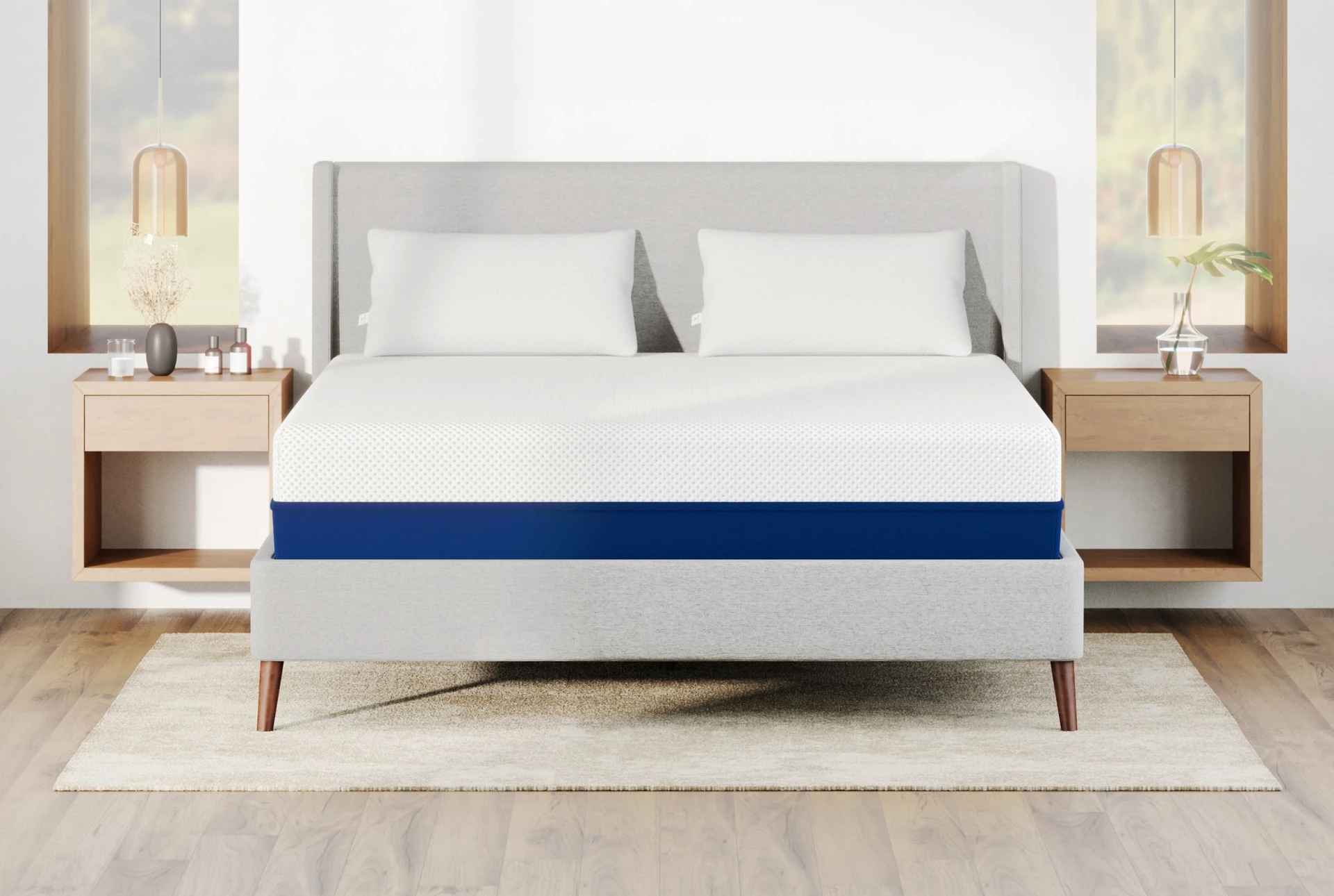
Amerisleep AS3
Amerisleep's medium-feel model, with balanced comfort and support for most sleep styles.
Lower back pain affects 80% of adults at some point - and for many, sleep is both when the pain is worst and when healing should happen. The right combination of sleep position and mattress support can make a significant difference.
Quick answer: Side sleeping with a pillow between your knees is the best default position. If you already have a medium-firm mattress and still wake with pain, the position change alone will often resolve morning stiffness within 2 weeks.
Saatva Classic is the top-rated mattress for back pain by sleep professionals - coil-on-coil construction for targeted lumbar support.
The 3 Best Sleep Positions for Lower Back Pain
1. Side Sleeping with Knee Pillow (Best Overall)
Place a firm pillow between your knees to keep the hips stacked and the pelvis neutral. This prevents the top leg from pulling the spine into rotation - the primary cause of morning lower back pain in side sleepers.
- Keeps spine in neutral alignment
- Reduces hip flexor tension
- Works well with medium and medium-firm mattresses
2. Back Sleeping with Knee Support
Place a pillow under the knees to maintain the natural lumbar curve. This flattens the lower back slightly against the mattress, reducing the hyperextension stress that occurs when the knees lie flat.
- Excellent for lumbar disc issues
- Best spinal alignment of any position
- Not ideal for snorers or sleep apnea patients
3. Fetal Position (for Disc Herniation)
Draw your knees gently toward your chest in a fetal position. This opens the intervertebral spaces and is particularly effective for lumbar disc herniation or stenosis-related pain.
- Reduces nerve compression from disc protrusion
- Avoid pulling the knees too tight - just a gentle curl
- Use a pillow between knees here too
What to Look for in a Mattress for Back Pain
| Feature | Why It Matters | What to Look For |
|---|---|---|
| Firmness | Prevents sag + pressure points | Medium to medium-firm (5–7/10) |
| Lumbar support | Fills the lower back curve | Zoned coils or targeted foam layers |
| Edge support | Easier to get in/out of bed | Reinforced perimeter coils or foam |
| Motion isolation | Undisturbed sleep = better recovery | Individually pocketed coils |
| Trial period | Back pain takes weeks to confirm | 365-night trial minimum |
Pillow Placement Guide by Position
- Side sleeping: One standard pillow under the head (keeping neck neutral) + one firm pillow between the knees
- Back sleeping: One medium-loft pillow under the head + a rolled pillow or wedge under the knees
- Fetal position: One pillow under the head + thin pillow between the knees
- Stomach sleeping (avoid but if you must): Thin or no pillow under the head + firm pillow under the pelvis to reduce lumbar hyperextension
Our Verdict
Frequently asked questions
Our #2 pick for this condition
Saatva Rx
Zoned hybrid with a dedicated lumbar pad foam layer — engineered for back and joint pain. Queen $3,295.
Which mattress firmness is best for chronic back pain?
Research from the Journal of Chiropractic Medicine consistently points to medium-firm (6–7/10) as the sweet spot for chronic lower-back pain. A bed that's too soft lets the lumbar spine sag into hyperextension overnight; too firm and the hips can't settle, compressing the lumbar discs. The Saatva Rx and Saatva Classic Luxury Firm both hit that 6.5–7/10 range with an active lumbar zone.
Do adjustable beds actually help lower-back pain?
Yes — elevating the head 7°–10° and the legs 15°–20° (the "zero-gravity" angle) offloads pressure on the L4-L5 disc space, which is where most chronic lower-back pain originates. The Saatva Adjustable Base Plus has a single-button zero-gravity preset. Pairs it with any Saatva mattress (the Rx and Classic flex the best under articulation).
How long before a new mattress actually relieves pain?
Clinical orthopedic literature gives 4–6 weeks as the adaptation window for a supportive new mattress to meaningfully reduce chronic pain. That's why mattress brands worth buying offer 100+ night trials — Saatva gives 365 nights, which is long enough to separate adaptation pain from actual mattress mismatch.
Is memory foam or latex better for back pain?
Latex wins for most back-pain sleepers because it supports the hips and shoulders more uniformly without the deep sinkage that misaligns the lumbar spine on pure memory foam. A latex-hybrid (springs + latex top) is the most-recommended build. Pure memory foam is better when pain is concentrated at pressure points (hips, shoulders) rather than the lumbar region.
Position change and pillow placement are free and can be implemented tonight. Start there. If morning pain persists after 2–3 weeks of optimized positioning, evaluate your mattress age and firmness. The sweet spot for back pain is medium-firm - the Saatva Classic in Luxury Firm is the best-tested option in this category, with a dedicated lumbar crown support layer and a 365-night trial that gives you enough time to properly evaluate the impact on your back pain.
See also: best sleeping positions, how to stop restless legs, Saatva Classic full review.
365-night trial, dedicated lumbar support, coil-on-coil construction. Saatva Classic for back pain.
MATTRESSES FOR PAIN RELIEF
MATTRESSES FOR PAIN RELIEF
Frequently Asked Questions
What is the best sleeping position for lower back pain?
Side sleeping with a pillow between the knees is the most universally effective position - it keeps the hips aligned and prevents the spine from rotating. Back sleeping with a pillow under the knees is a close second.
Does a firm mattress help lower back pain?
Medium-firm is better than very firm for most back pain sufferers. Very firm mattresses create pressure points at the hips and shoulders, causing the spine to sag in between. The spine needs conforming support, not rigid resistance.
How do I know if my mattress is causing my back pain?
If your back pain is worse in the morning and improves within 30 minutes of getting up, your mattress is almost certainly a contributing factor. Pain that's worst after sitting or activity but better in the morning suggests another cause.
Can a mattress topper help lower back pain?
A medium-density latex or memory foam topper (2–3 inches) can help if your mattress is too firm. If your mattress is already too soft, a topper won't help - you need a firmer mattress underneath.
How long should I wait before replacing a mattress for back pain?
If your mattress is over 7–8 years old and you have regular morning back pain, replacement is likely warranted. Test it by sleeping on a different mattress (hotel, guest room) - if your back feels better the next morning, that's strong evidence.
Our #1 Amerisleep pick for lower-back support
The Amerisleep AS3 is our first Amerisleep recommendation for this page.