
 by
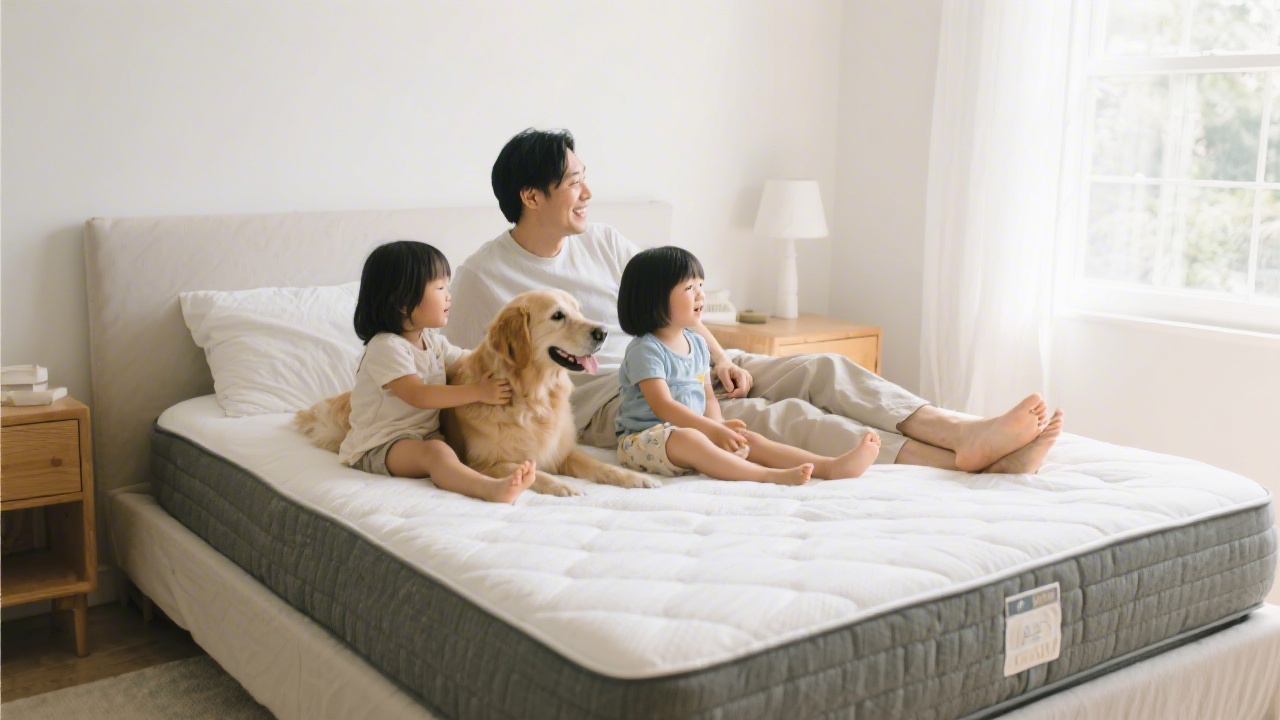
by A family mattress works harder than any other mattress. It supports adults with different body weights, absorbs the impact of children jumping at 6 am, survives spilled juice and pet accidents, and still needs to deliver restorative sleep night after night for 8 to 10 years. The selection criteria for a family mattress are fundamentally different from those for a solo sleeper or a couple without children or pets.
Our Recommendation
Saatva Classic — durable innerspring hybrid, easy to clean, ideal for families
Affiliate disclosure: We may earn a commission if you purchase through our links at no extra cost to you.
What Makes a Family Mattress Different
Durability under high load cycling: A mattress used by two adults and regularly shared with a child or a 50-pound dog experiences significantly more compression cycling than a single sleeper. Foam comfort layers compress and lose resilience faster under repeated high-weight use. Innerspring and hybrid constructions with tempered steel coils handle load cycling better than all-foam mattresses and maintain support for longer.
Accident resistance: Children under 5 average 2 to 4 nighttime accidents per week during potty training phases. Pets tracked in from outside deposit allergens and moisture. A mattress without adequate moisture protection develops bacterial and mold contamination that is nearly impossible to remediate. Mattress protection starts with a waterproof pad; it does not end there. The mattress itself should have a removable, washable cover where possible.
Edge support: Toddlers who climb onto an adult bed land on the edges first. Poor edge support creates an unstable perimeter that rolls a small child off. Reinforced edge coils or high-density foam perimeters address this. The practical benefit for adults is also significant: sleeping to the edge of the bed without feeling the perimeter collapse is better sleep surface utilization on a shared mattress.
Temperature regulation: More bodies in a bed generates more heat. A mattress that traps heat will feel uncomfortably warm to all occupants when a child co-sleeps. Innerspring and hybrid constructions with open coil systems allow significantly more airflow than closed-cell foam mattresses.
Firmness for Multiple Body Types
The standard recommendation for couple sleeping is medium to medium-firm. When children or pets are added to the equation, the calculus shifts slightly toward firmer. A firmer mattress provides more stable, elevated support for light children who would sink into a soft foam surface. It also resists body impression more effectively under the asymmetric load distribution that occurs when a child sleeps across the width of the mattress instead of along it.
For households where one adult is significantly lighter than the other and is a side sleeper with pressure sensitivity, a medium-firm hybrid with a zoned comfort layer provides targeted softness at shoulder and hip zones without compromising overall support.
Size Considerations
Families with children who share the bed should default to king size where bedroom space allows. The 16-inch difference in width between a queen (60 inches) and a king (76 inches) is the difference between adequate and genuinely comfortable when two adults and a toddler share a sleeping surface. A California king (72 x 84 inches) suits tall adults who run out of length on a standard king.
For families with multiple children in adjacent rooms, consider whether the master mattress will ever be a co-sleeping destination for a second child. Two adults plus two children is a realistic 3 am scenario in households with young children.
Protection Strategy
A two-layer protection approach works best for family mattresses: a waterproof mattress pad as the primary barrier, and a breathable mattress protector between the pad and the bottom sheet to manage allergen accumulation. Wash the mattress pad after any accident, not at the next weekly laundry cycle. Biological material begins breaking down within hours and stains become permanent within 24 to 48 hours of drying.
Rotate the mattress 180 degrees every 6 months. Families who do not rotate experience body impression concentrated in a small area where the adults sleep most nights, while the far edges remain relatively unused. Rotation distributes wear and extends serviceable mattress life by 1 to 2 years.
Top Picks for Family Mattresses
Innerspring hybrid (coil-on-coil): Best overall durability, temperature regulation, and edge support for families. The interconnected coil base handles load cycling better than foam over 8 to 10 years. Suitable for co-sleeping families and households with large pets.
Latex hybrid: Durable foam layer that retains shape better than polyfoam or memory foam under high use. Naturally resistant to dust mites and mold, which is an advantage for families with allergic children. Heavier and harder to handle during rotation.
Pair either option with a waterproof mattress pad from the first night of ownership. The mattress pad is not optional equipment for a family mattress; it is the difference between a 7-year mattress and a 4-year mattress.
Frequently Asked Questions
What mattress is best for a family with young children?
For families with young children, prioritize durability, waterproof protection, and motion isolation over luxury feel. An innerspring hybrid with a removable, washable cover or a waterproof mattress pad handles the accident frequency of children under 5. Medium-firm works for the widest range of adult body types and does not create the edge instability that toddlers who climb onto the bed can fall from.
How do I protect a family mattress from accidents?
A waterproof mattress pad is the most effective protection. Look for pads rated for liquid resistance at the seams, not just the surface. Wash the mattress pad at 60 degrees Celsius after accidents to eliminate bacteria. A second spare pad allows immediate replacement while the first is in the wash. Spot-clean the mattress itself with an enzyme-based cleaner for biological stains.
What mattress firmness works for multiple body types?
Medium-firm (around a 6 to 6.5 out of 10 on the firmness scale) is the most universal choice for mixed-weight households. It provides enough support for heavier adults and enough pressure relief for lighter sleepers. Exclusively soft mattresses sag prematurely under heavy adult weight. Exclusively firm mattresses create pressure points for light side sleepers.
How long should a family mattress last?
A quality family mattress should last 7 to 10 years under normal adult use. In households with children and pets sharing the bed regularly, expect the effective lifespan to be 6 to 8 years due to higher weight concentration, more motion stress, and accelerated wear. Rotating the mattress 180 degrees every 6 months extends lifespan by distributing wear more evenly.
Is a king or queen size better for a family?
A king mattress (76 x 80 inches) is substantially better for families that share a bed with young children. Families regularly find that two adults plus one toddler completely fills a queen mattress (60 x 80 inches). The 16-inch width difference becomes critical at 2 am when a child has sprawled sideways. A California king (72 x 84 inches) adds length for tall adults but sacrifices some width relative to a standard king.
Key Takeaways
Best Mattress for Families is a topic that depends heavily on individual needs and preferences. The most important thing is to consider your specific situation — your body type, sleep position, and personal comfort preferences — before making any decisions. When in doubt, take advantage of trial periods to test before committing.