
 by
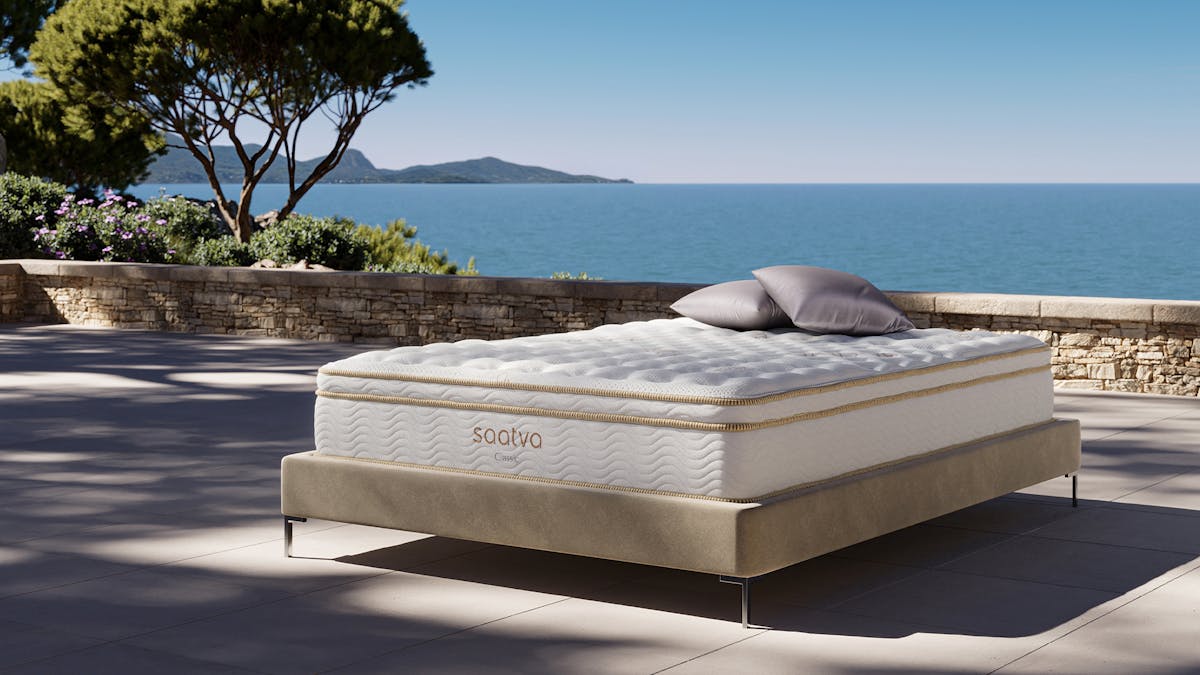
by The best natural latex mattress is the Saatva Zenhaven: a flippable all-latex build with GOLS-certified natural Talalay latex, GOTS organic cotton and wool, 365-night trial, and a lifetime warranty with free white-glove delivery. For the most-certified all-latex option at a lower price, the PlushBeds Botanical Bliss (GOLS + GOTS + GREENGUARD Gold) is the strongest value pick.
Saatva Zenhaven
9.2/10
- Dual-sided: Luxury Plush (~4/10) on one side, Gentle Firm (~7/10) on the other, two mattresses in one
- 5-zone natural Talalay latex with vented channels for outstanding airflow
- GOLS-certified latex, GOTS organic cotton cover, organic New Zealand wool fire barrier
- 365-night trial, lifetime warranty, free white-glove delivery and old-mattress removal
- Premium price (~$3,295 queen) is the highest in this category
- ~125 lb queen makes flipping a two-person job
- $99 return fee if you decide to send it back during the trial
The Zenhaven is the most complete natural latex package available: certified organic materials, two firmness options in a single mattress, the longest trial in the category, and white-glove delivery that sets it up in your room and hauls away your old mattress. The lifetime warranty reflects the genuine durability of Talalay latex. If you want one premium certified-organic latex mattress to last 20-plus years, this is it.
PlushBeds Botanical Bliss
9.0/10
- GOLS-certified organic Dunlop latex layers, GOTS-certified cotton and wool cover
- GREENGUARD Gold, eco-INSTITUT, and Control Union low-VOC certifications
- Rearrangeable layers let you dial firmness at home (Medium 5.5/10 or Medium-Firm 8/10)
- Handcrafted in California, 25-year non-prorated warranty
- Heavy (up to 172 lb queen), two people needed to unbox and rearrange layers
- All-latex buoyant feel is not the slow-hug of memory foam
The Botanical Bliss carries more certifications than any other latex mattress at its price: GOLS latex, GOTS cover, GREENGUARD Gold, and eco-INSTITUT. If third-party verification matters most and the Zenhaven's price is too steep, this is the clear alternative.
Why natural latex differs from synthetic and blended latex
Natural latex is tapped from Hevea brasiliensis rubber trees, coagulated, and processed into foam through either the Dunlop or Talalay method. Synthetic latex, by contrast, is petroleum-derived (styrene-butadiene rubber) and lacks the durability and breathability of natural latex. Blended latex mixes both; it costs less but also carries the off-gassing and longevity profile of synthetic foam.
A mattress marketed as "natural latex" is only verifiably natural if it carries GOLS certification (Global Organic Latex Standard), which requires the latex content to be at least 95% certified organic natural latex. Without GOLS, "natural latex" is an unregulated marketing claim. Both the Zenhaven and Botanical Bliss carry GOLS-certified latex layers.
Dunlop vs Talalay: which is better for a natural latex mattress
| Property | Dunlop | Talalay |
|---|---|---|
| Density | Denser, heavier | Lighter, more uniform |
| Feel | Firmer, earthy bounce | Softer, more responsive |
| Durability | 25+ years typical | Slightly shorter lifespan |
| Organic certification | GOLS available | GOLS available (less common) |
| Best for | Support layers, heavier sleepers | Comfort layers, side sleepers |
Most high-quality latex mattresses use Dunlop in the support core (denser, longer-lasting) and Talalay in the comfort layers (softer, more pressure-relieving). The Botanical Bliss uses GOLS Dunlop throughout; the Zenhaven uses natural Talalay for its characteristic buoyant, cloud-like feel.
What certifications actually mean for natural latex mattresses
The certification stack matters more in latex than in any other mattress category because many brands use "natural" loosely:
- GOLS (Global Organic Latex Standard): covers the latex itself. Requires 95%+ certified organic rubber. The most important single certification for a latex mattress.
- GOTS (Global Organic Textile Standard): covers the cotton and wool cover materials.
- GREENGUARD Gold: tests for chemical emissions, particularly relevant for bedrooms and children's environments.
- eco-INSTITUT: European emissions testing, often stricter in its VOC thresholds than US standards.
- OEKO-TEX Standard 100: bans a list of harmful chemicals at the textile level, not full-mattress certification.
A mattress carrying GOLS + GOTS + GREENGUARD Gold is the gold standard for verified natural latex. The Botanical Bliss carries all three plus eco-INSTITUT. The Zenhaven carries GOLS and GOTS.
How the top natural latex mattresses compare
| Mattress | Type | Firmness | Certifications | Trial | Queen |
|---|---|---|---|---|---|
| Saatva Zenhaven | Flippable all-latex (Talalay) | Luxury Plush 4/10 or Gentle Firm 7/10 | GOLS, GOTS | 365 nights | ~$3,295 |
| PlushBeds Botanical Bliss | All-latex (Dunlop) | Medium 5.5/10 or Medium-Firm 8/10 | GOLS, GOTS, GREENGUARD Gold, eco-INSTITUT | 100 nights | ~$1,449 |
| Amerisleep AS3 | All-foam (Bio-Pur, plant-based) | Medium 5/10 | CertiPUR-US | 100 nights | From $1,049 |
Natural latex vs memory foam: the key differences
Natural latex and memory foam differ in almost every performance dimension:
- Response time: Latex responds in under one second; memory foam takes 1 to 5 seconds to recover. Combination sleepers and people who move frequently in bed prefer the snap-back of latex.
- Temperature: Natural latex sleeps significantly cooler than memory foam because the open-cell structure allows airflow. Memory foam traps body heat, even with gel infusion or Bio-Pur plant-based processing.
- Durability: GOLS-certified Dunlop latex lasts 20 to 25 years without significant body impressions. Memory foam typically degrades noticeably within 8 to 10 years.
- Pressure relief: Both relieve pressure well; memory foam provides more contouring. Latex provides pressure relief with buoyancy rather than cradle, which many back and stomach sleepers prefer.
- Off-gassing: Natural latex has minimal or no off-gassing (GREENGUARD Gold tests confirm this). Memory foam, including Bio-Pur, has measurable off-gassing for several days after unboxing.
Amerisleep AS3
8.7/10
- Bio-Pur plant-based open-cell foam sleeps cooler than standard memory foam
- HIVE 5-zone support targets lumbar and shoulder zones independently
- Outstanding motion isolation for couples
- CertiPUR-US certified, made in the USA, 100-night trial
- Not a latex mattress; suitable if you want plant-based foam, not GOLS certification
- Softer edges than coil-based alternatives
The AS3 is not a latex mattress, but it earns a mention here for shoppers drawn to this category by eco and non-toxic priorities who still prefer the contouring feel of foam. Bio-Pur uses plant-based inputs and CertiPUR-US bans the most harmful chemicals, at a price well below the certified-organic latex options.
Who should buy a natural latex mattress
Natural latex makes the most sense if any of these apply:
- You run hot and memory foam leaves you sweating through the night
- You want verified organic materials without trusting marketing language (GOLS and GOTS are audited, not self-declared)
- You expect to keep the mattress for 15 to 20+ years and want durability that outlasts foam
- You prefer a responsive, buoyant feel rather than a slow-sinking cradle
- You or a household member has chemical sensitivities and want the lowest possible VOC off-gassing
Natural latex is less suited for people who specifically want deep memory-foam contouring, who share a bed and need maximum motion isolation, or who have a strict budget (certified organic latex starts around $1,449 queen).
How long do natural latex mattresses last
GOLS-certified Dunlop latex is the most durable mattress material available. Independent durability testing and owner data suggest:
- Dunlop latex support cores: 20 to 25+ years before meaningful body impressions
- Talalay comfort layers: 15 to 20 years
- Memory foam comparison: 8 to 12 years for quality all-foam, 12 to 15 for quality hybrid
The Botanical Bliss 25-year warranty and the Zenhaven lifetime warranty both reflect the material's longevity rather than marketing. Properly maintained (rotated every 3 months, supportive foundation), a certified-organic latex mattress bought today is likely to outlast two or three foam alternatives.
For the best natural latex mattress, the Saatva Zenhaven leads with its flippable dual-firmness Talalay latex build, 365-night trial, lifetime warranty, and free white-glove delivery. The PlushBeds Botanical Bliss is the strongest value pick with GOLS + GOTS + GREENGUARD Gold certifications at roughly half the price. If you want plant-based non-toxic foam rather than true latex, the Amerisleep AS3 is the closest alternative.
Frequently asked questions
Is natural latex mattress good for back pain?
Yes, particularly for back and stomach sleepers who need a supportive, responsive surface. Natural latex resists sagging and maintains spinal alignment over time. It is less body-conforming than memory foam, which some back-pain sufferers prefer.
Does natural latex off-gas?
GOLS-certified natural latex off-gasses minimally or not at all. A faint rubbery smell for the first 24 to 48 hours after unboxing is normal and harmless. It dissipates quickly and does not indicate VOC content. This is one of latex's main advantages over memory foam, which can off-gas for several days.
Can I be allergic to a natural latex mattress?
Latex allergies exist and are serious, but mattress-grade GOLS-certified latex goes through processing that substantially reduces the proteins responsible for Type I latex allergies. Most people with latex sensitivity sleep on latex mattresses without reaction, but if you have a confirmed latex allergy (especially if you have had an anaphylactic response), confirm with your allergist before purchasing. The Botanical Bliss and Zenhaven both offer trials long enough to test your reaction at home.
What is the difference between GOLS and GOTS?
GOLS (Global Organic Latex Standard) certifies the latex rubber content of a mattress; it requires 95%+ certified organic latex and covers the processing facility. GOTS (Global Organic Textile Standard) certifies the textile components, primarily the cotton cover and wool layers. A mattress carrying both covers the full material stack from rubber tree to finished product.