
 by
by Nature's sleep lesson #1: environment matters. The Saatva Classic mattress is the most controllable variable in your sleep environment — and the one with the clearest ROI. See current pricing →
The animal kingdom is the oldest sleep laboratory on Earth. Every species that exists today carries a sleep solution refined across millions of years of selective pressure. Studying those solutions — what works, what fails, what every species shares — produces lessons that apply directly to human sleep in 2026.
Here are the 10 most applicable lessons that nature's sleep research teaches.
Lesson 1: Sleep Is Non-Negotiable
No animal species has evolved away from sleep. Jellyfish sleep. Nematode worms sleep. Fruit flies sleep. Every attempt to find a naturally sleep-free complex animal has failed. Despite the survival cost of unconsciousness — vulnerability to predation, loss of foraging time — sleep has persisted because its benefits are more critical than those costs.
The lesson for humans is stark: treating sleep as a variable to be minimized is not a productivity strategy. It is fighting a 600-million-year evolutionary imperative with willpower. The imperative wins.
Lesson 2: Environment Determines Sleep Quality
The single most consistent finding across all animal sleep research is that environment shapes sleep quality. Wild animals sleep better than captive ones. Animals in familiar territories sleep better than displaced ones. Animals in thermally comfortable environments sleep longer and deeper than those in extremes.
For humans: your bedroom environment is not a luxury consideration. It is the primary sleep variable. Light, temperature, noise, and surface quality determine your sleep architecture before any supplement, app, or behavioral intervention has a chance to act. How captive environments cause insomnia →
Lesson 3: Sleep Is Species-Specific — but Universal in Mechanism
Giraffes sleep 4.5 hours. Brown bats sleep 20 hours. Humans need 7-9 hours. Each is optimal for its species. There is no universal "right" amount — but there is a right amount for you, determined largely by genetics. What is universal: the mechanisms (slow-wave sleep, REM sleep, adenosine homeostasis) appear in all mammals and most vertebrates. Your biology is not unique in its sleep needs; it is species-typical.
Lesson 4: Safety Signals Are Required for Deep Sleep
Prey animals in exposed locations sleep lighter than the same species in protected dens. Wild chimpanzees in contested territory sleep in shorter bouts than those in stable home ranges. The human brain runs identical software: perceived threat — which includes physical discomfort, financial stress, and relationship conflict — suppresses slow-wave sleep and increases nighttime arousals.
This is not a metaphor. Chronic stress produces measurable changes in sleep architecture via the same HPA axis upregulation documented in stressed wild animals. A sense of safety — physical, financial, psychological — is a prerequisite for deep sleep, not a byproduct of it.
Lesson 5: Physical Exhaustion Creates Sleep Pressure
Wild animals move constantly. A lion may cover 10-15 km during a hunt. Elephants walk 50 km per day. This physical activity builds adenosine pressure — the "sleep debt" chemical — that drives powerful sleep onset and deep slow-wave sleep. Captive animals with reduced activity consistently show poorer sleep quality, independent of environment. How animals build and discharge sleep pressure →
Modern humans are the most sedentary animals in nature. The chronic insomnia epidemic closely tracks the dramatic reduction in physical activity over the past 60 years. Exercise is not an optional sleep aid — it is what builds the biological pressure that drives sleep quality.
Lesson 6: Light-Dark Cycling Is the Master Clock Signal
Every animal with a circadian clock — which is every animal studied — uses light exposure as the primary timing signal for sleep. Remove the natural light-dark cycle (as in Arctic perpetual daylight or artificial nocturnal light) and sleep timing drifts and fragments within days. Artificial light at night disrupts melatonin in bears, birds, deer, and humans by the same molecular mechanism. How extreme environments disrupt this signal →
Lesson 7: Social Sleep Provides Protective Benefits
Sea otters hold hands to sleep in groups. Chimpanzees build communal sleeping trees. Meerkats sleep in huddles with sentinels at the perimeter. Humans co-slept in groups throughout most of their evolutionary history. The modern isolated sleeper is the historical aberration.
Social sleep provides distributed vigilance, thermal regulation, and psychological security signals that suppress threat responses and permit deeper sleep. For humans, co-sleeping (where safe for infants) or simply sharing a bedroom produces the same safety-signaling benefits, with measurable effects on cortisol and sleep architecture in studies of couples vs. solo sleepers.
Lesson 8: Sleep Architecture Is Conserved Across Evolution
NREM and REM sleep appear in all mammals studied. Slow-wave sleep appears in fish. REM-like states have been documented in reptiles. This conservation is powerful evidence that both sleep phases perform essential functions — neither is optional. Humans who selectively suppress REM (with certain medications, alcohol, or sleep timing) show REM rebound and cognitive deficits, consistent with all animal models. Why REM matters — platypus to humans →
Lesson 9: Sleep Debt Compounds Across Species
When migratory birds reduce sleep during migration, they show sleep rebound at stopovers — sleeping longer and deeper than baseline to recover the deficit. When mammals are experimentally sleep-deprived, rebound sleep is observed universally. There is no evidence in any species that chronic sleep debt is sustainable without cumulative cost. The human claim that "I can function on 5 hours" is a cognitive illusion well-documented in sleep deprivation research — impaired individuals consistently rate their own performance as higher than objective measures show.
Lesson 10: The Sleep Surface Matters — Even in Nature
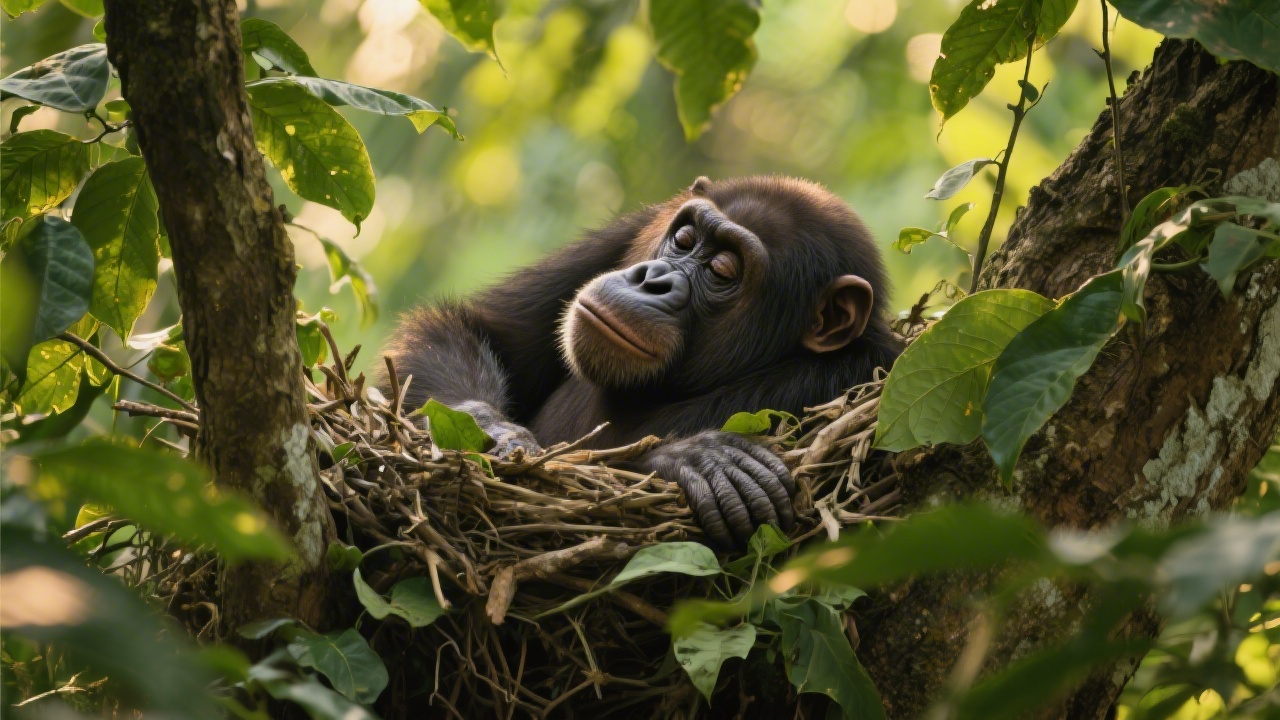
Great apes (chimpanzees, bonobos, gorillas, and orangutans) consistently build sleeping platforms — branch and leaf nests in trees — for every sleep period. This investment of daily time and energy is maintained throughout their lives. When researchers analyzed chimp nest structure, they found it optimized for spinal support and pressure distribution: flexible branches providing conforming support, layered leaves providing cushioning, elevated position providing safety and thermoregulation.
Our closest evolutionary relatives invest significant energy in building a better sleep surface every night. The human equivalent is investing in a mattress that provides the same spinal alignment and pressure relief. Nature confirms it is worth it. Our top mattress recommendations for 2026 →
Frequently Asked Questions
What does animal sleep research tell us about sleep necessity?
Every animal species studied shows sleep or sleep-like rest. No species has evolved to eliminate sleep. This confirms sleep's benefits outweigh even the predation risk of unconsciousness — making it biologically non-negotiable.
Why do animals sleep better in the wild than in captivity?
Wild environments match evolved sleep requirements: natural light cycles, appropriate temperatures, familiar territories, and physical exhaustion from natural activity. Captive environments frequently fail on all dimensions, producing insomnia-like fragmentation.
What is the optimal sleep duration for humans?
Research points to 7-9 hours for adults with significant genetic variation. Hunter-gatherer societies average 6.5-8 hours consolidated nocturnally. Animal sleep confirms optimal duration is species-specific — humans are not unusual in needing a defined daily quantum.
Is sleeping on the ground more natural?
Not necessarily. Great apes build elevated sleep platforms nightly, suggesting even our closest relatives seek engineered sleep surfaces. The priority is spinal neutrality and pressure distribution, not ground proximity.
What is the single most important sleep lesson from nature?
Sleep is non-negotiable. No animal has evolved away from it despite its evolutionary cost. Sleep deprivation is a biological debt with compounding interest — not a productivity strategy.
Apply Lesson #1 Tonight
Every animal studied shows the same truth: sleep quality depends on the environment you create for it. Start with the surface. The Saatva Classic is designed around the same spinal alignment principles evolution optimized over millions of years.
Key Takeaways
What Nature Teaches Us About Sleep is a topic that depends heavily on individual needs and preferences. The most important thing is to consider your specific situation — your body type, sleep position, and personal comfort preferences — before making any decisions. When in doubt, take advantage of trial periods to test before committing.