
 by
by Quilts are often confused with comforters and duvets, but they work differently. Understanding how quilts are made helps you decide when they’re the right choice for your bed — and when a comforter or duvet insert would serve you better.
What Is a Quilt?
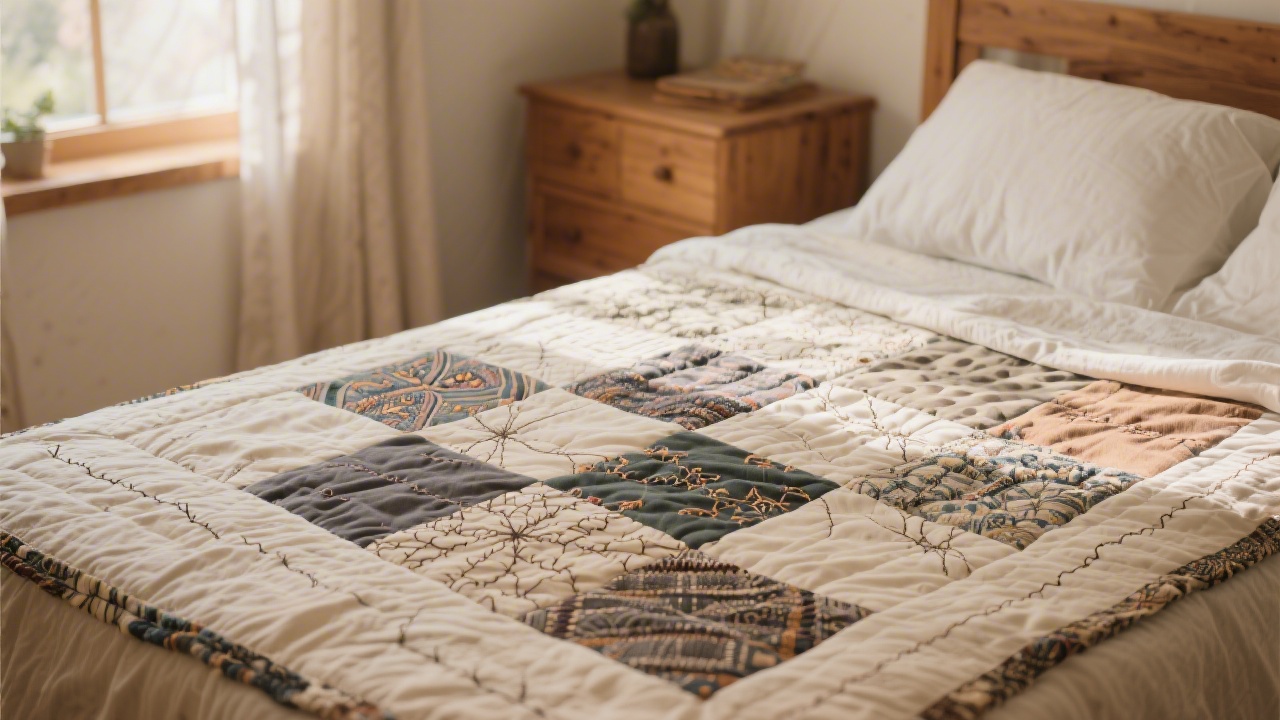
A quilt is a three-layer textile: a decorative top layer (often pieced fabric), a middle batting layer for insulation, and a plain backing layer. All three are stitched through in a pattern that holds them together — this stitching is visible on both sides and is the defining characteristic of a quilt.
The stitching flattens the batting, which means quilts are thinner and flatter than comforters. They don’t loft or puff. They lie flat on the bed.
Quilt vs Comforter
- Thickness: Quilts are thin and flat. Comforters are thick and lofted.
- Warmth: Comforters are warmer per unit of weight. Quilts are suitable for moderate temperatures or layering.
- Construction: Quilts are stitched through all layers. Comforters use chambers (baffle box) or sewn-through grid patterns that contain loose fill.
- Use case: Quilts work as a top layer in warm climates, as a decorative layer, or as a mid-layer in cold climates with other bedding beneath.
- Washing: Quilts are typically easier to wash and dry flat than thick comforters.
Quilt vs Duvet
A duvet is a filled insert that goes inside a removable cover. A quilt is a finished, standalone piece. Duvets are warmer and fluffier; quilts are flatter and can be used without a cover. See our duvet insert guide for comparison.
Types of Quilt Batting
Cotton Batting
Traditional choice. Breathable, becomes softer with washing, lies flat. Low loft means less insulation. Best for warm climates and decorative use.
Polyester Batting
Retains shape better than cotton, slight loft, machine washable easily. Less breathable. Common in mass-market quilts.
Wool Batting
Heavier than cotton or polyester. Naturally moisture-regulating. Better warmth than cotton batting. Used in traditional and artisan quilts.
Bamboo Batting
Lightweight and breathable. More moisture-wicking than cotton. Gaining popularity in premium quilts aimed at warm sleepers.
Quilt Styles
- Patchwork quilts: Pieced top from multiple fabric pieces. Traditional American style.
- Whole cloth quilts: Single fabric top with decorative stitching as the design element. More modern aesthetic.
- Printed quilts: Mass-market option with printed design rather than pieced construction. Less durable but affordable.
- Kantha quilts: Indian style made from layered recycled fabric. Hand-stitched. Lightweight and breathable.
When to Choose a Quilt
- You live in a warm climate and want minimal bedding weight
- You want a decorative top layer with texture and visual pattern
- You layer bedding (sheet + quilt + optional throw in winter)
- You prefer flat bedding over lofted
- You want something that washes and dries more easily than a thick comforter
Quilt Care
- Machine wash cold or warm on gentle cycle
- Tumble dry low or line dry
- Avoid high heat — can shrink cotton batting and damage stitching
- Store flat or loosely folded, not tightly compressed
Also see: our down alternative comforter roundup and our guide on best throw blankets.
Frequently Asked Questions
Are quilts warm enough for winter?
In most climates, a quilt alone is insufficient for winter. Layer a quilt with a blanket or use it over a duvet insert. In warm climates (above 60°F average winter nights), a quilt alone works fine.
What size quilt do I need?
Quilts run smaller than comforters as they’re meant to cover the mattress top without draping to the floor. A queen quilt is typically 90x90 to 90x100 inches. Check dimensions against your mattress height.
Can I use a quilt as a duvet insert?
Technically yes, though quilts aren’t designed for this. They’ll bunch inside a cover. A purpose-built duvet insert performs better inside a duvet cover.
How do I wash an antique or handmade quilt?
Hand wash in cold water or use a delicate cycle in a front-load machine. No agitator. Lay flat to dry. Avoid machine drying for antique or heirloom pieces.
What’s the difference between a quilt and a blanket?
A blanket is a single-layer woven or knitted fabric. A quilt has three layers (top, batting, backing) stitched together. Blankets are simpler; quilts have structural complexity and decorative stitching.