
 by
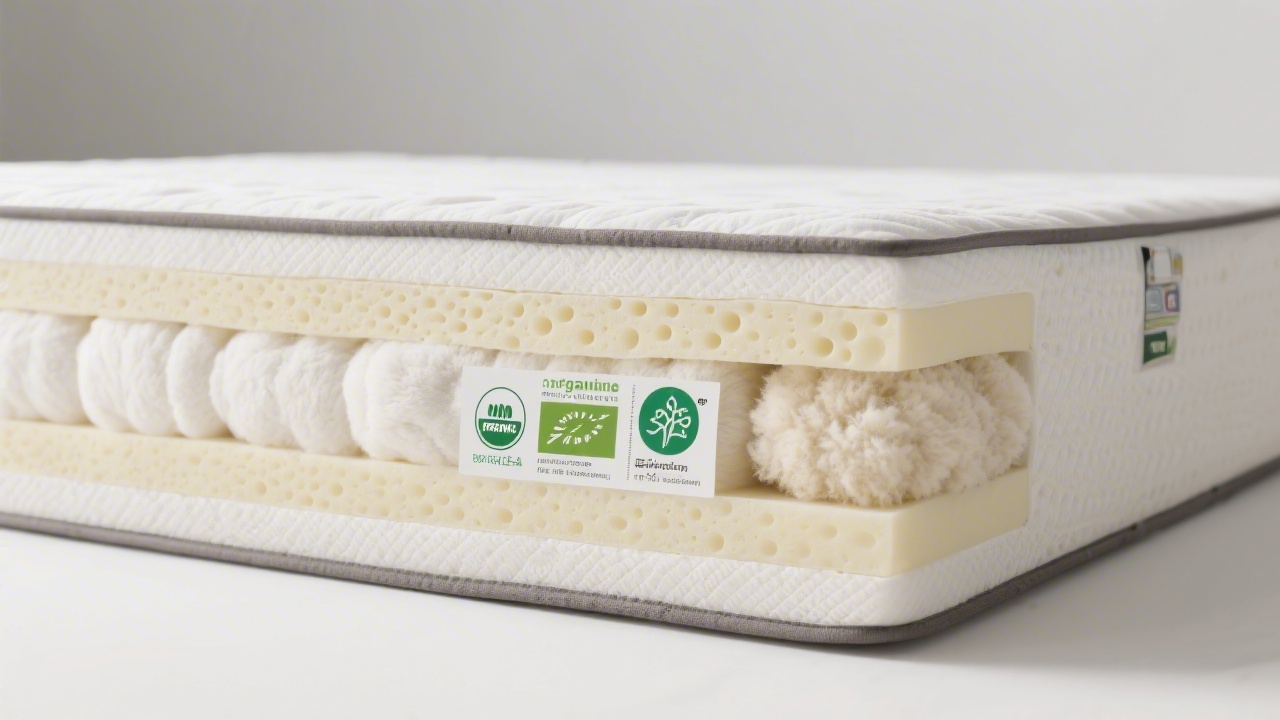
by "Eco-friendly," "natural," "sustainable," and "green" are among the most overused - and least regulated - terms in the mattress industry. Nearly every brand in the market uses at least one of them. Very few can substantiate the claim with third-party verification.
This guide evaluates what genuine sustainability looks like in mattress brands, what to look for, and how to detect greenwashing.
Editor's Pick: Saatva Zenhaven - GOTS + GOLS Certified
Check price & availability →
The Greenwashing Problem in Mattresses
The mattress industry has a significant greenwashing problem. Mattresses are complex products with multiple components - foam, springs, fabric covers, fire barriers, adhesives - and sustainability claims often apply to only one element while the marketing language implies the whole product is "green."
Common greenwashing patterns:
- Brand name greenwashing: Words like "natural," "organic," "green," or "eco" in the brand or product name with no supporting certification
- Partial certification marketing: "CertiPUR-US foam" prominently featured when this only covers the foam layer
- Unverifiable organic claims: "Made with organic cotton" without a GOTS certificate number
- Self-issued seals: Custom "eco" badges created by the brand with no third-party audit
- Carbon-offset theater: Purchasing carbon offsets to claim "carbon neutral" while manufacturing practices are unchanged
What Genuine Sustainability Looks Like
Material Certifications
The certification stack is the most verifiable aspect of a brand's sustainability claim:
- GOLS: Global Organic Latex Standard - for organic latex layers. Requires minimum 95% organic rubber. Verifiable at global-standard.org.
- GOTS: Global Organic Textile Standard - for cotton and wool components. Covers fiber origin AND processing. See our GOTS certification guide.
- OEKO-TEX Standard 100: Harmful substance testing on all components. See our OEKO-TEX guide for details.
- CertiPUR-US: For foam layers only - chemical safety threshold. See our CertiPUR-US guide.
Manufacturing Practices
Beyond materials, evaluate:
- Domestic vs. offshore manufacturing: US-made reduces shipping footprint; also enables better supply chain oversight
- Factory certifications: ISO 14001 (environmental management), Rainforest Alliance, or Fair Trade certifications on factories
- Energy sourcing: Whether manufacturing facilities use renewable energy
- Waste practices: Foam offcuts and textile waste recycling programs
End-of-Life Programs
Mattress disposal is a significant environmental issue. An estimated 15–20 million mattresses are discarded in the US annually, most going to landfill. Brands with genuine take-back or recycling programs address this gap. When evaluating:
- Does the brand pick up old mattresses on delivery?
- Are mattresses disassembled and components recycled, or simply donated/resold?
- Is there a documented partnership with a certified mattress recycler?
Evaluating Brand Sustainability Claims
When assessing a specific brand, work through these questions:
- Are certifications product-specific or brand-level? A brand can hold GOTS certification for one product line without all products being certified.
- Are certificate numbers publicly verifiable? Genuine certifications are in public databases. Ask for certificate numbers.
- What percentage of the mattress is certified? A mattress with a GOTS-certified cotton cover and a conventional foam core has limited organic content overall.
- Does the company publish a sustainability report? Larger brands with genuine programs typically publish annual reports with metrics.
- What are the financing/delivery carbon commitments? B Corp certification or third-party audited carbon reporting indicates a more serious commitment.
Material Sustainability by Mattress Type
Mattress care & maintenance FAQ
If replacement is overdue
Saatva Classic — from $2,229 queen
If cleaning isn't fixing the problem, a 15–20 year lifespan hybrid is the long-term answer. 365-night home trial, lifetime warranty, free white-glove delivery + free old-mattress removal.
How often should you actually clean a mattress?
Every 3 months: vacuum the surface with an upholstery attachment. Every 6 months: deep clean (baking soda + vacuum). Every 12 months: rotate the mattress (180° if flippable, or head-to-foot if not).
What's the fastest way to remove urine/stains from a mattress?
Blot with cold water + mild dish soap, then apply white vinegar to neutralize odor. Avoid hot water (sets proteins) and bleach (damages fabric/foam). Baking soda for 6–12 hours after drying pulls residual moisture and smell.
When is it actually time to replace a mattress?
Signals: visible permanent indentation > 1.5", waking up with pain/stiffness that fades during the day, noticeable age-related smell, age beyond 8–10 years for most hybrid/foam mattresses. If a new topper doesn't solve it, it's a mattress problem. The Saatva Classic runs a 15–20 year expected lifespan — double most foam-only mattresses.
Can you vacuum a mattress with a regular vacuum?
Yes — upholstery attachment, slow passes, no beater bar. Start at the seams (where dust mites concentrate) and work the full surface. 10–15 minutes for a queen.
Why does a mattress smell musty?
Usually moisture trapped under the mattress from the floor or an unventilated frame. Fix: sprinkle baking soda, vacuum after 6–12 hours, then add a breathable mattress protector. If the smell returns, the frame/floor is still trapping moisture — add a slatted base or risers.
| Mattress Type | Sustainability Potential | Key Certifications to Look For |
|---|---|---|
| Natural latex | High - renewable rubber, biodegradable | GOLS, OEKO-TEX |
| Organic innerspring hybrid | High - if textiles are GOTS certified | GOTS, OEKO-TEX |
| Conventional memory foam | Low - petroleum-derived, non-biodegradable | CertiPUR-US (safety only) |
| Bio-foam hybrids | Moderate - reduced petroleum content | CertiPUR-US + brand transparency |
| Wool/cotton innerspring | High - if organically sourced | GOTS for wool and cotton |
Also see: our guide to mattress off-gassing and chemical emissions - relevant for buyers concerned about indoor air quality.
Saatva Zenhaven - Verified Organic Latex, GOTS + GOLS Certified
Check price & availability →