
 by
by Our pick: Saatva Loom & Leaf
Consistently top-rated for construction quality and independently verified coil/foam specs.
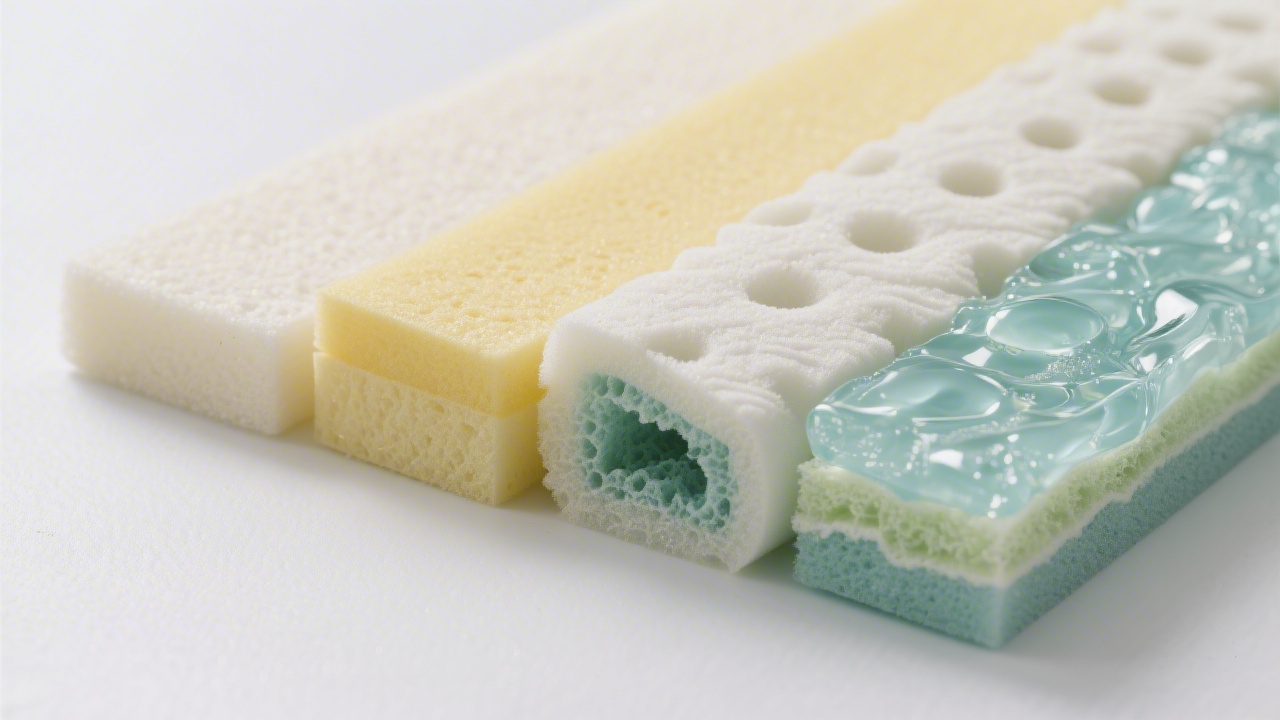
The Four Main Mattress Foams
Walk into any mattress store and you'll hear "memory foam" used as a generic term for all foam mattresses. That's a mistake that costs buyers money and comfort. Memory foam, latex, polyfoam, and gel foam have fundamentally different compositions, performance profiles, and quality tiers. Understanding the differences lets you evaluate specs - not just take a salesperson's word.
Pros and Cons
What We Like
- Luxury innerspring with excellent lumbar support
- Multiple firmness options available
- Free white-glove delivery and mattress removal
- 365-night trial and lifetime warranty
What Could Be Better
- Higher price than many online brands
- Heavier than foam mattresses
- Not compressed in a box
- Some off-gassing possible initially
Memory Foam (Viscoelastic Polyurethane Foam)
Memory foam is a viscoelastic material - meaning it's both viscous (slow to recover shape) and elastic (returns to its original form). Developed by NASA in the 1960s for aircraft cushioning, it was commercialized in mattresses by Tempur-Pedic in the early 1990s.
How it works: memory foam softens in response to body heat and pressure, contouring closely to your body shape. This is why it eliminates pressure points so effectively - it distributes weight across the entire contact area rather than concentrating it at hips and shoulders.
The downsides: heat retention and slow response. Traditional memory foam traps body heat because its closed-cell structure limits airflow. The slow recovery (the foam takes a second to "fill back in") can create a "stuck" feeling some sleepers dislike.
Quality is measured primarily by density - see our full density guide. As a quick reference: 3 lb/ft³ or below is low quality; 4–5 lb is standard; 5+ lb is high density and significantly more durable.
Latex Foam
Latex foam comes from the sap of rubber trees (natural latex) or from synthetic rubber compounds (synthetic latex) or a blend. It's the most expensive foam type in most mattresses.
There are two manufacturing processes that affect feel:
- Dunlop latex: The original process. Latex sap is poured into a mold and baked. Dunlop is denser and firmer at the bottom (sediment settles). Durable and excellent for support layers.
- Talalay latex: The poured latex is flash-frozen and vacuum-processed before baking. This creates a more uniform, lighter, more consistent cell structure. Talalay is bouncier and airier - preferred for comfort layers.
Latex is the most breathable foam type (open-cell structure allows airflow), the most responsive (almost no "stuck" feeling - pushes back immediately), and the most durable (natural Talalay latex can last 15–20 years). It's also the heaviest - a latex mattress typically weighs significantly more than a comparable foam or hybrid.
Check certification: look for GOLS (Global Organic Latex Standard) for natural latex or OEKO-TEX Standard 100 at minimum. See our natural latex mattress guide for more.
High-Density Polyfoam (Polyurethane Foam)
Polyfoam is the backbone of the mattress industry. Every foam mattress contains it somewhere - usually in transition layers or as a base support core. It's made by reacting polyols with diisocyanates, forming a polymer with air pockets.
The critical number is density: high-density polyfoam (1.8+ lb/ft³ for base layers, 2.0+ preferred) provides real support and durability. Low-density polyfoam (1.0–1.5 lb) is what makes budget mattresses feel soft and new but sag within 2–3 years.
By itself, polyfoam isn't great as a comfort layer - it doesn't contour or breathe as well as memory foam or latex. But as a firm base layer or transition layer, quality polyfoam is excellent and cost-effective.
Gel-Infused Foam
Gel foam is standard memory foam with gel particles, gel beads, or gel swirls added during manufacturing. The marketing promise is that gel absorbs and dissipates body heat. The reality is more nuanced.
Independent testing shows gel foam runs slightly cooler than traditional memory foam in the first few minutes of contact, but the cooling effect diminishes significantly over an entire night. Gel foam still has a predominantly closed-cell structure - it doesn't fundamentally solve memory foam's heat retention problem.
It's not a scam - gel foam does perform slightly better thermally than standard memory foam. But if sleeping hot is your primary concern, copper-infused foam, phase-change material (PCM) covers, or a latex layer are more effective solutions than gel alone.
Foam Quality Red Flags
Brands almost never advertise low-density foam because the numbers are damning. Warning signs in product listings: no density specs listed at all, descriptions using only ILD (Indentation Load Deflection, which measures firmness not quality), mattress weight well below category average (light = less foam or low-density foam), and vague terms like "premium foam" with no certification or density data.
Foam Certifications Worth Trusting
CertiPUR-US is the baseline for US market polyurethane foams - it certifies the foam doesn't contain ozone depleters, prohibited flame retardants, heavy metals, formaldehyde, or phthalates. It says nothing about density or quality, but it's better than nothing. GOLS (latex) and GOTS (organic textiles) certify natural content and farming practices.
For overall mattress evaluation, pair this with our mattress buying mistakes and mattress price guide pages.
Our pick: Saatva Loom & Leaf
Consistently top-rated for construction quality and independently verified coil/foam specs.
Frequently Asked Questions
Is latex foam better than memory foam?
It depends on your priorities. Latex is more durable, breathable, and responsive. Memory foam provides deeper pressure relief and better motion isolation. The best choice depends on your sleep position and whether you sleep hot.
What density memory foam is best?
For comfort layers, 4–5 lb/ft³ is the standard range. 5+ lb is high density with noticeably better longevity. Avoid anything below 3 lb for a mattress you intend to keep more than 3 years.
Does gel foam actually keep you cool?
Slightly cooler in the first few minutes - the effect diminishes over a full night. Copper-infused foam, PCM covers, or latex provide more consistent thermal regulation.
What is the difference between Dunlop and Talalay latex?
Dunlop is denser and firmer - ideal for support cores. Talalay uses vacuum and freeze processing for a lighter, more uniform, bouncier feel preferred in comfort layers.
Is CertiPUR-US foam safe?
CertiPUR-US certifies the absence of specific harmful chemicals. It's a meaningful baseline health certification, but it says nothing about foam density or long-term quality.
The Verdict
Choose Mattress Foam Types: Memory Foam if: You value what Mattress Foam Types: Memory Foam offers in construction, materials, and sleep technology.
Choose Latex vs Polyfoam vs Gel Foam if: You prefer Latex vs Polyfoam vs Gel Foam's design philosophy and material choices. Compare pricing and trial periods.
Both serve different sleep needs. Choose based on your body type, sleep position, and comfort preferences.