
 by
by Our pick: Saatva Classic
Consistently top-rated for construction quality and independently verified coil/foam specs.
What Are Pocketed Coils?
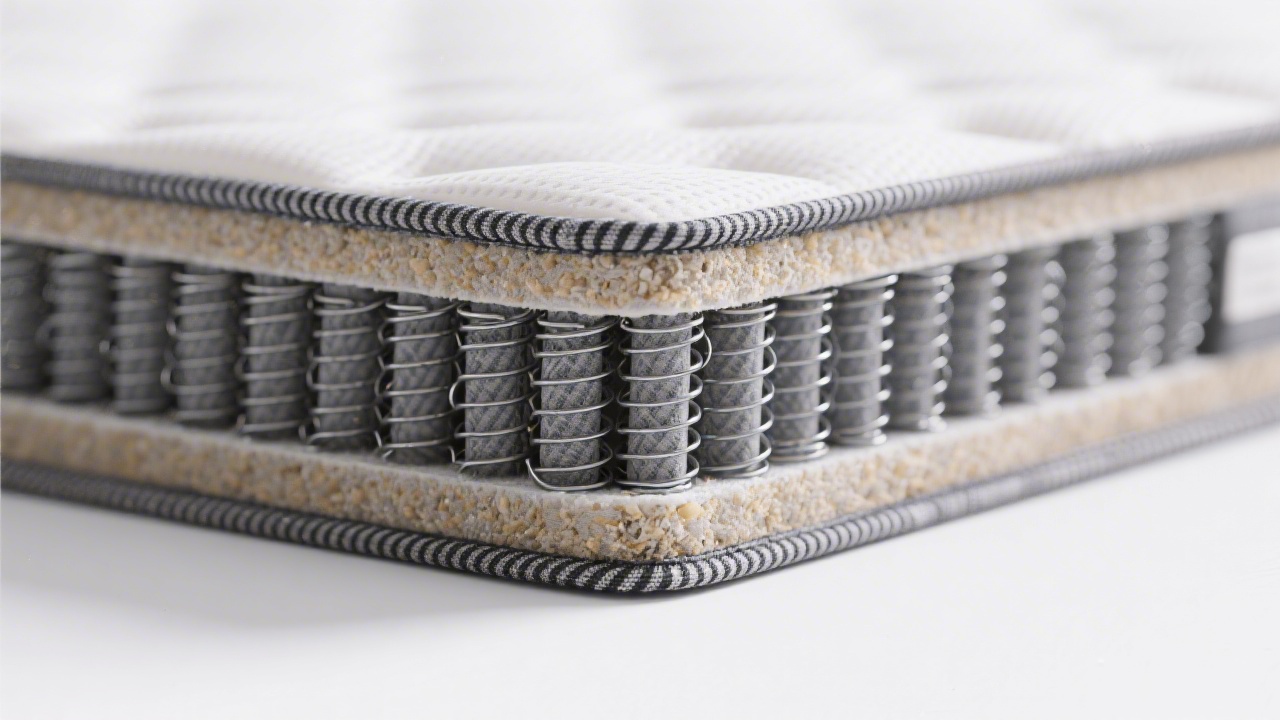
Pocketed coils - also called Marshall coils, individually wrapped coils, or encased coils - are steel springs each individually sewn into a fabric pocket. Unlike traditional spring systems where coils share a rigid wire frame, every pocketed coil moves independently. When your partner shifts at 2 AM, their side of the mattress absorbs the movement; your side is largely unaffected.
The concept dates to 1899, when Canadian inventor James Marshall patented the encased-spring system. It took most of the 20th century for manufacturing costs to drop enough to make pocketed coils standard in mid-range and premium mattresses - today they appear in most hybrids above $800.
Pocketed vs Bonnell Coils: The Core Difference
Bonnell coils are the traditional hourglass-shaped springs connected by horizontal helical wires into a single unit called an innerspring. When one coil compresses, the entire connected system responds. That means movement transfers across the mattress - the classic "sleeping with a restless partner" problem.
Bonnell coils dominated the industry for over a century because they're cheap to manufacture and durable in a basic sense. Budget mattresses under $400 still use them widely. But for anyone sharing a bed, or anyone who tosses and turns, the interconnected design works against you.
| Feature | Pocketed Coils | Bonnell Coils |
|---|---|---|
| Motion transfer | Low | High |
| Contouring | Good | Minimal |
| Edge support | Good (with border rod) | Good |
| Price | Higher | Lower |
| Noise | Very quiet | Can squeak with age |
Other Coil Types You'll Encounter
Offset coils are a variation of Bonnell with hinged top and bottom that allow slightly more individual movement than standard Bonnell while remaining connected. Common in mid-tier innerspring mattresses.
Continuous coils (LFK coils) are made from a single long wire formed into a grid pattern. They're more uniform in feel and durable, but share the motion-transfer limitation of other connected systems. Serta uses a version of this system.
Micro-coils (nano-coils, comfort coils) are tiny pocketed coils - typically 1–2 inches tall - used as a transition or comfort layer on top of a primary coil system or foam. They add bounce and airflow without sacrificing contouring. Common in premium hybrid layers.
Coil Count: Does It Matter?
Coil count is one of the most misunderstood specs in the mattress industry. Here's the reality: coil count matters - but only within the same coil type and same mattress size.
A queen mattress with 1,000 pocketed coils is very different from one with 400. More coils in a given space means finer contouring, more precise zone differentiation, and better weight distribution. But 1,000 micro-coils in a 1-inch comfort layer is not "better" than 400 full-height pocketed coils in the support core - they're doing different jobs.
Minimum benchmarks to use: for a queen hybrid, look for at least 800 pocketed coils in the support layer, ideally 1,000+. For a full mattress built around pocketed coils, 600+ is the minimum threshold worth considering.
See our full guide to coil count for more detail.
Wire Gauge: The Spec Brands Hide
Coil gauge refers to the thickness of the wire, measured on a counter-intuitive scale: lower gauge numbers mean thicker wire. Common ranges:
- 12–13 gauge: Firm, supportive, slow to compress. Good for heavier sleepers (over 230 lbs).
- 14–15 gauge: Standard range, balancing support and responsiveness.
- 15.5–17 gauge: Thinner, softer response. Common in pillow-top comfort layers.
Brands rarely advertise gauge prominently, but it determines how the mattress will actually feel over time - and how long before coils begin to compress unevenly.
Zoned Coil Systems
Some manufacturers use varying coil gauges across different zones - firmer coils under the lumbar and hips, softer coils under the shoulders. This replicates what a custom sleep specialist would recommend. We cover this in detail in our zoned support explainer.
The Saatva Classic, for example, uses a dual-coil system: a support layer of 884 individually wrapped coils plus an additional tempered steel coil grid beneath, totaling 1,008 coils - one of the higher counts in the category - with lumbar zone enhancement.
How to Evaluate Coils When Shopping
Ask or look for: coil count for your mattress size, coil type (pocketed is the answer you want), wire gauge if available, and whether a border rod reinforces the perimeter for edge support. If a brand lists "individually wrapped" without specifying count or gauge, that's a flag - push for specifics.
Also consider pairing this with our mattress buying mistakes guide and how to test a mattress in-store for practical application.
Our pick: Saatva Classic
Consistently top-rated for construction quality and independently verified coil/foam specs.
Frequently Asked Questions
Are pocketed coils the same as Marshall coils?
Yes. Marshall coil is the original patent name. Pocketed coil, individually wrapped coil, and encased coil all refer to the same technology.
How many pocketed coils should a queen mattress have?
At minimum, 800 in the support layer. Premium options feature 1,000+. Coil count alone doesn't determine quality - gauge and zone design matter equally.
Do pocketed coils squeak?
Properly manufactured pocketed coils are nearly silent because each spring is fabric-encased. Squeaking is far more common with older Bonnell or connected spring systems.
What gauge coil is best for back pain?
A medium gauge (14–15) pocketed coil system with lumbar zone reinforcement balances contouring and support for most back pain sufferers. Heavier sleepers may benefit from 13-gauge coils.
Are micro-coils worth it?
Micro-coils in a comfort layer add airflow, pressure relief, and responsive bounce that foam alone can't replicate. They're worth the premium only if the support core also uses quality pocketed springs.